
Amongst Arnell Engstrom’s papers in the possession of the Local History Collection are various correspondences, business records, and financial records relating to the Northwest Michigan Fair Association from 1927 to 1954. For decades, Arnell Engstrom (June 6, 1897- May 25, 1970) was as pivotal member of the Traverse City community (Figure 2). He was involved in the local governance in Traverse City serving on the Board of Education, Chamber of Commerce, Grand Traverse Board of Supervisors, and was a founding trustee for Northwestern Michigan College. Engstrom also served in state government as a member of the Michigan House of Representatives from 1940-1968.1
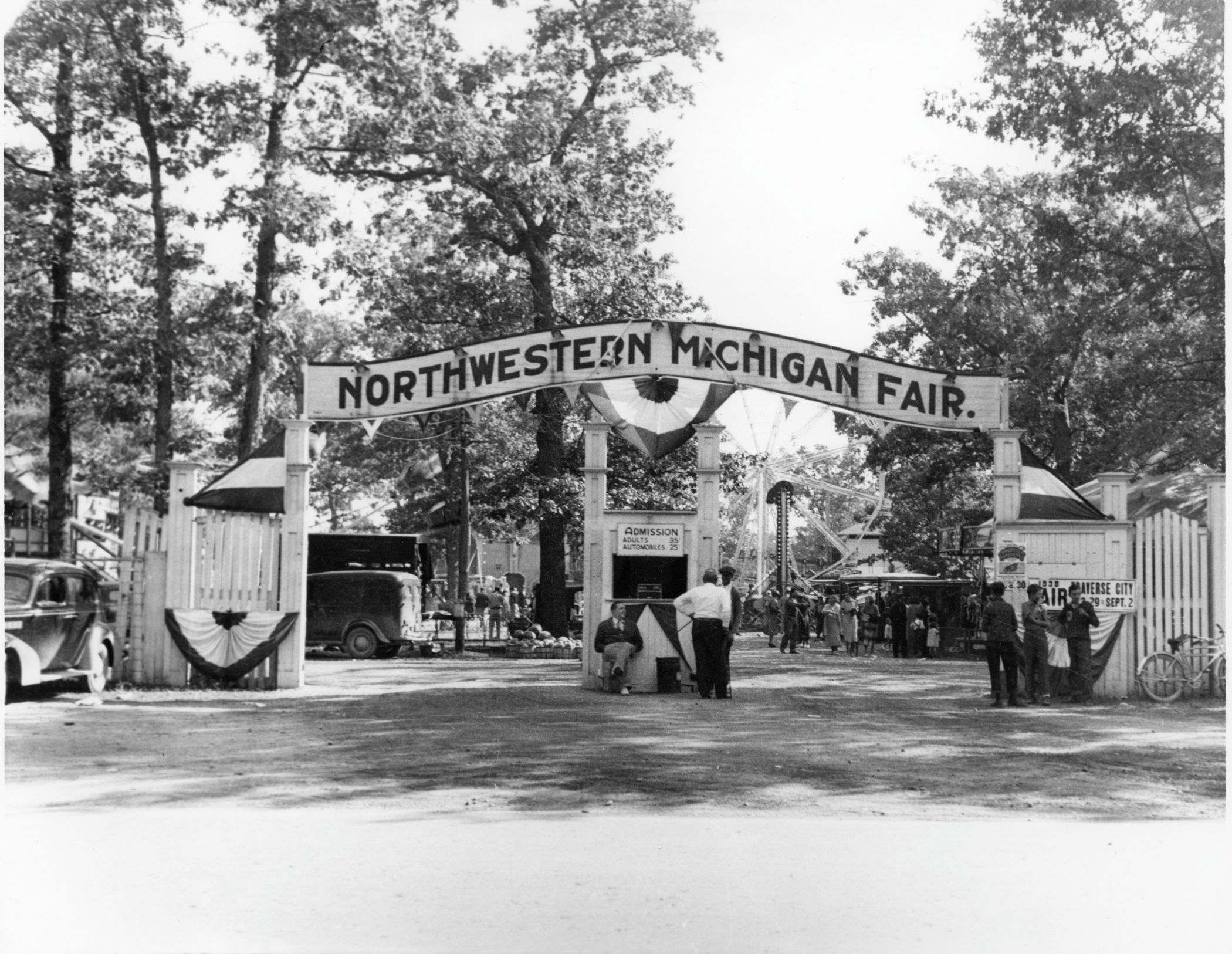
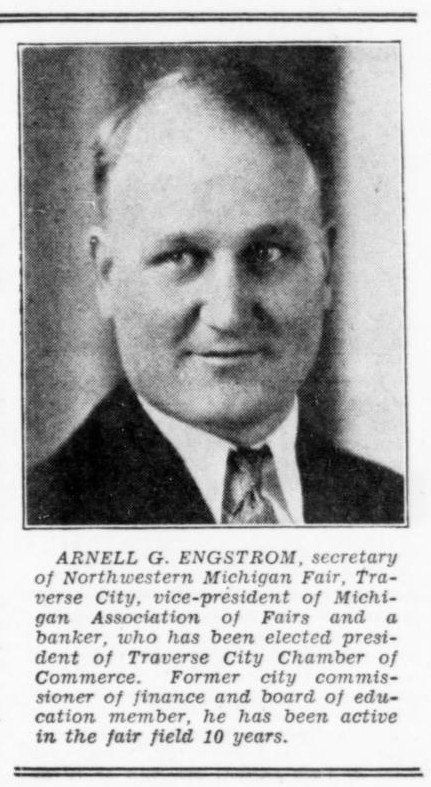
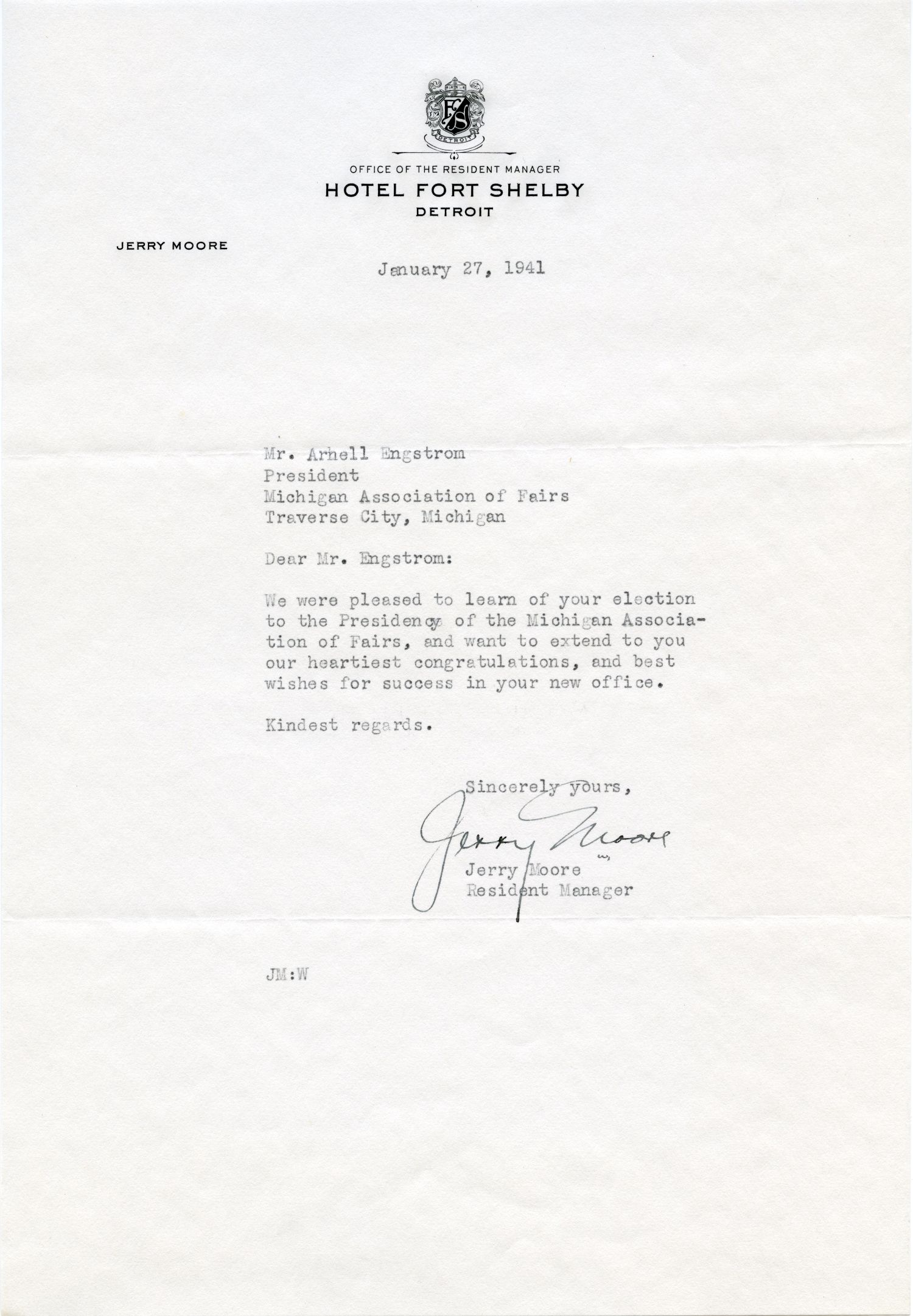
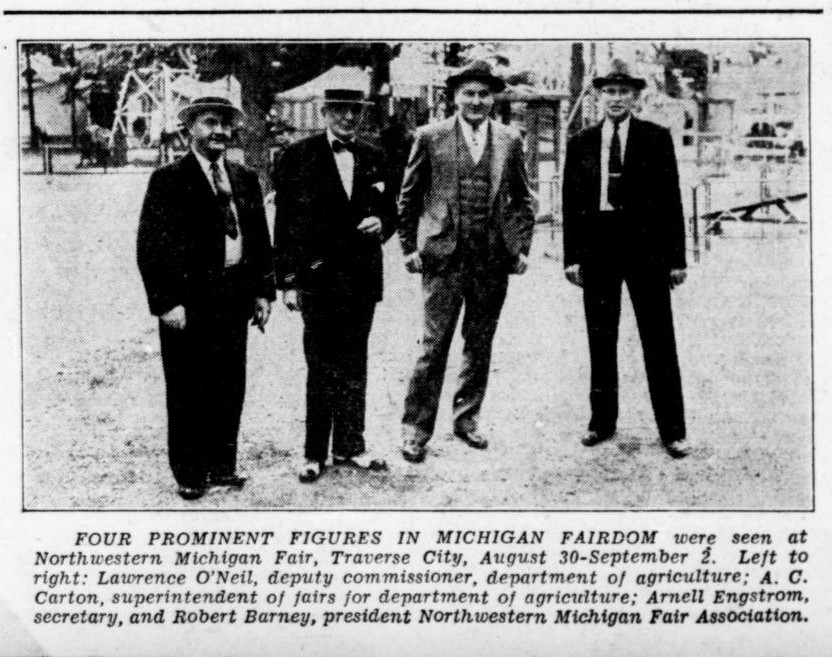
As a businessperson, Engstrom was co-owner of the Engstrom-Hicks Insurance Agency and managed the estate of F. H. Smith and the Henry Hull family, and their Oval Wooden Dish Company. From serving as the secretary for the Northwestern Michigan Fair Association, Engstrom eventually became the vice-president in the state-wide Michigan Association of Fairs in 1936 (Figure 2), before finally serving as the president of the Michigan Association of Fairs in 1941 (Figure 3).2
This article hopes to prove a revealing look at the operations of the Northwestern Michigan Fair Association in the first half of the twentieth century through highlighting various promotional material and correspondences. From free acts to corn games, the Northwestern Michigan Fair was an event that attracted performers, professionals, and hobbyists alike from all over the United States.
Fair Origins
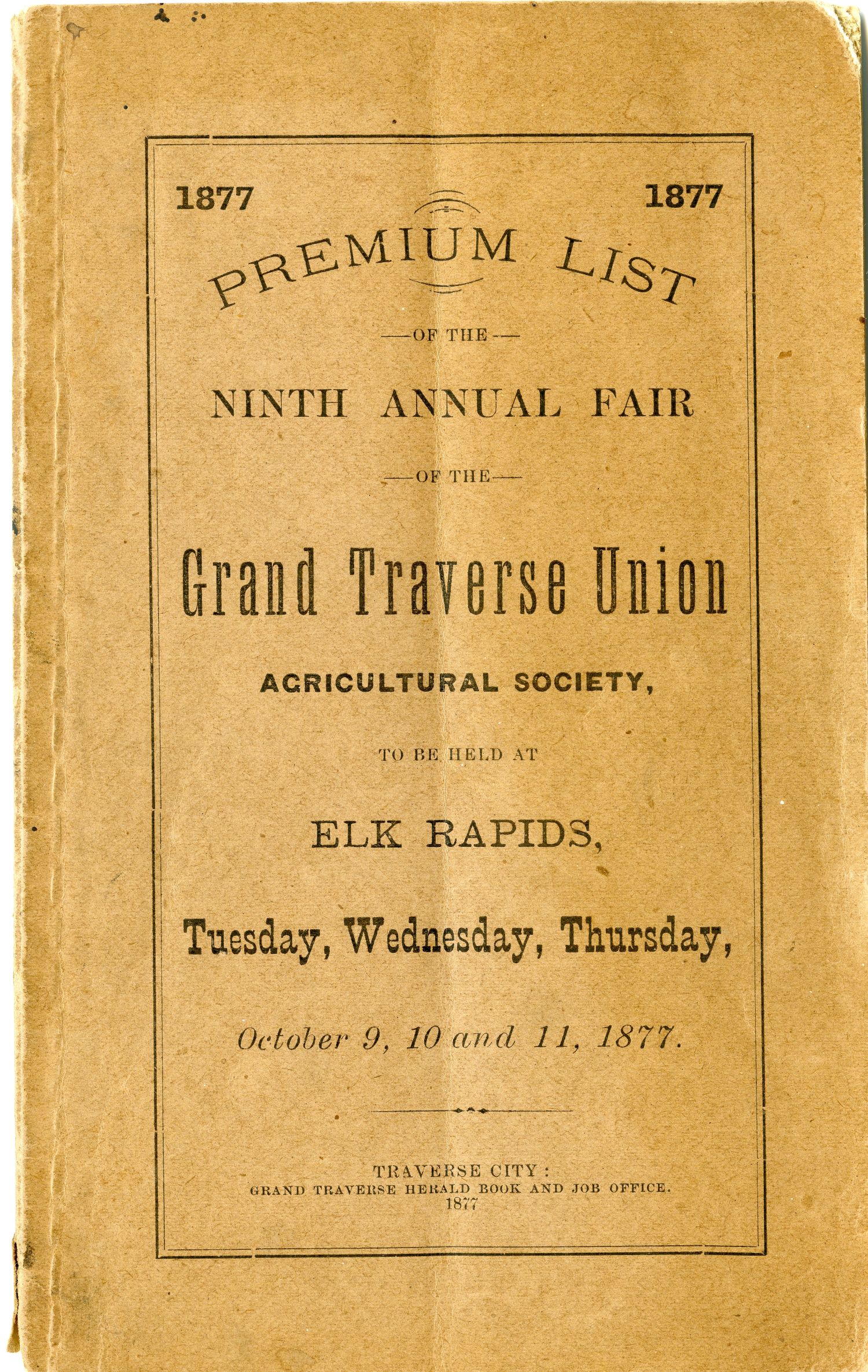
Before the Northwestern Michigan Fair Association, there were at least three predecessors who operated an annual fair in the Grand Traverse region. The Grand Traverse Union Agricultural Society held its first annual fair in 1868 and would continue to operate annual fairs until 1877 (Figure 4).3
The first annual Fair for the Grand Traverse Agricultural Society was held October 2-4, 1878.4 The society claimed that the previous Union society encompassed too many counties in the Grand Traverse region for it to have any “successful annual exhibitions.”5 The society erected a permanent building on a newly acquired site after they purchased forty acres of the Bryant estate land 1.25 miles east of the Herald Building.6 By 1884, the fair administration changed their name again; becoming known as the Grand Traverse County Agricultural and Industrial Society.7
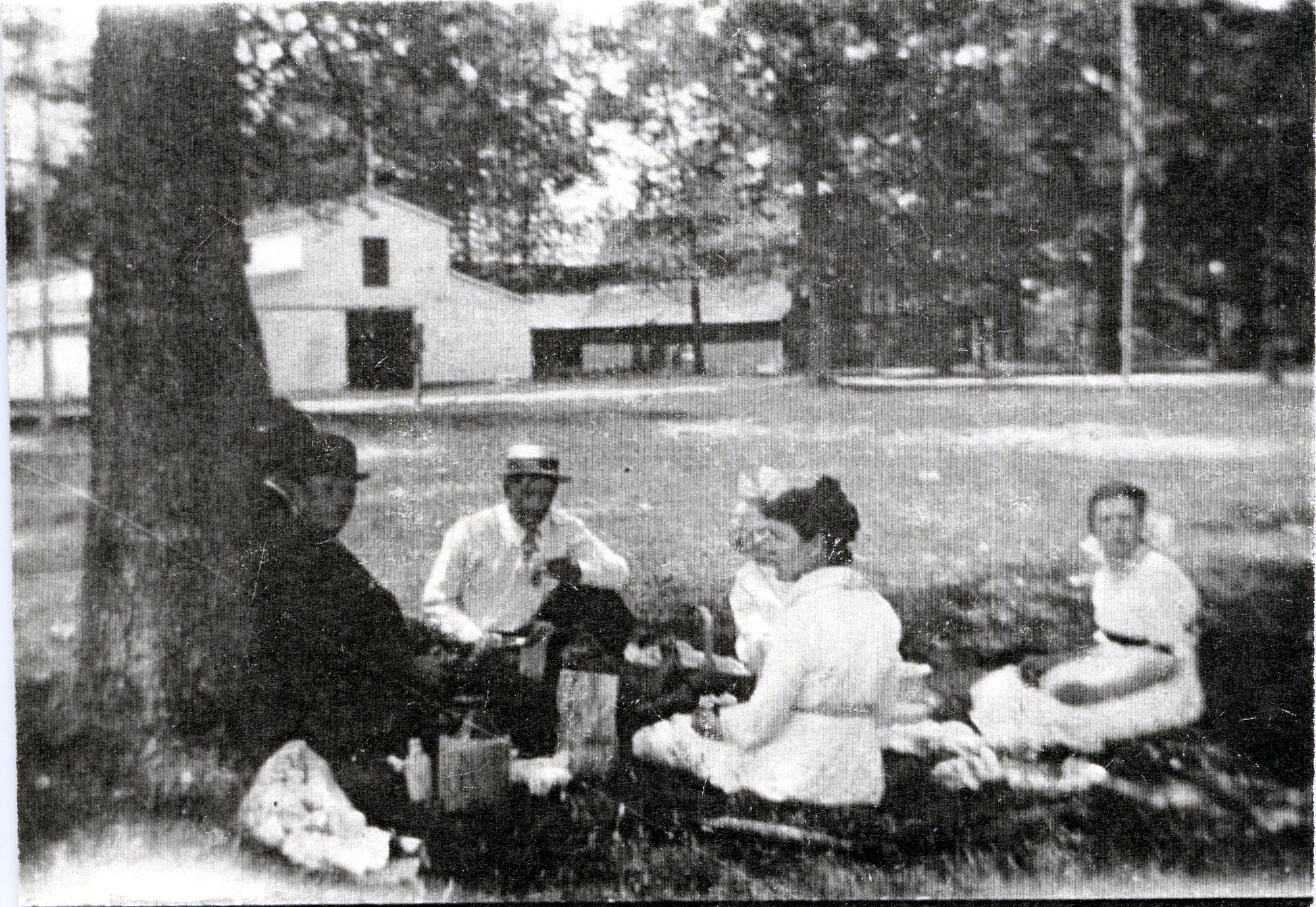
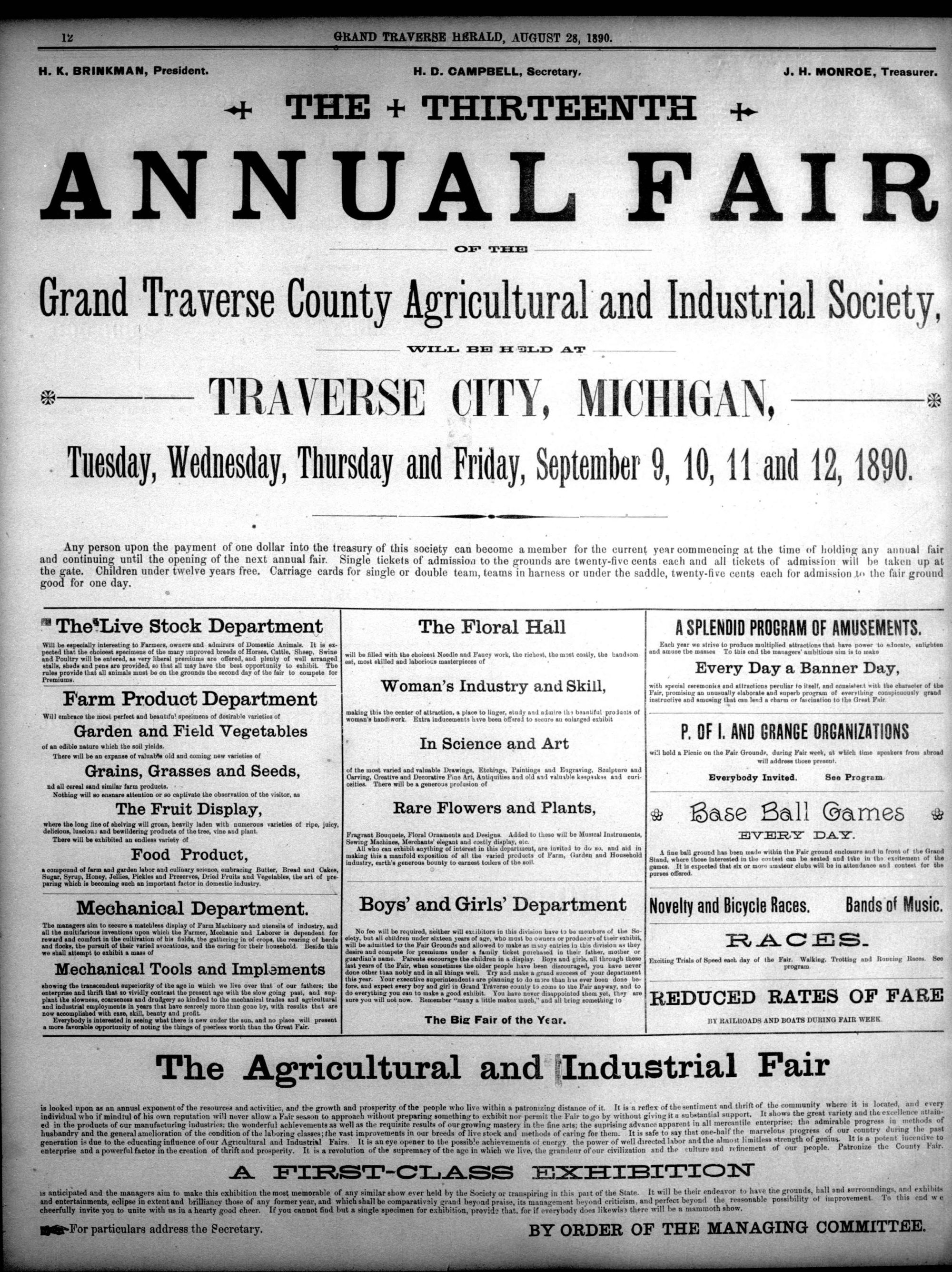
Their fairs were continuous for at least another two decades years, before the Grand Traverse Region Fair Association was formed in October 1907.8
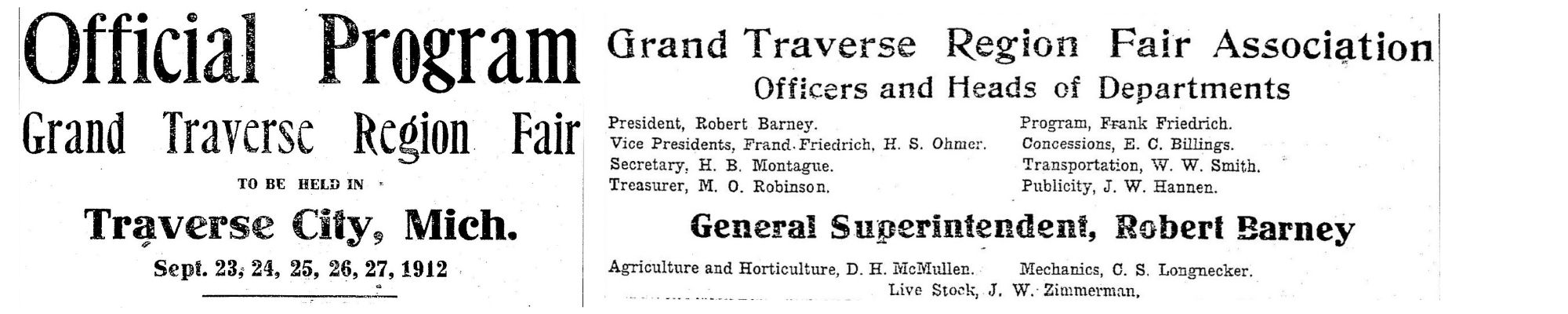
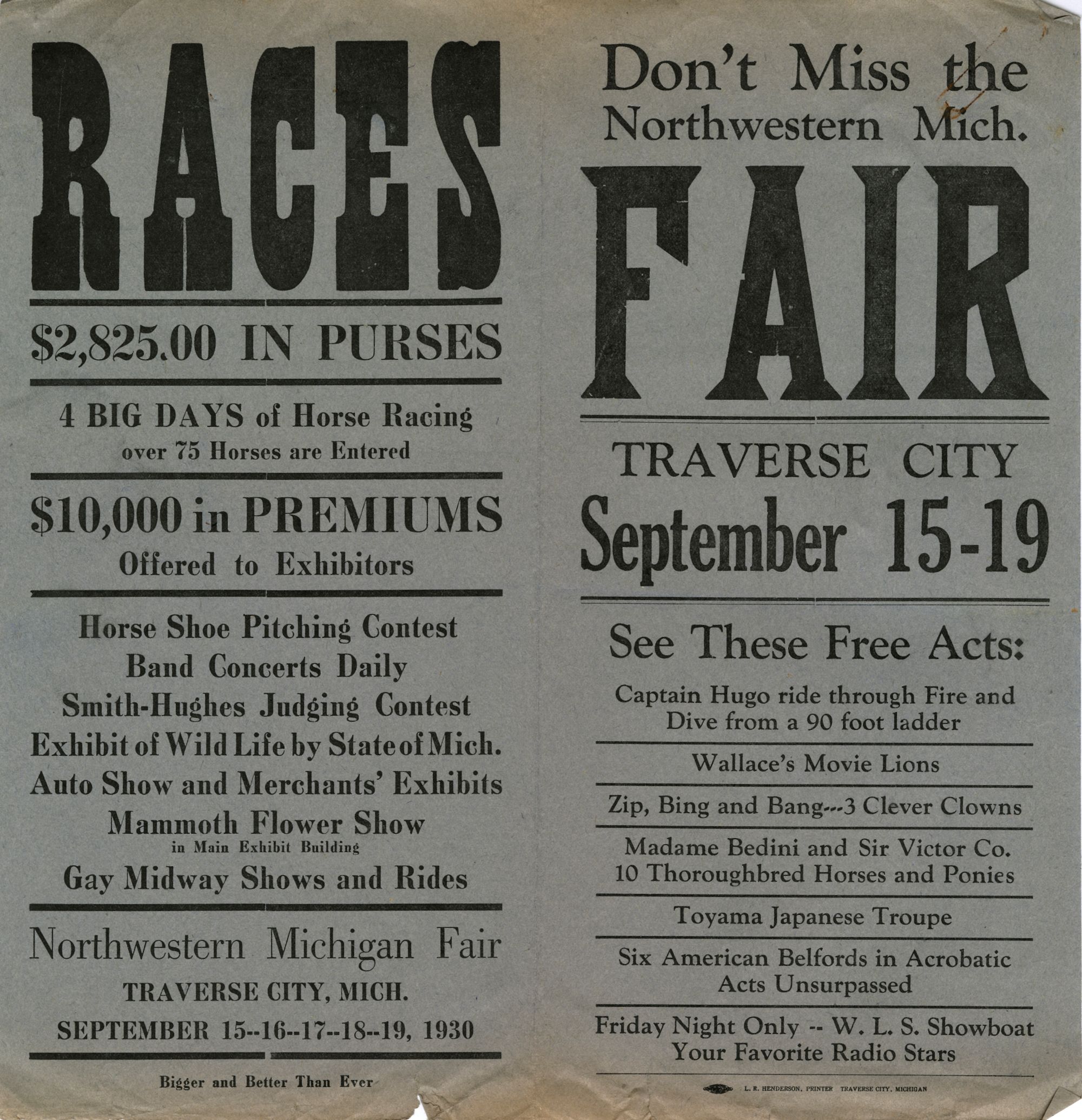
By 1920, the Grand Traverse Region Fair Association had seamlessly become the Northwestern Michigan Fair Association, an association that continues to this day (Figure 8).9
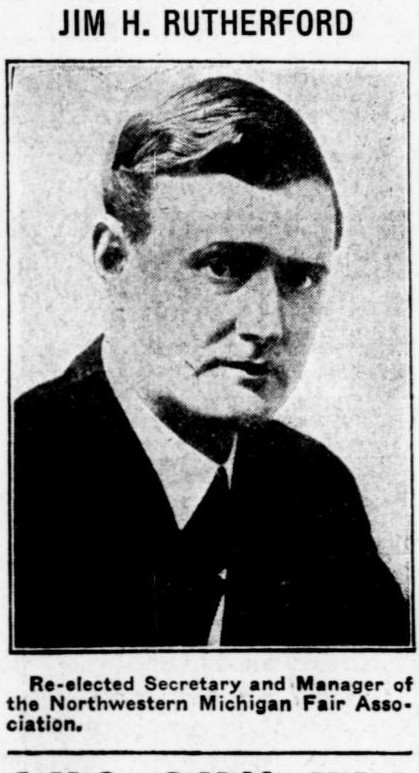
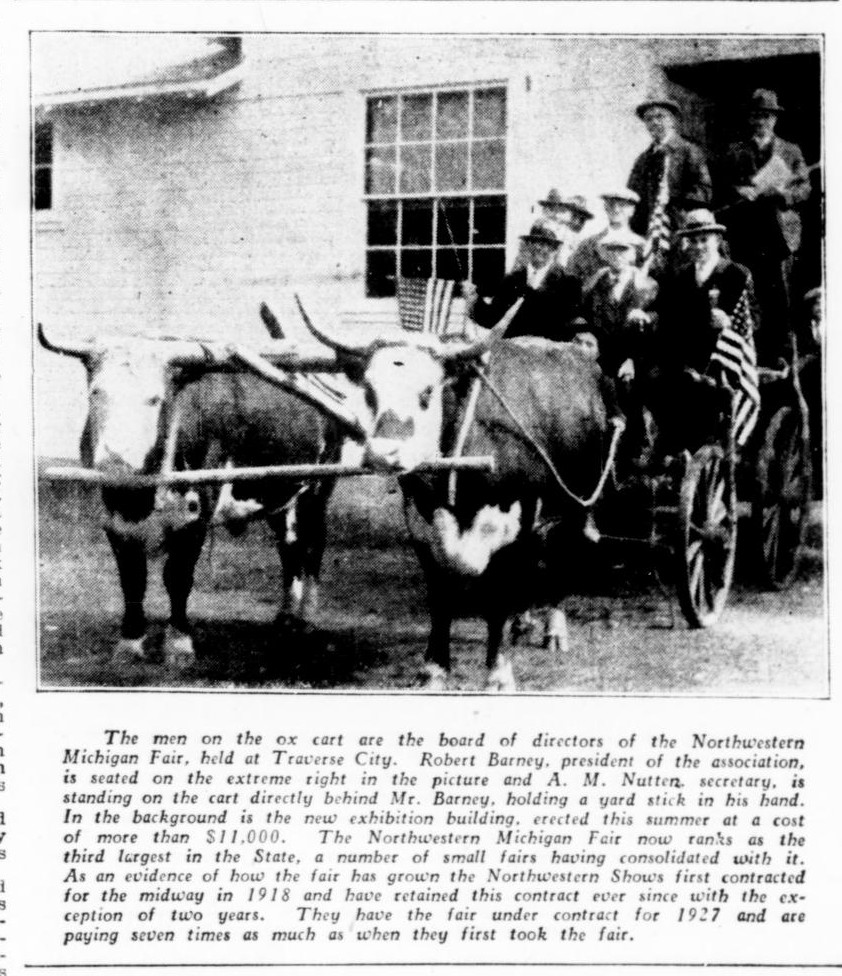
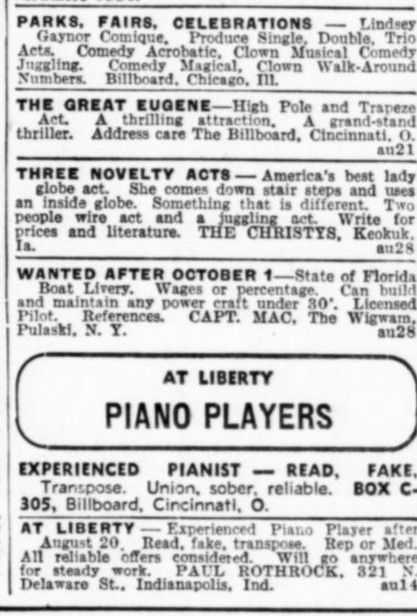
When exactly Arnell Engstrom joined the Northwestern Michigan Fair Association is unknown, but his reign as the association’s secretary began sometime before the fair in 1927.10 As a secretary, Engstrom was well known in the world of fairs, with The Billboard featuring Engstrom more than once during his time as the Northwestern Michigan Fair Association’s secretary (Figure 10.)11
Acts
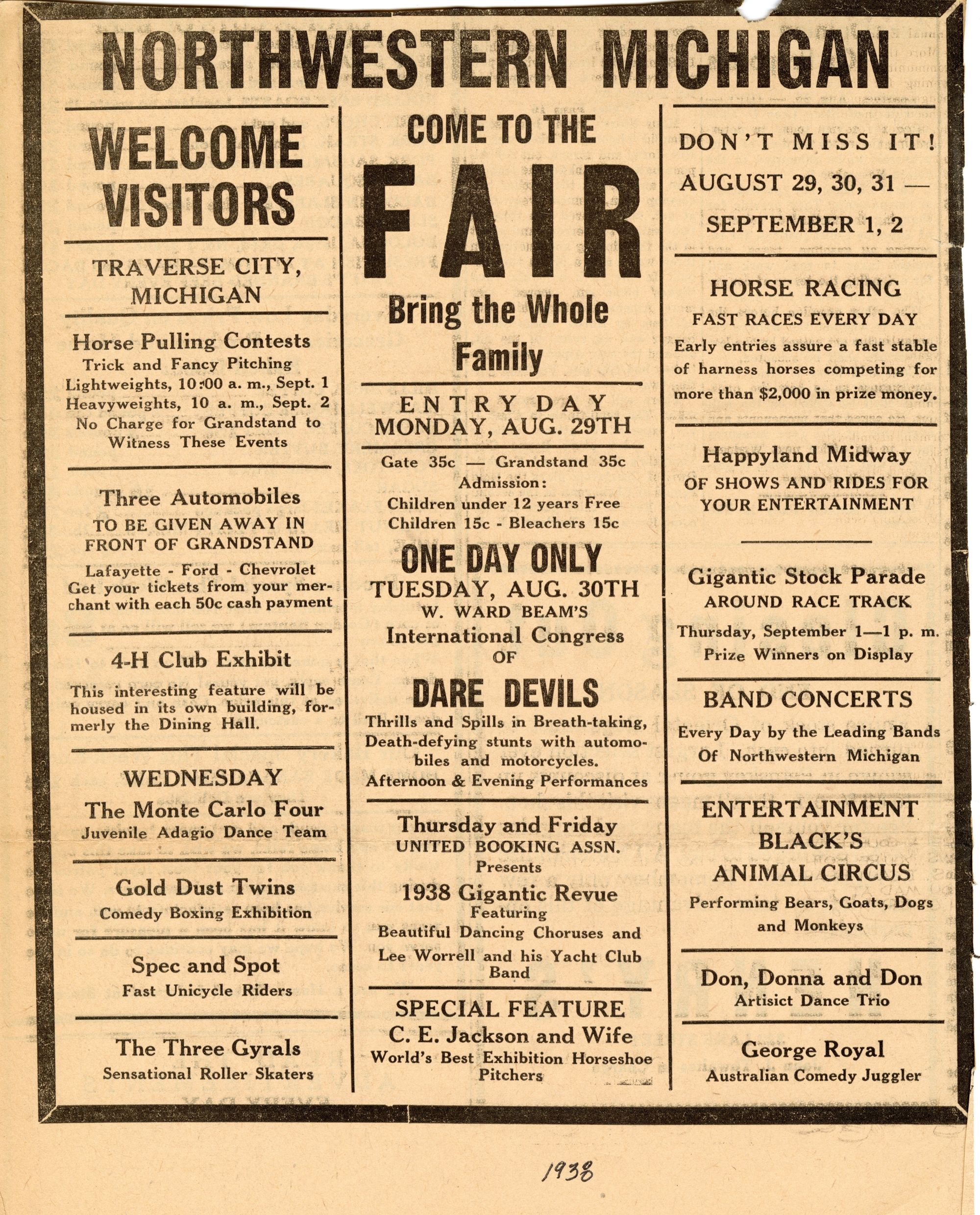
Many entertainment agencies and performers themselves would send inquiries and promotional material to Engstrom over the years. Currently, there is no complete record of all the acts performed during Engstrom’s tenure as the fair association’s secretary. But based on the amount of materials related to circus and carnival acts amongst Engstrom’s papers in the Local History Collection, there were plenty of competing offers every year. A collection of newspaper clippings does provide some of the named acts between 1927 and 1946.
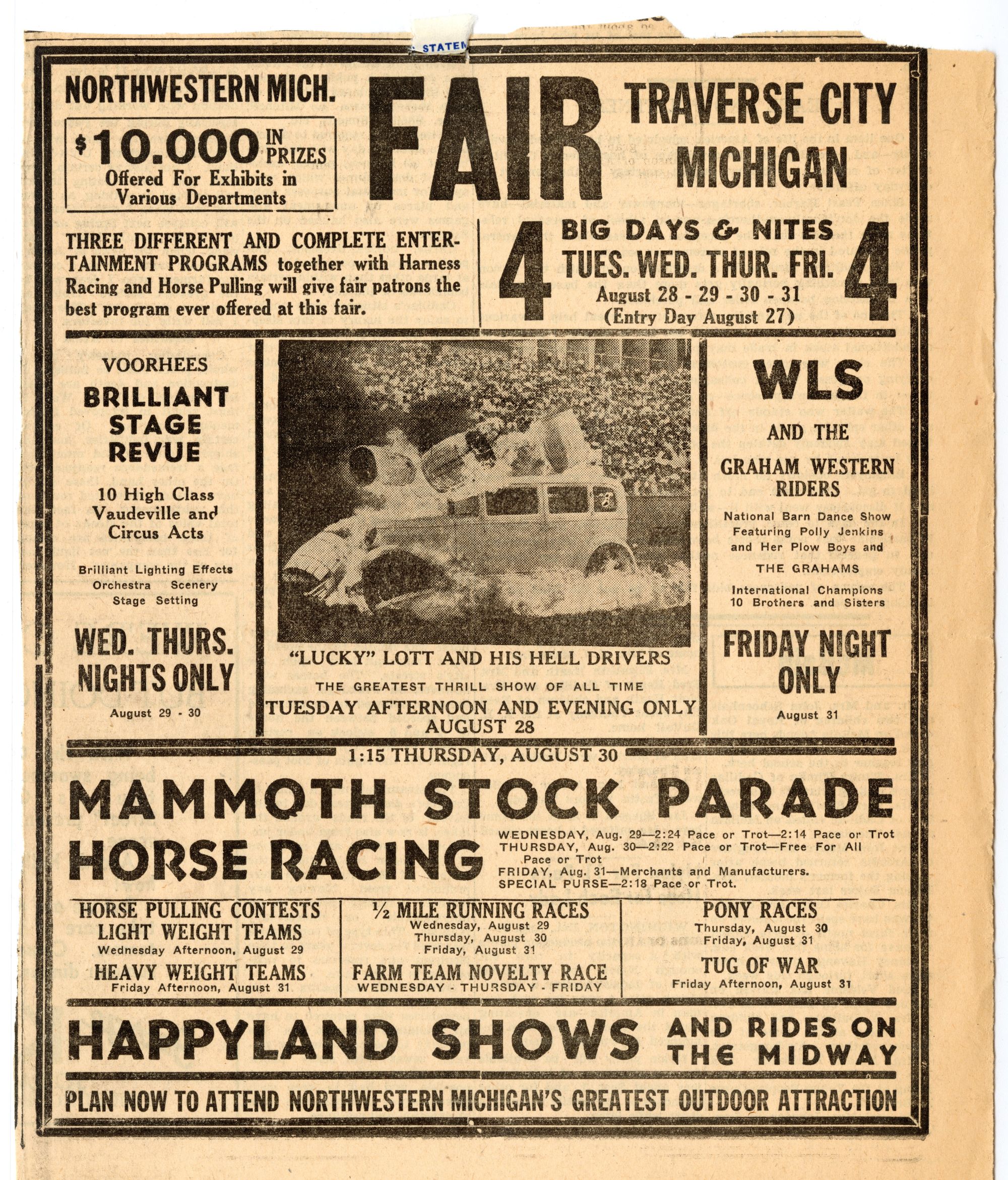
Many or most of these acts were likely not featured at the Northwestern Michigan Fair, but their prevalent presence in the collection makes them an integral part of the operational planning of the fair. The acts cover a wide-range of spectacles and genres, from animal acts (Figure 14) to vaudeville/comedy acts (Figure 51) to acrobats/contortionists/trapeze artists (Figure 35).
Animal Acts
The promotional material highlighted in this article features performers who used animals in their acts.12 The discourse on using animals for entertainment, i.e. in circuses or traveling acts, is ongoing.13 Officially, the American Society for the Prevention of Cruelty to Animals (ASPCA), a long standing animal welfare organization in the United States founded 1866, stands “opposed to using wild or exotic (non-native wild) animals, whether taken from the wild or captive-bred, in circuses, carnivals and other traveling animal shows because of the stress, cruelty and physical, social and psychological deprivations that the animals inevitably suffer, many as a direct result of extended confinement and being on the road much of the year.”14 Massachusetts, for example, became the eleventh state in the United States to restrict the use of specific wild animals in traveling animal acts on August 8, 2025.15 On the other hand, in the state of Michigan, circuses/zoos are exempt from some cruelty laws.16
Positively the Best Comedy Pig Act in the Business
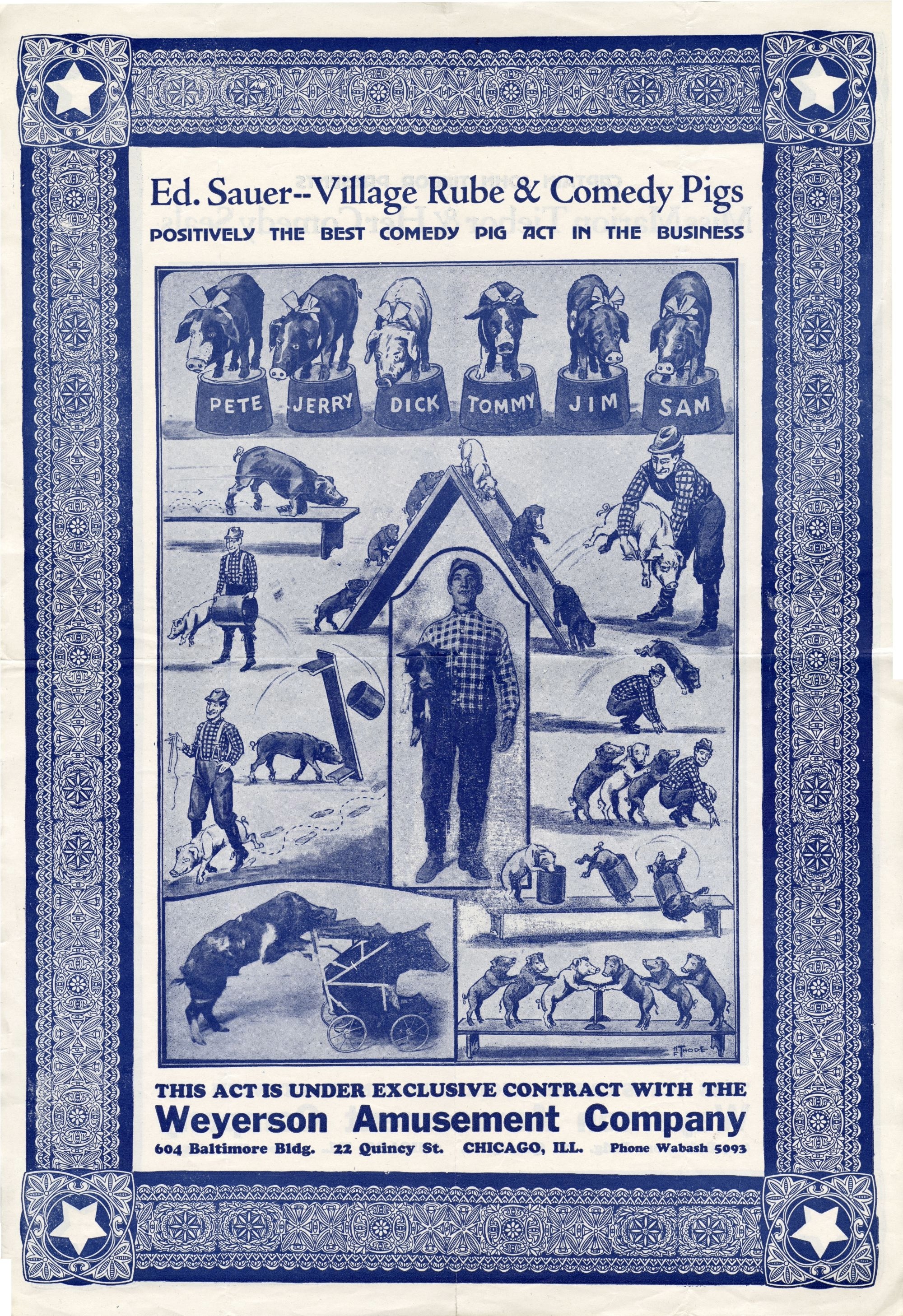
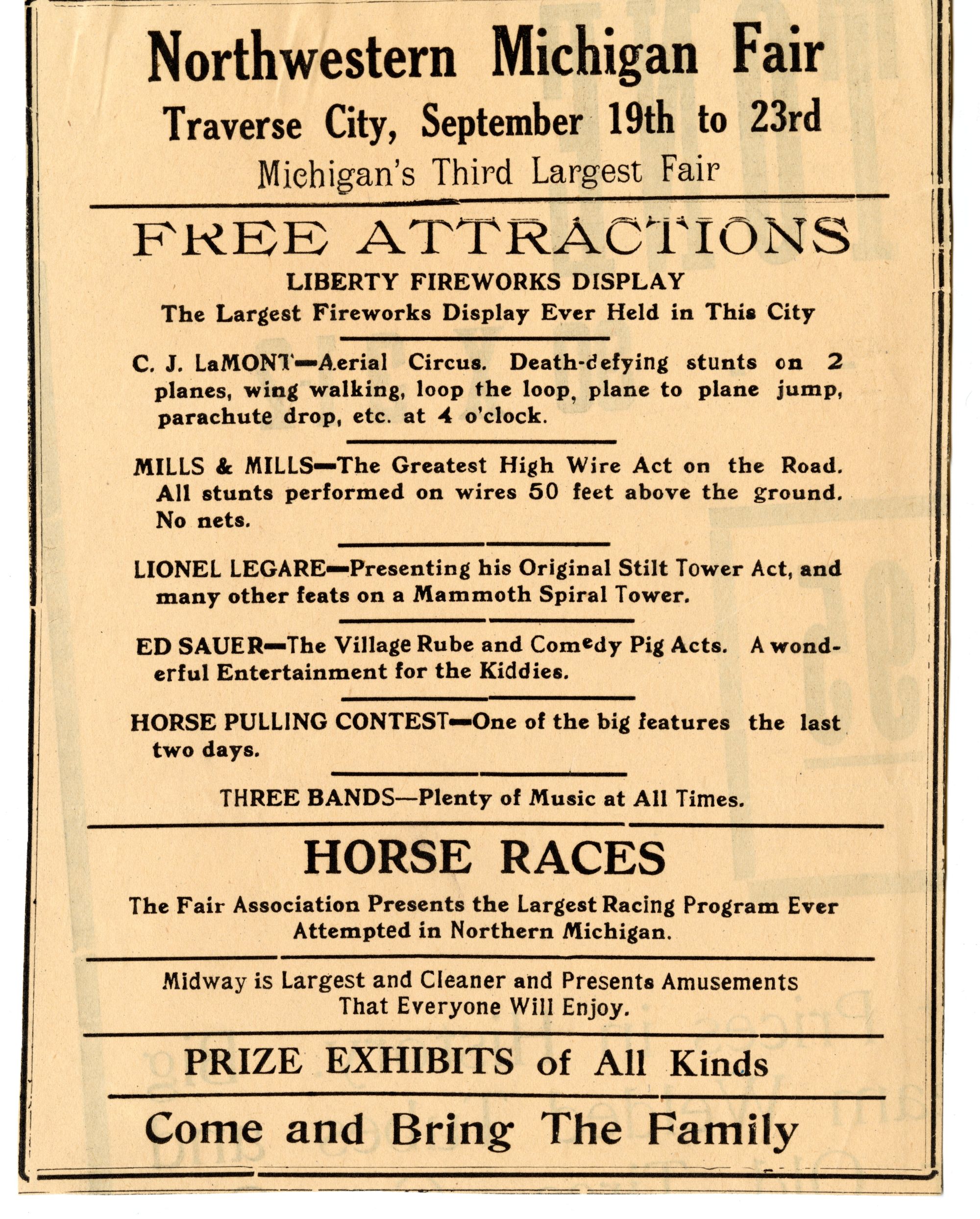
In 1927, the first year of Engstrom’s residency as secretary of the Northwestern Michigan Fair Association, Ed Sauer (Figure 14), along with C. J. LaMont (aerial circus and plane jump), Mills & Mills (a high wire act), and Lionel Legare 18(famous for the Mammoth Spiral Tower act) performed during the Northwestern Michigan fair (Figure 15).
Lil Kerslake (Himself) and His Animal Actors
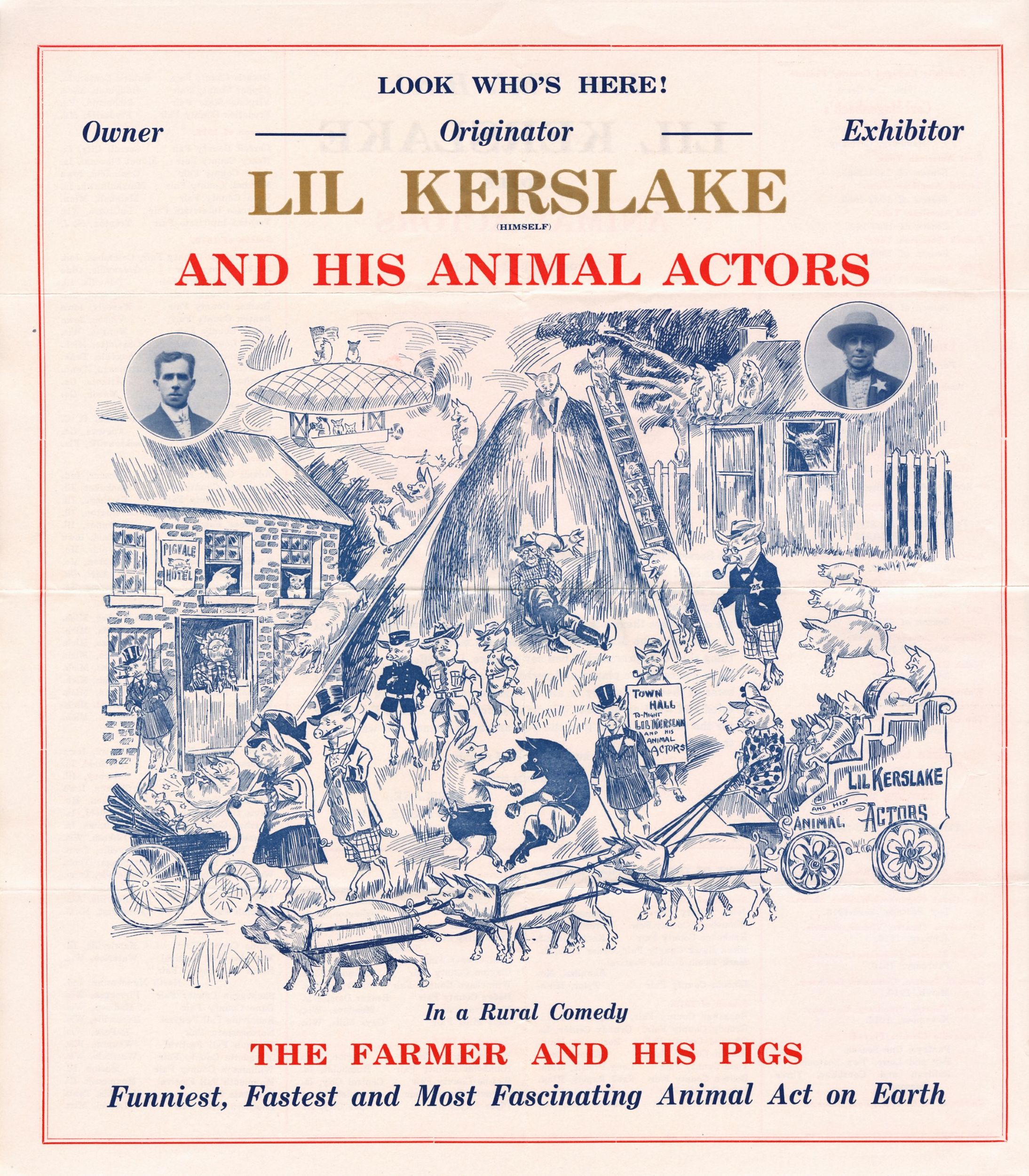
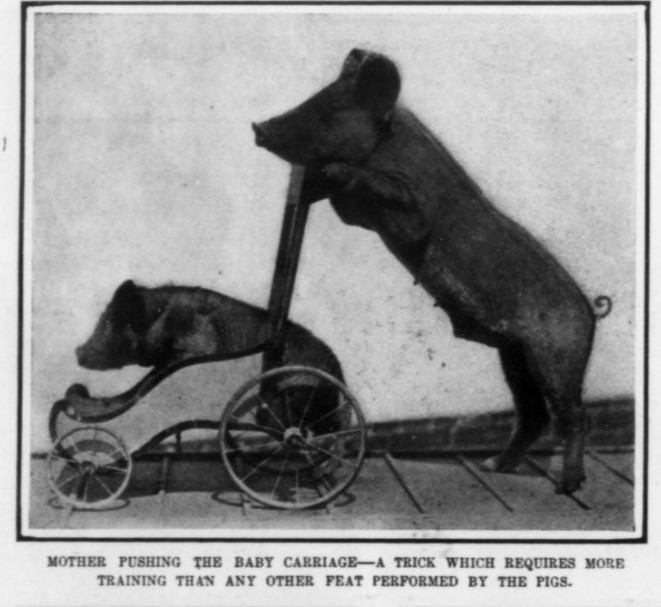
Fred “Lil” Kerslake, is a fascinating showsperson, whose passion for animals led him to develop a well-known act with dogs, ponies (Figure 20), donkeys, and most famously–pigs (Figure 16).19 Kerslake was fascinated with the intellectual competence and potential in pigs, boasting his pigs “did everything but talk.”20
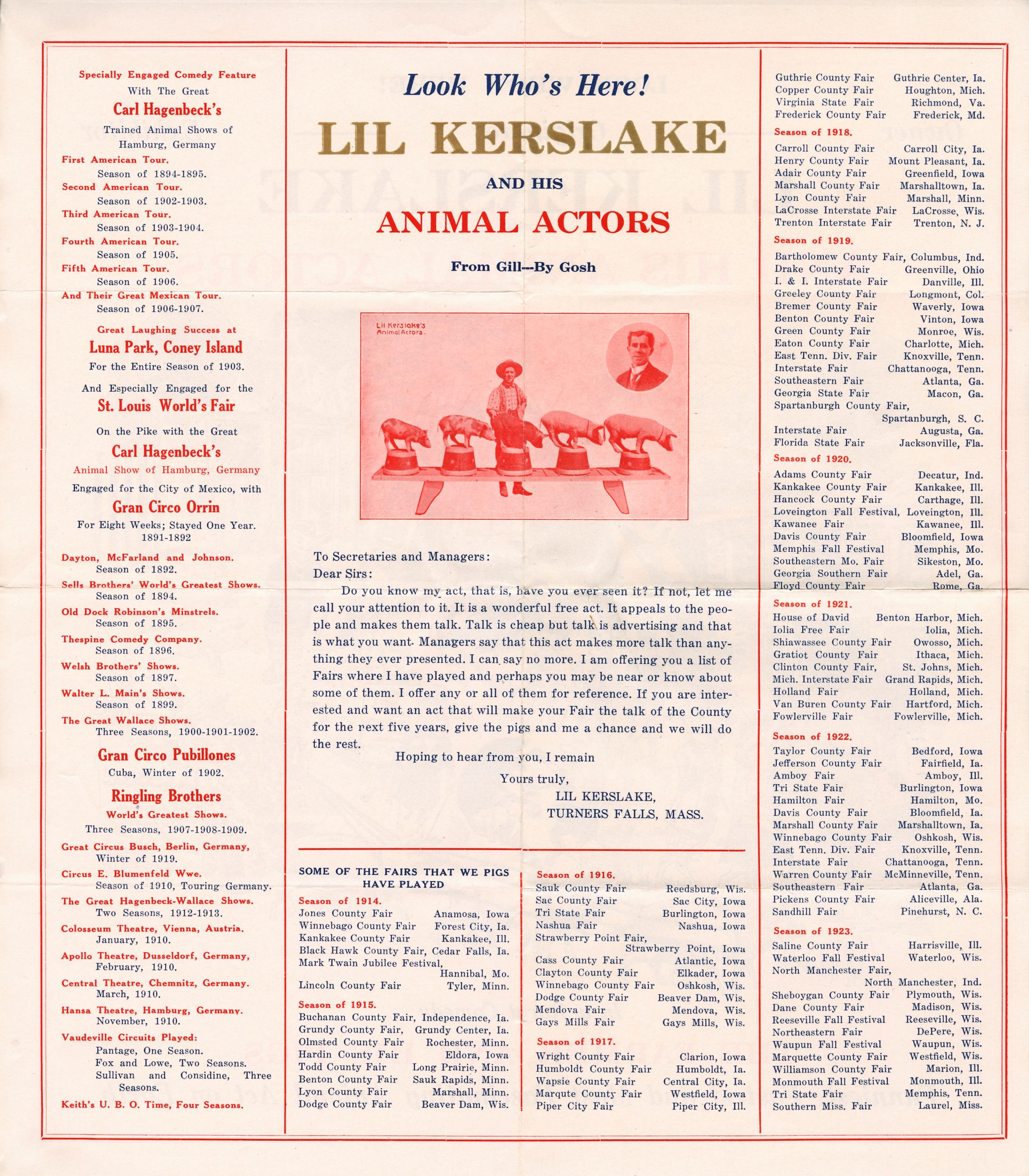
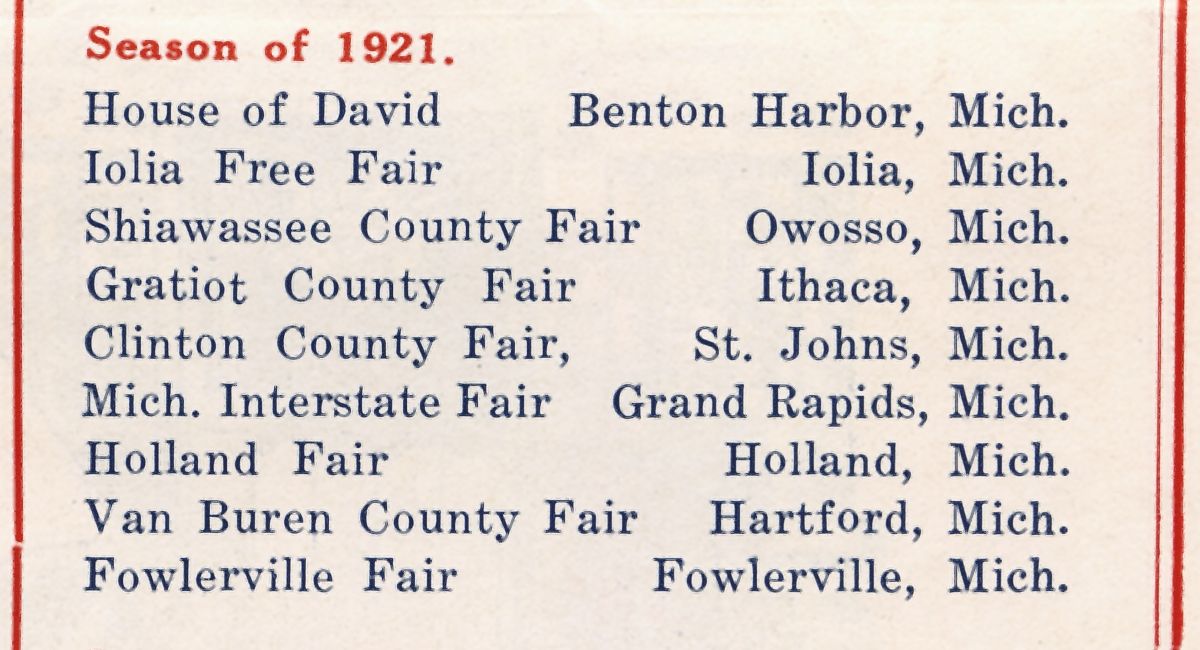
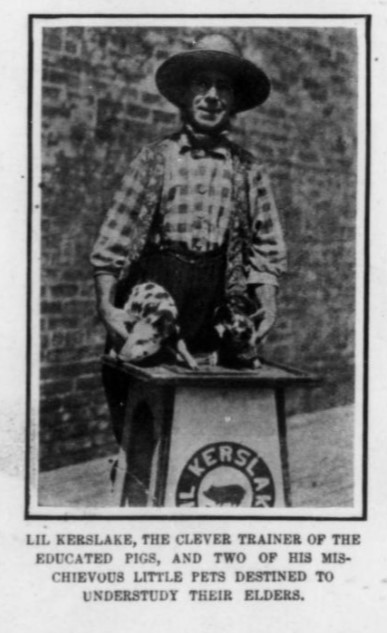
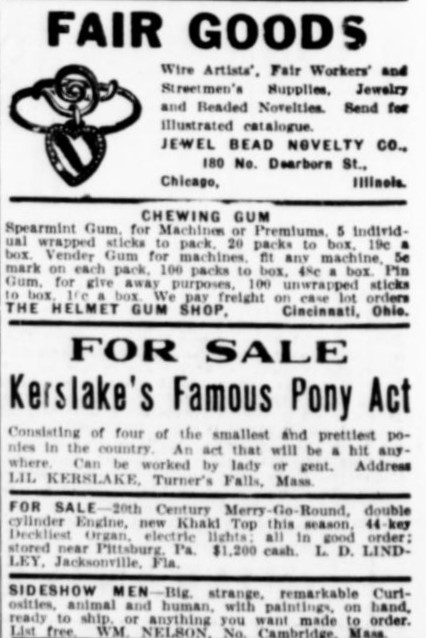
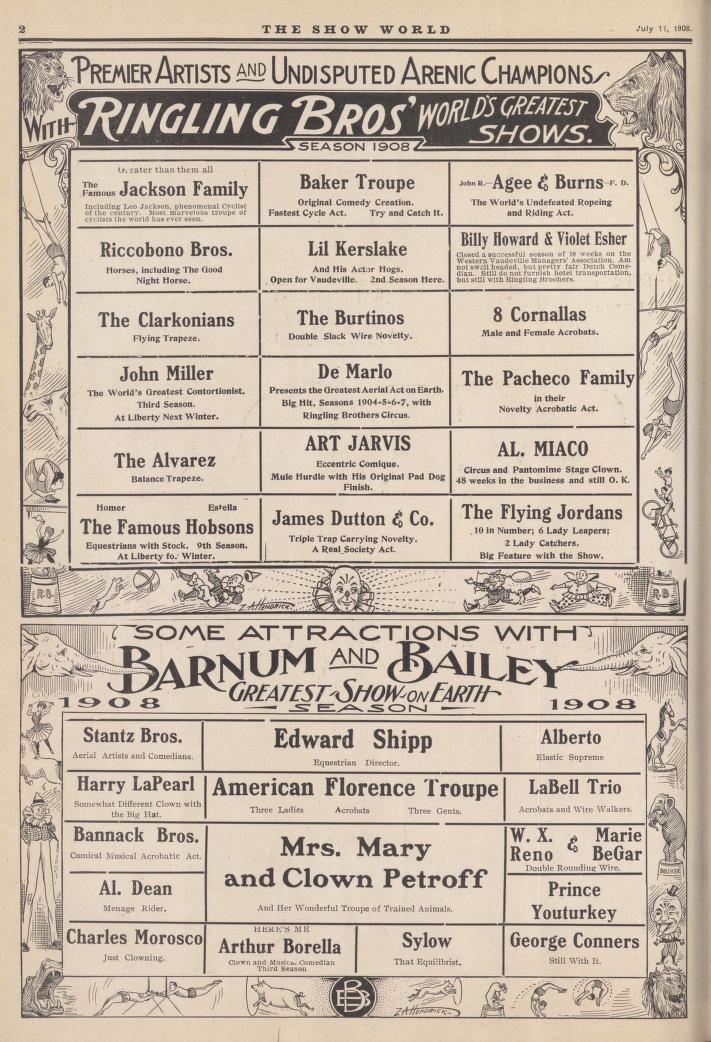
Lil Kerslake performed with the Hagenbeck Shows, with the Ringling Brothers (Figure 21), Loew’s Vaudville, and Gran Circo Pubillones in Havana, Cuba.21 Kerslake traveled extensively for decades both touring in the United States and Europe.22 Kerslake almost always received glowing reviews for his performances with his pig entourage, he was extremely popular as an entertainer for decades from the 1890s to 1930. The poster in the possession of the Local History Collection was likely sent to the Northwestern Michigan Fair Association as promotional material (Figure 16).
“Pigs are nowise as ignorant as they appear,” as Kerslake asserted in an interview with Leslie’s Illustrated Weekly in 1909.23 Kerslake explains his training process in an interview, which describes a patient, firm, but calm education: “One of the first things to impress upon an amateur pig is that you will not under any circumstances run after him…Go on training the others, and after a while go quietly and get the runaway, and, two chances to one, he will stay this time, especially if there is some food in the reward. ”24
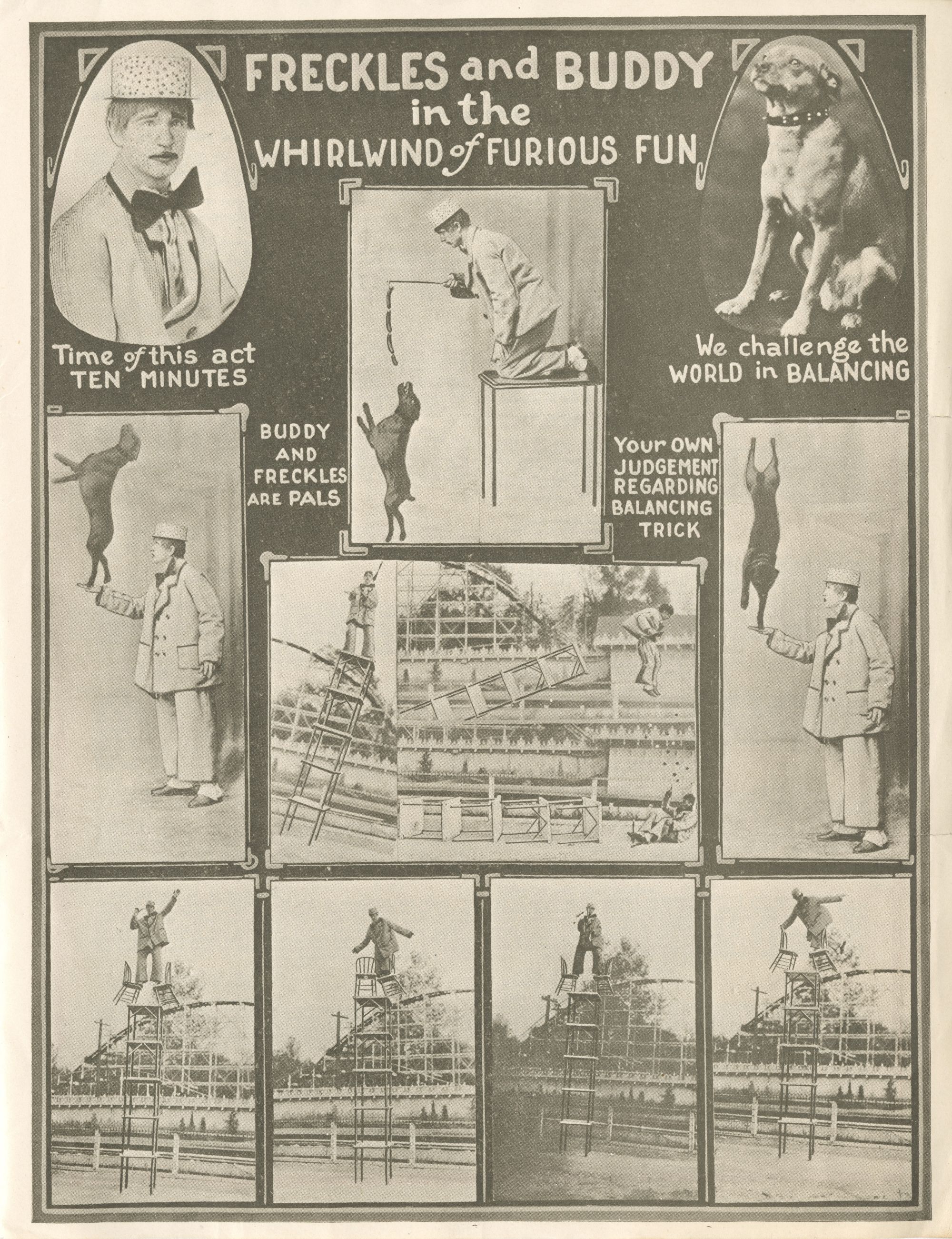
Buddy and Freckles are Pals
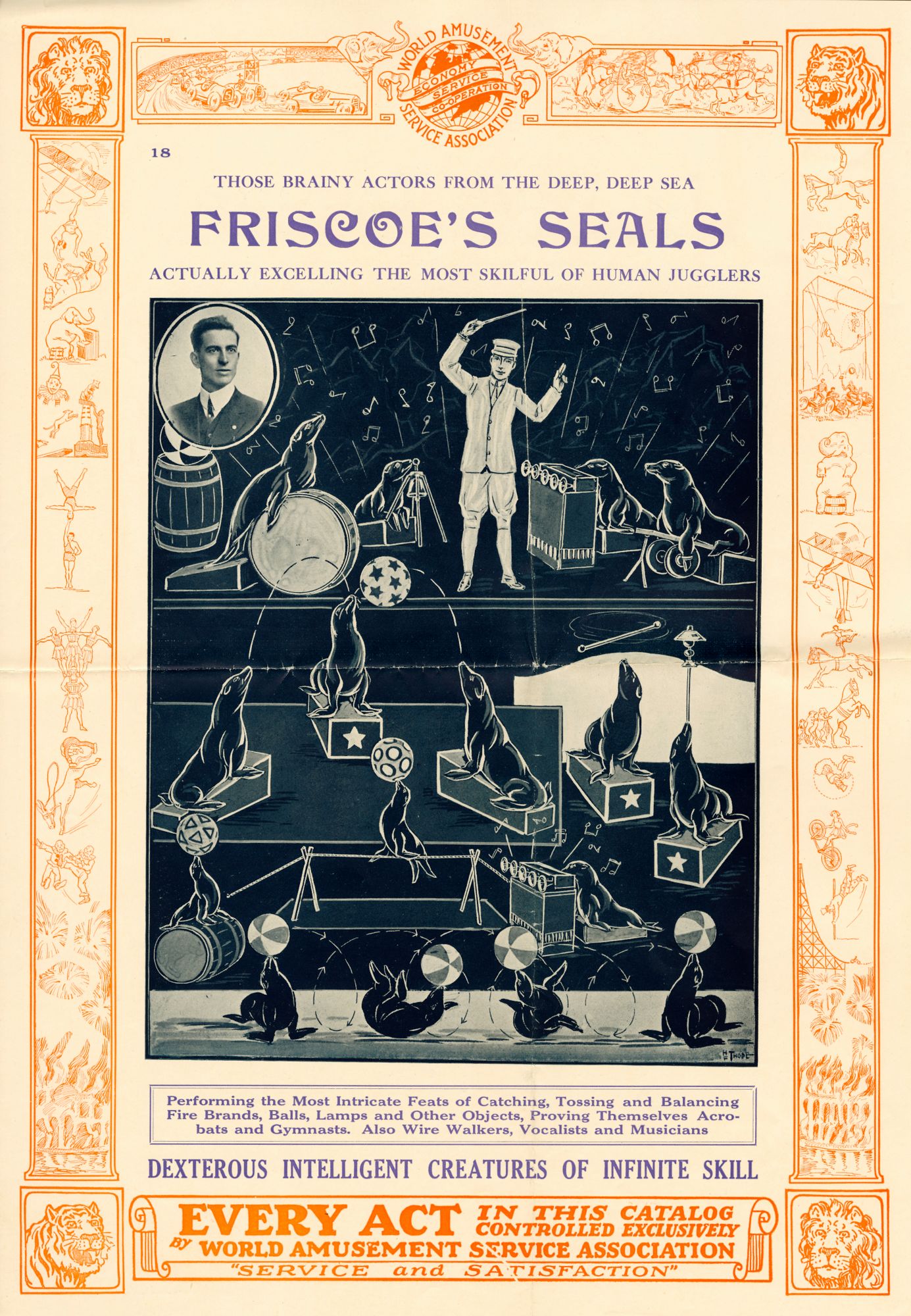
The Brainy Actors from the Deep, Deep Sea
Acrobats and Contortionists
Performers had little gimmicks to make their act interesting and attractive for venues. Likeness to animals, like frogs ( Figure 25 and Figure 26) were prevalent for, in this case, contortionists. Bats were also referenced for two performers, Irvin Davis the “World Famous Bat Man,” (Figure 28) and Coleman the Bat Wing Man (Figure 30), who used airplanes for their sky-diving acts.
The Giant Frog Man and World’s Greatest Gymnastic Entertainer
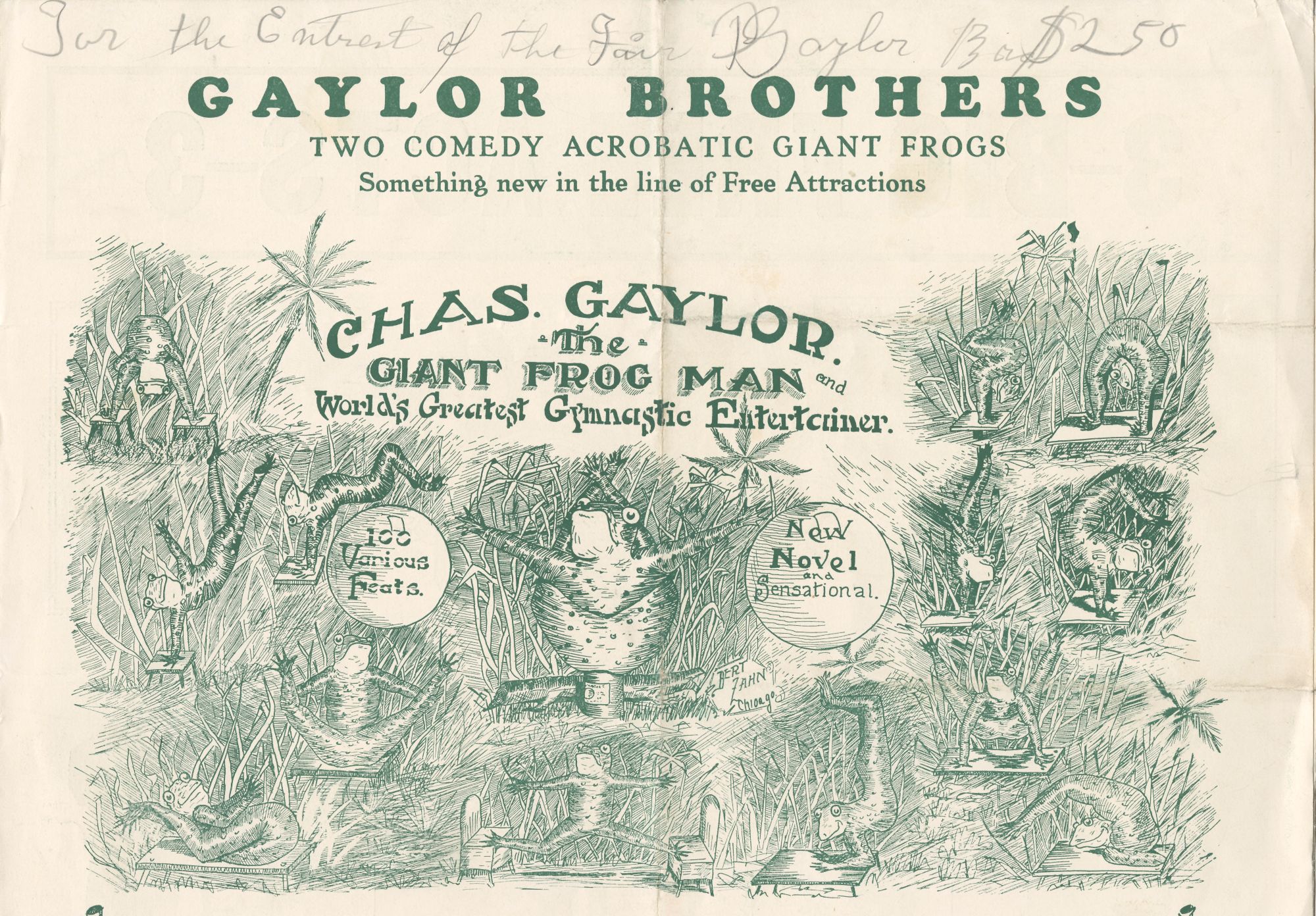
Charles Gaylor, the Giant Frog Man performed at the Lasalle Harvest Festival and Carnival in La Salle New York in 1921: “The Great Charles Gaylor: As the Giant Frog Man, an original Gymnastic act. America’s Greatest Hand Balancer and Equilibrist.25 In 1918, Gaylor was based in Detroit at 768 17th St., as listed in an advertisement in the weekly publication, The Billboard.26
“Circus Nite in Frogland”
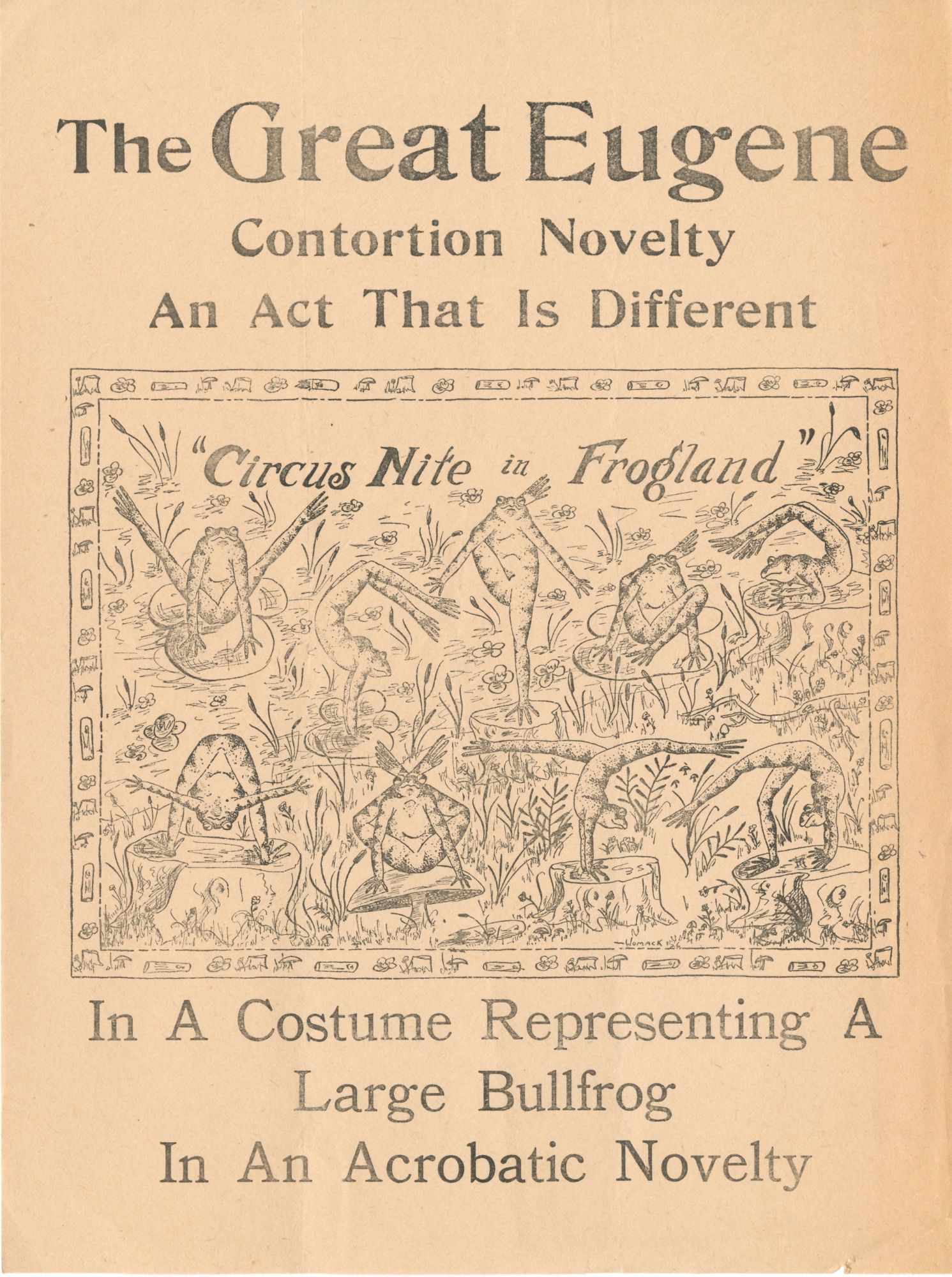
The Great Eugene was a performer operating in the 1930s. Eugene successfully performed in Goshen, Indiana in 1938, “High-pole free act by Great Eugene has been a hit in every city played.”27 Unlike 7, the Great Eugene was also known for his trapeze act (Figure 27).28
World Famous Batman
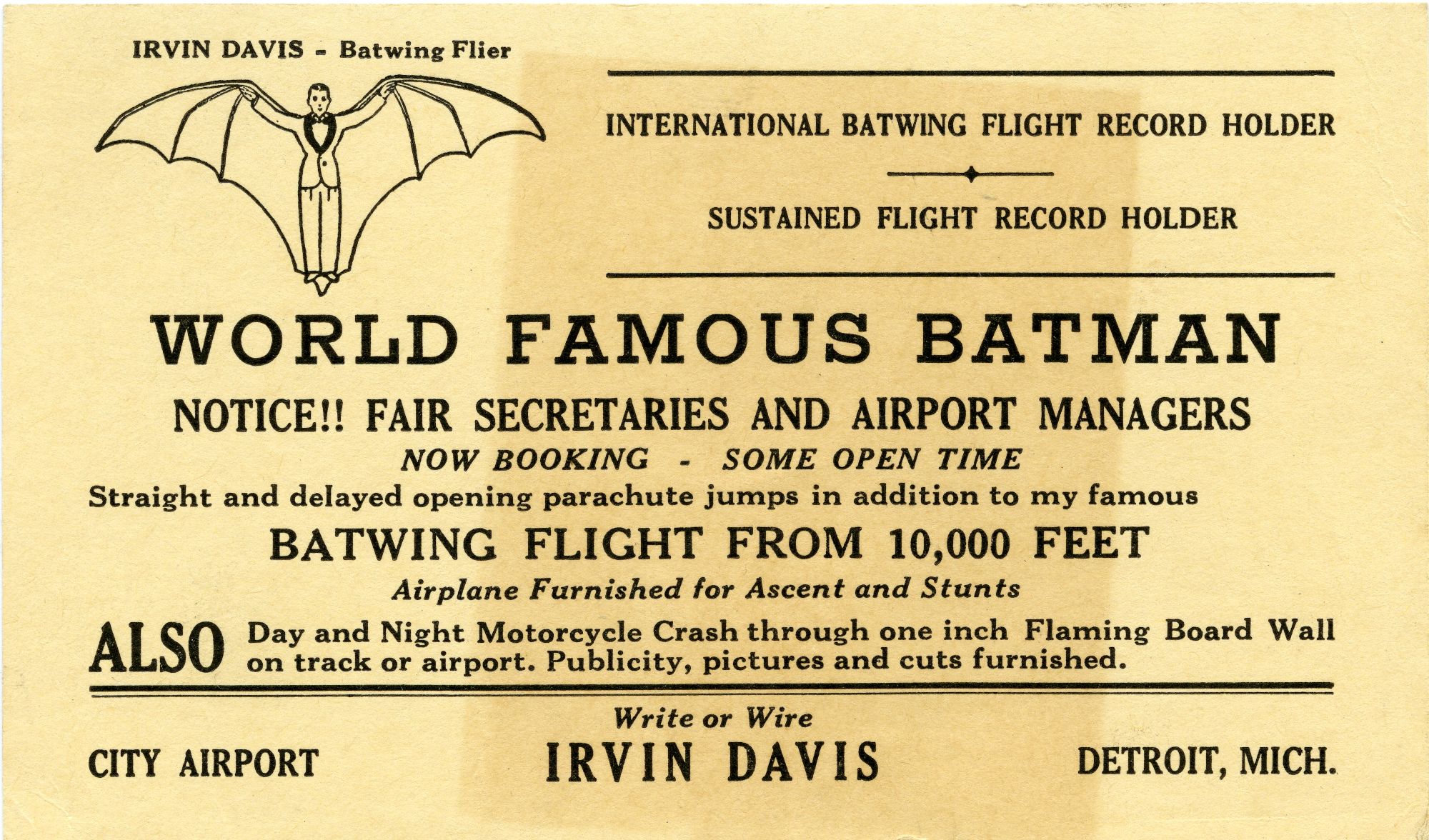
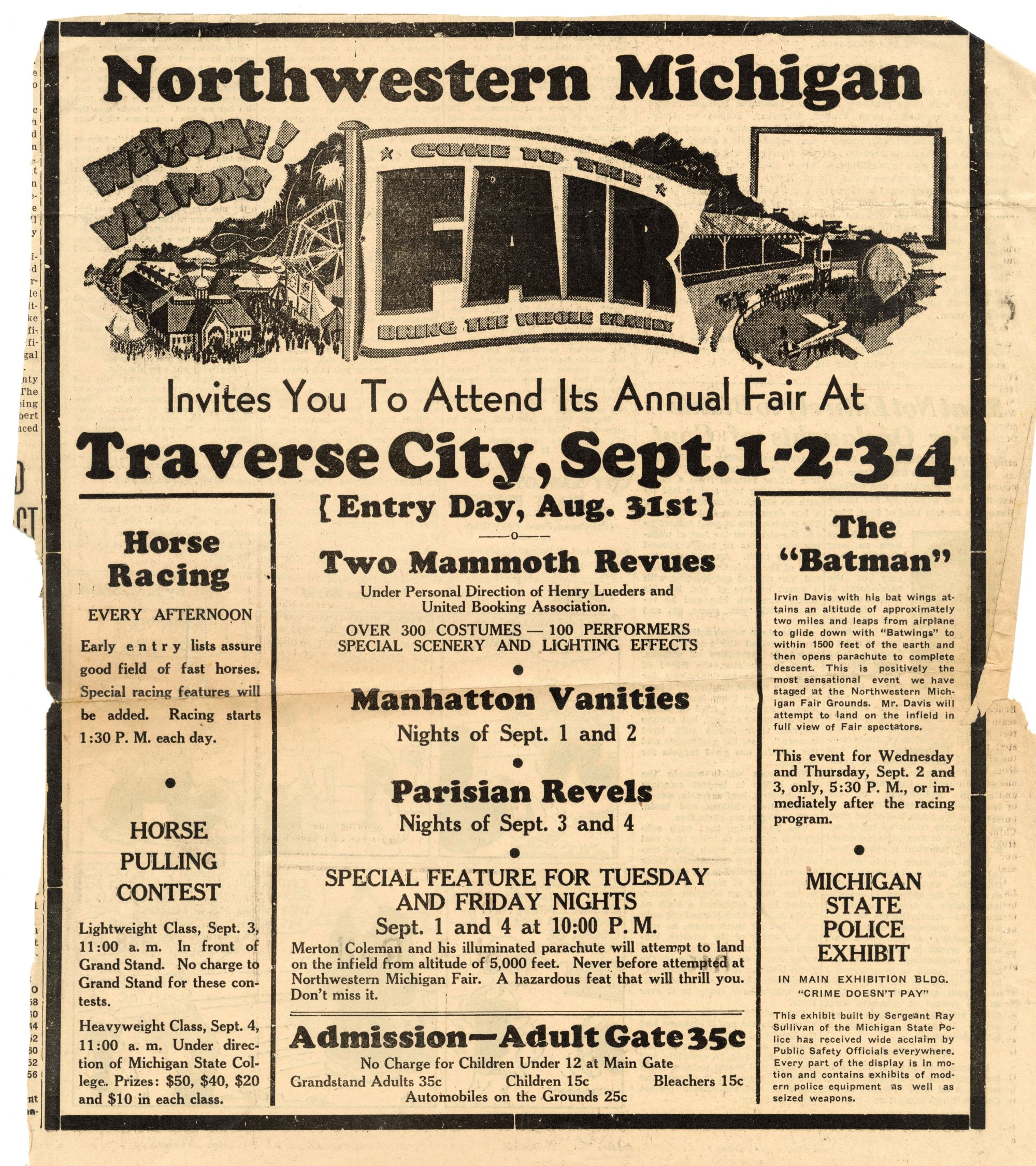
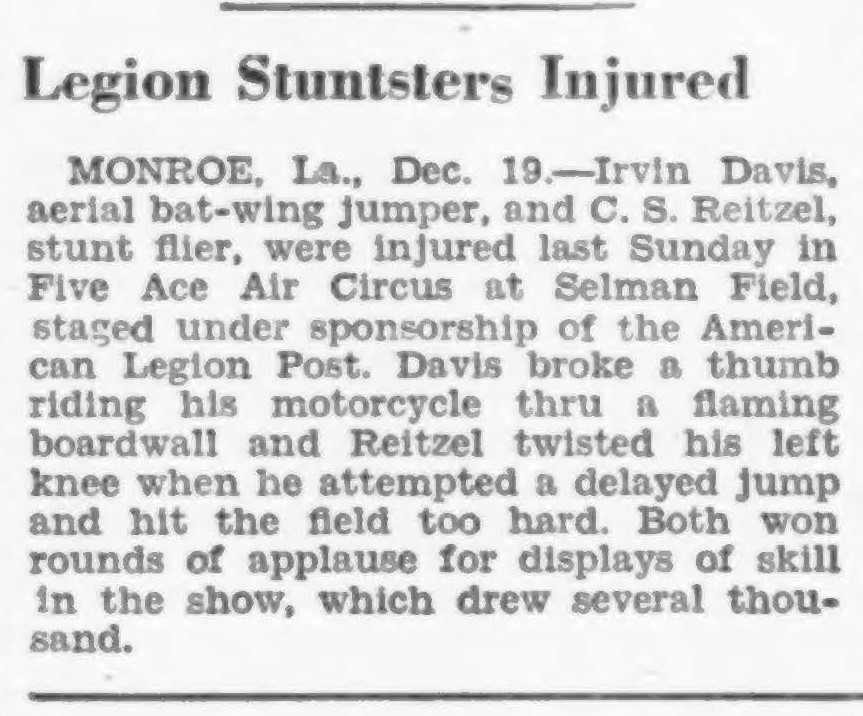
Of the two performers who self-identified as batmen, only one is known to have performed at the Northwestern Michigan Fair. The “World Famous Batman,” Irvin Davis performed in Traverse City on September 2-3, 1936 (Figure 29). The newspaper advertisement for the event indicates Davis’ act only included the aerial jump, however, at other fairs Davis preformed various dare-devil stunts, like riding a motorcycle through a ring of fire (Figure 30).
Coleman the Bat Wing Man
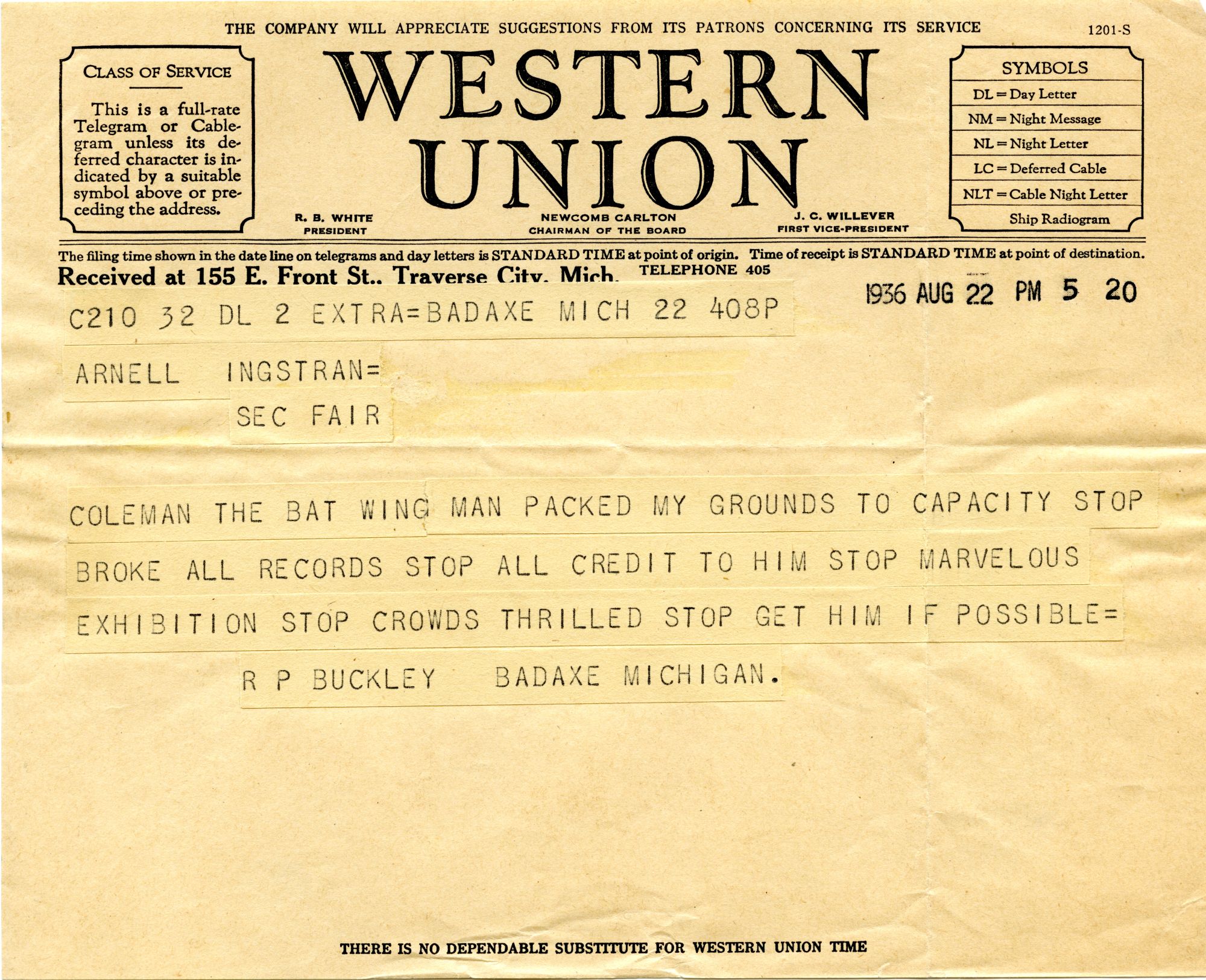
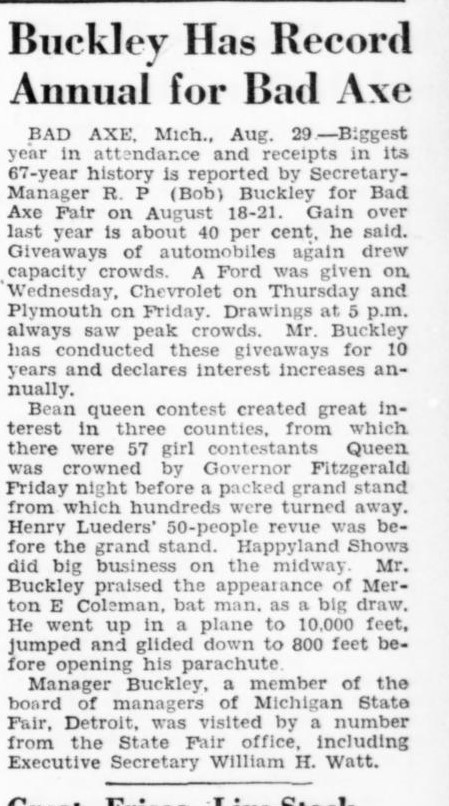
The telegram sent to “Arnell Instran” (Arnell Engstrom) in August 1936, was a letter of recommendation for “Coleman the Bat Wing Man. R. P. (Bob) Buckley, in which the manager of the Bad Axe fair testified to Coleman’s popularity among fair-goers (Figure 31). Buckley’s assertions are not without context, as a similar review in The Billboard echo Buckley’s claims: “Mr. Buckley praised the appearance of Merton E. Coleman, bat man, as a big draw. He went up in a plane to 10,000 feet, jumped and glided down to 800 feet before opening his parachute” (Figure 32).
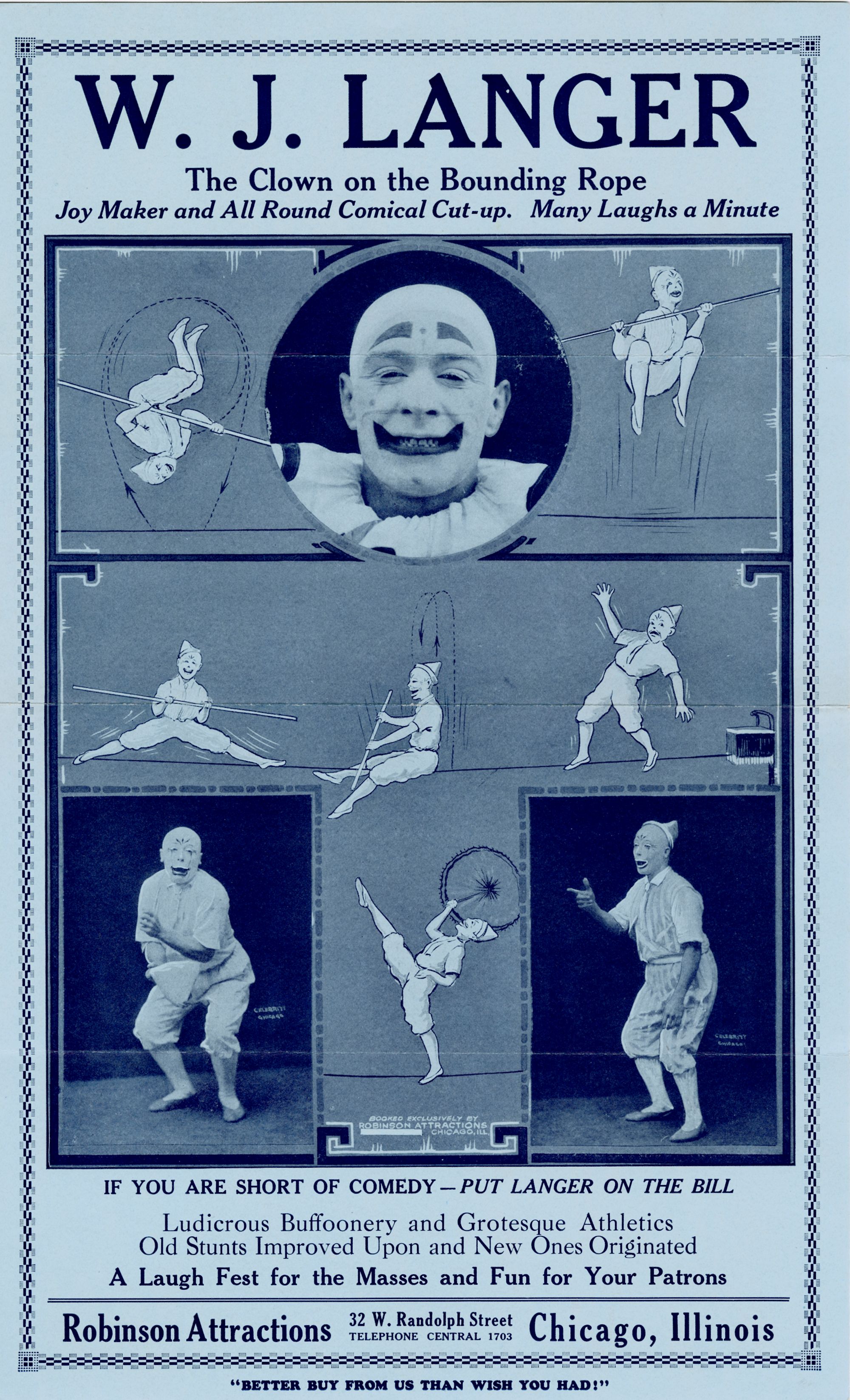
Three Famous Wrinkle Chasers in a Grotesque Comedy Bar Act!
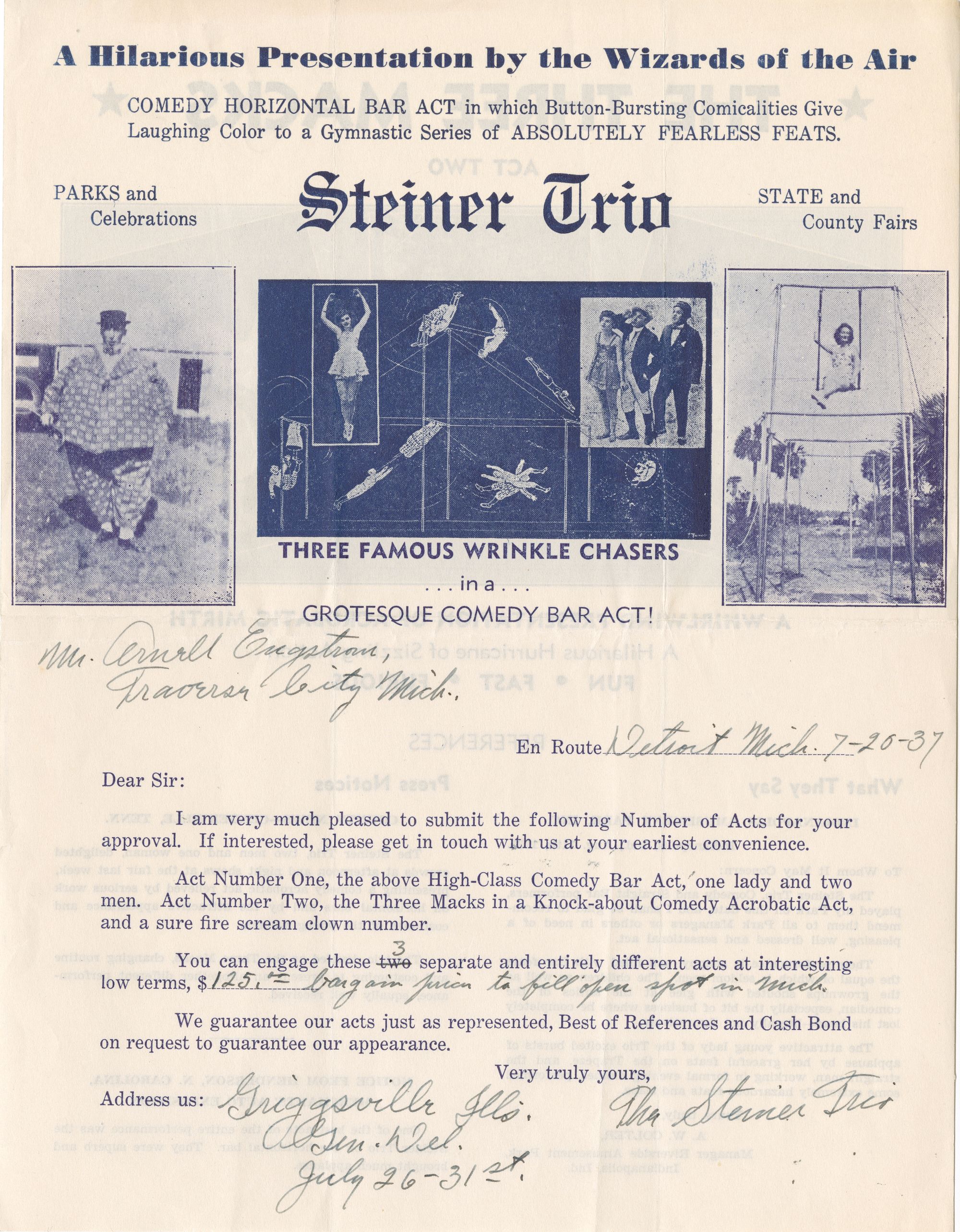
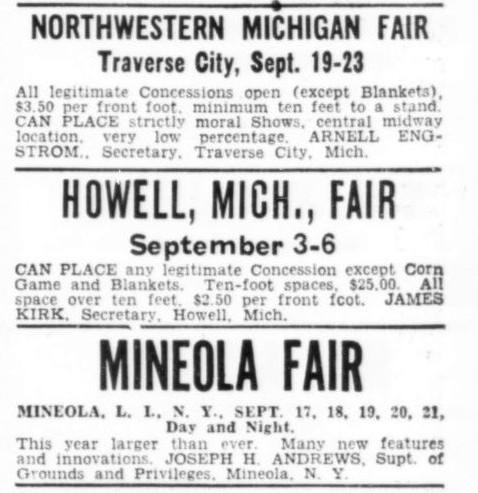
Many of the promotional posters and materials sent to the Northwestern Michigan Fair were addressed specifically to Arnell Engstrom (Figure 33). It is clear that Engstrom was the contact person for those interested in performing or setting up concessions at the fair. For a while LHC staff pondered how exactly these performers and agencies from the many corners of the United States knew Engstrom’s name specifically. Word of mouth, Engstrom’s active participation in the Michigan Fair Association (Figure 3), and advertisements in the popular magazine, The Billboard (Figure 34) are identified as ways through which performers and concessioners would find Engstrom’s name.
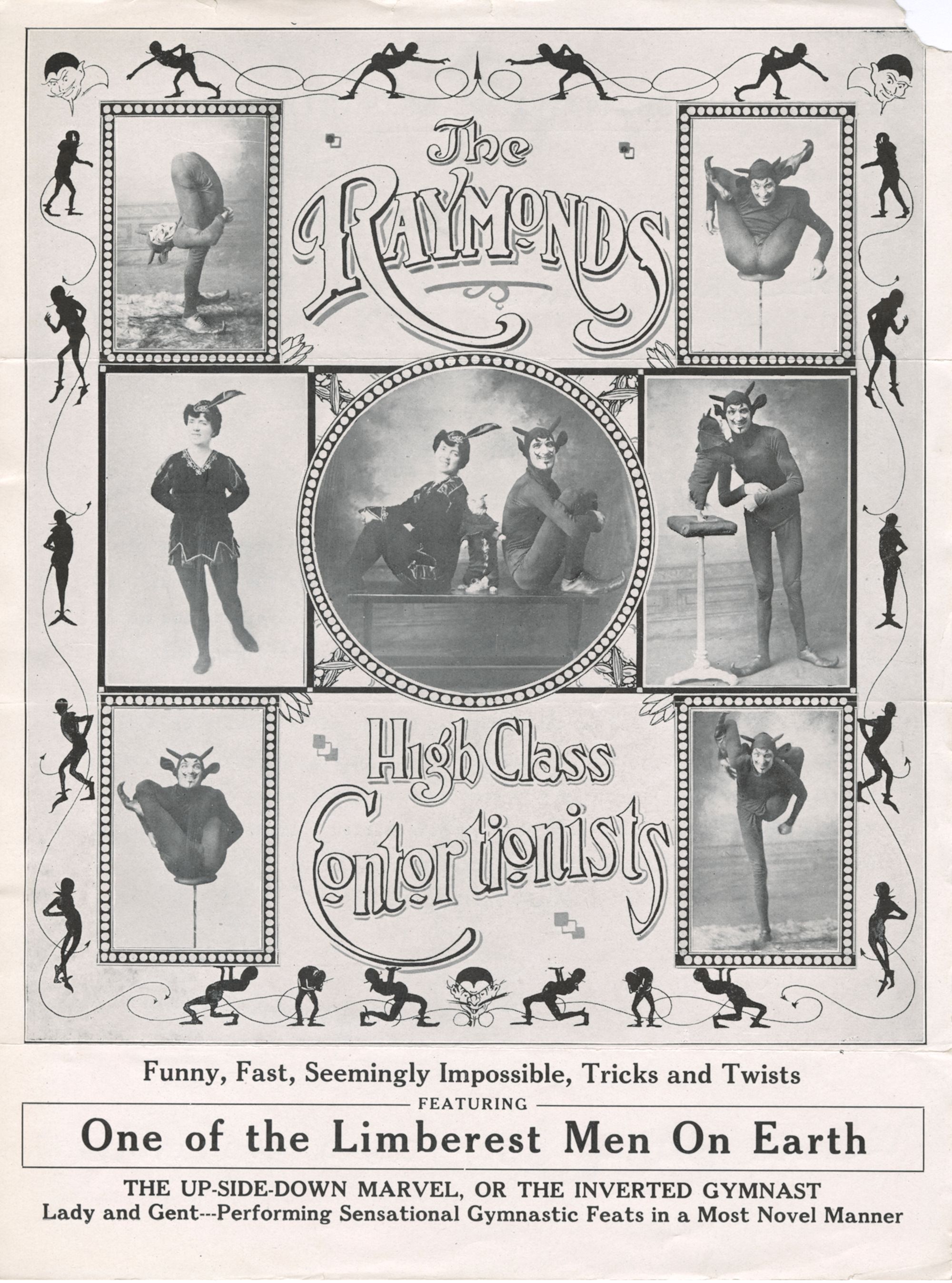
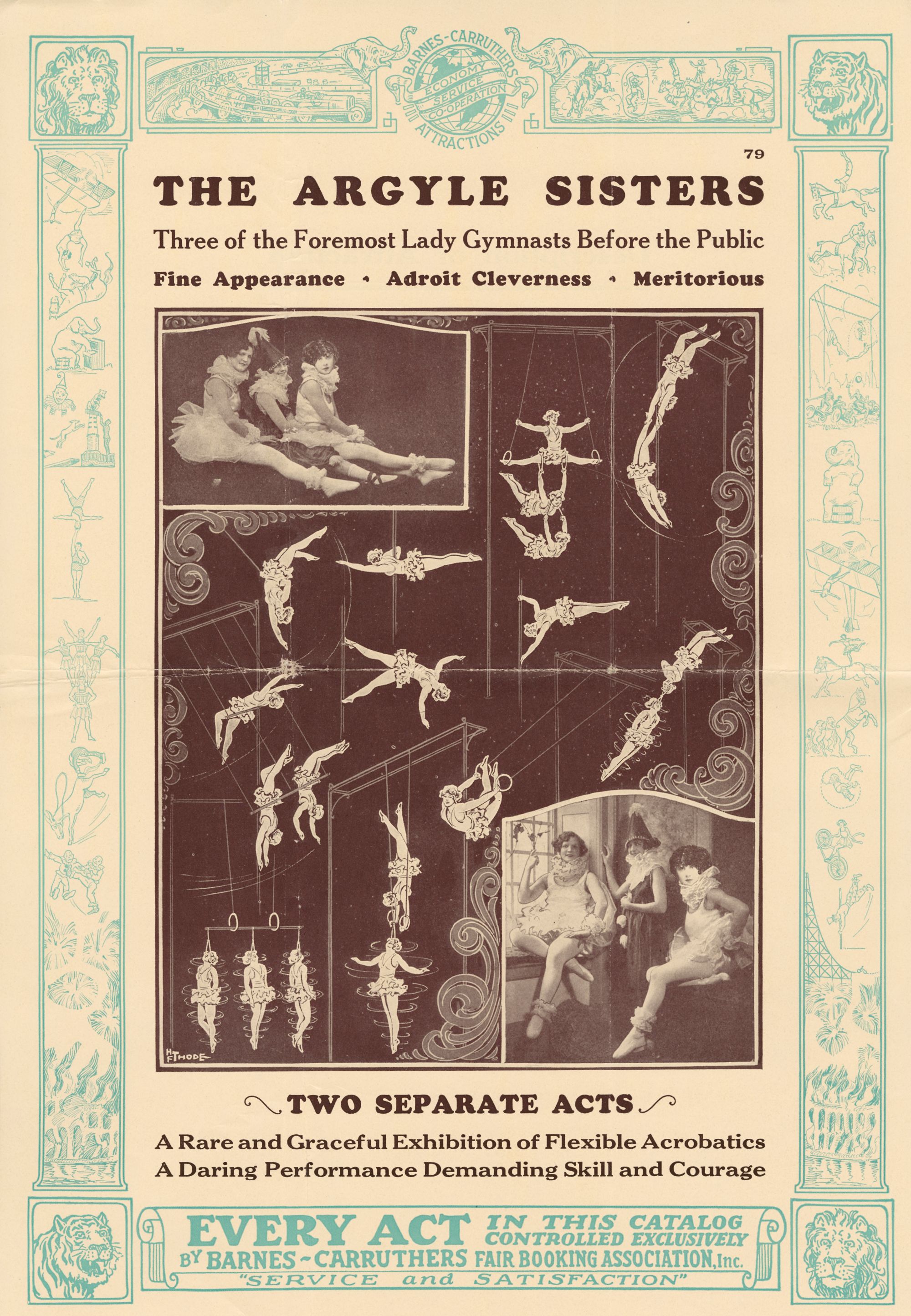
“Lady and Gent – Performing Sensational Gymnastic Feats in a Most Novel Manner”
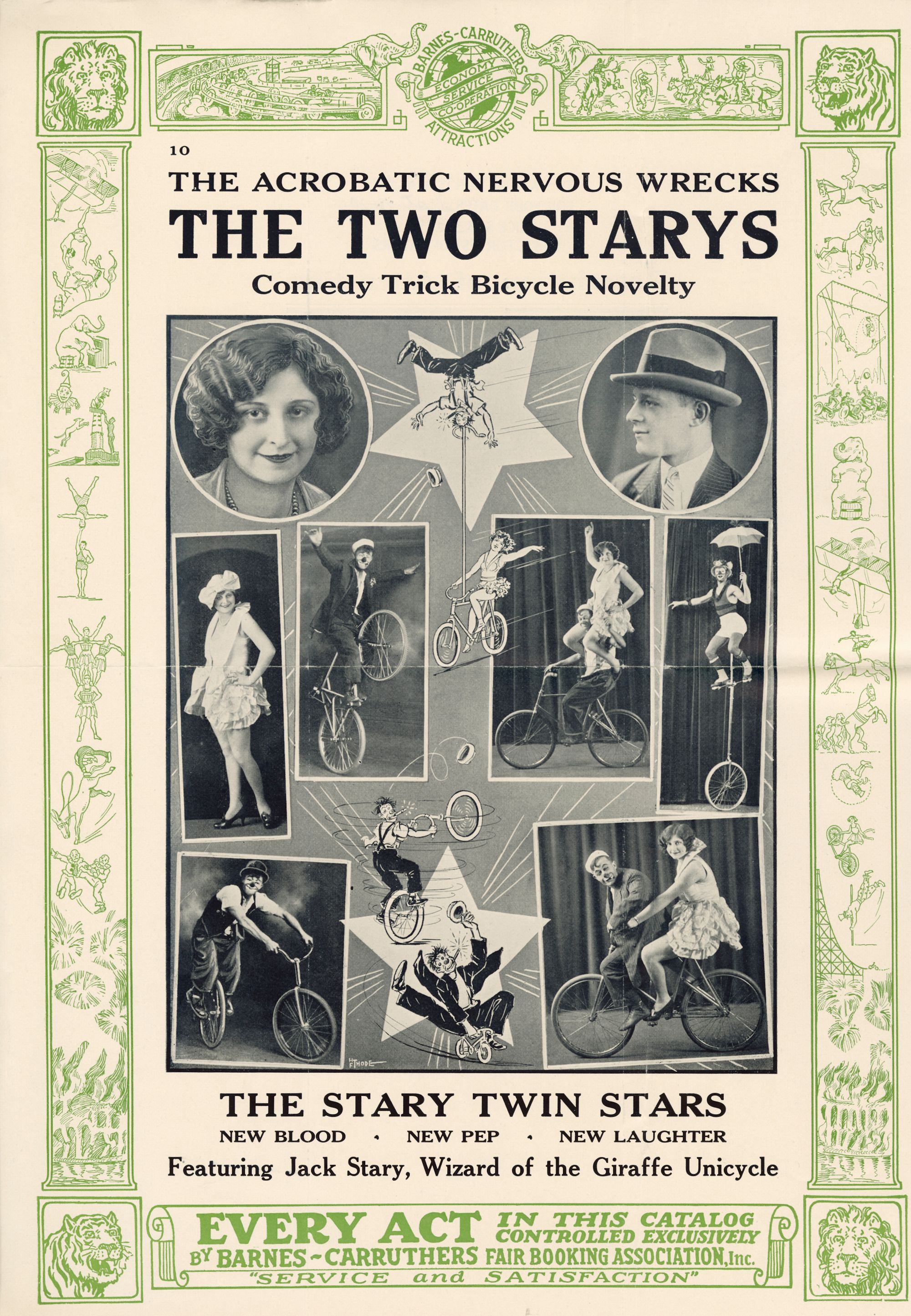
Ludicrous Buffoonery and Grotesque Athletics -- Old Stunts Improved Upon and New Ones Originated
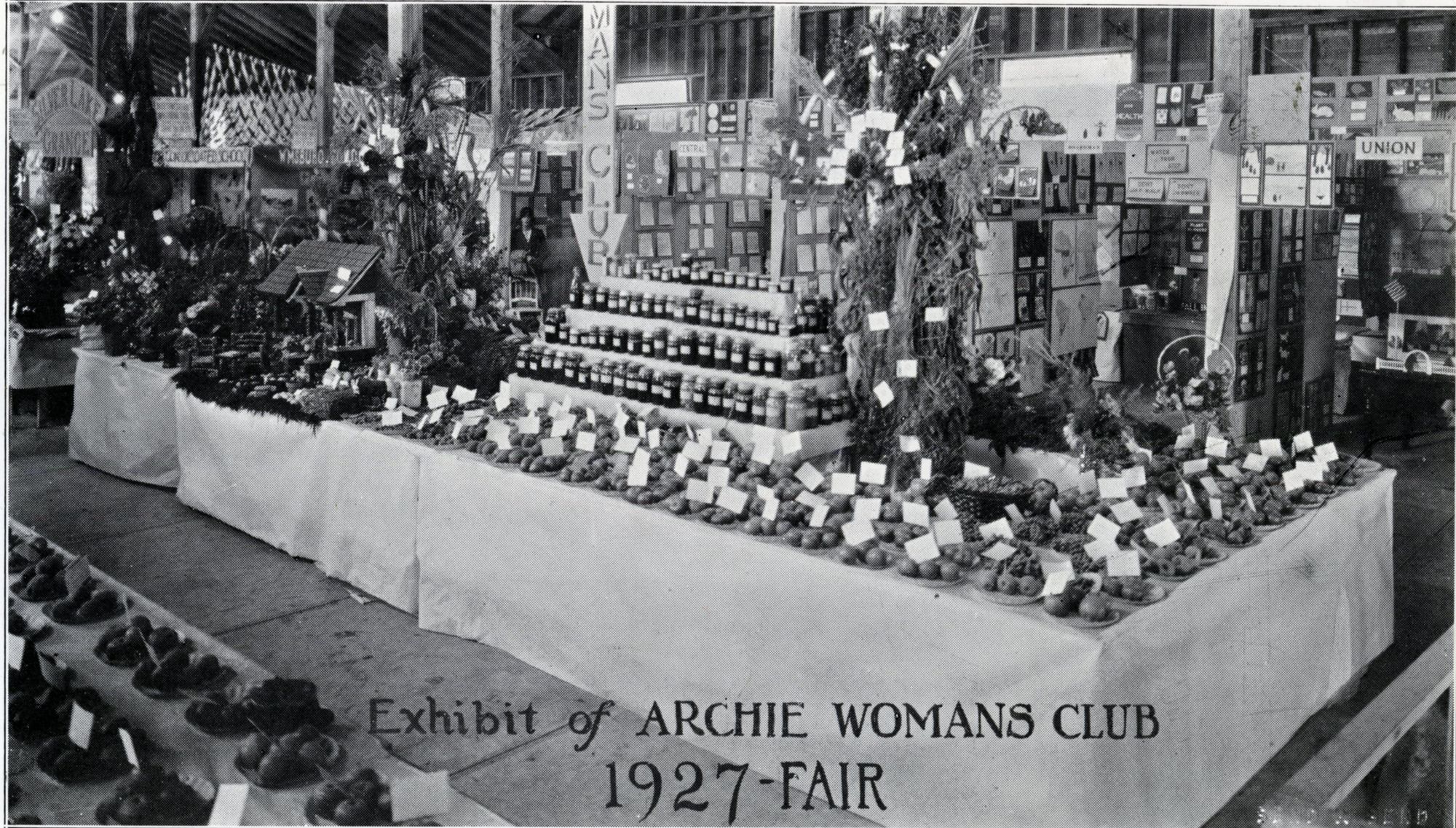
Concessions
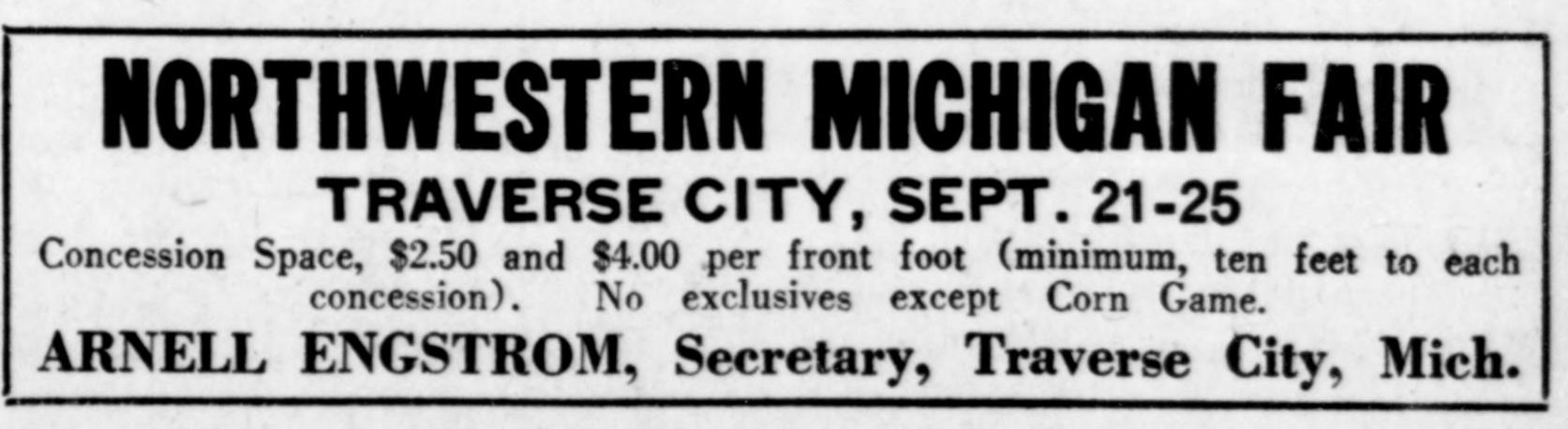
Correspondences between Engstrom and fair concessioners reveal the types of concessions available for fair-goers. The types of concessions are not so different to contemporary food found at the fair, for example, chocolate coated ice-cream (Figure 39).
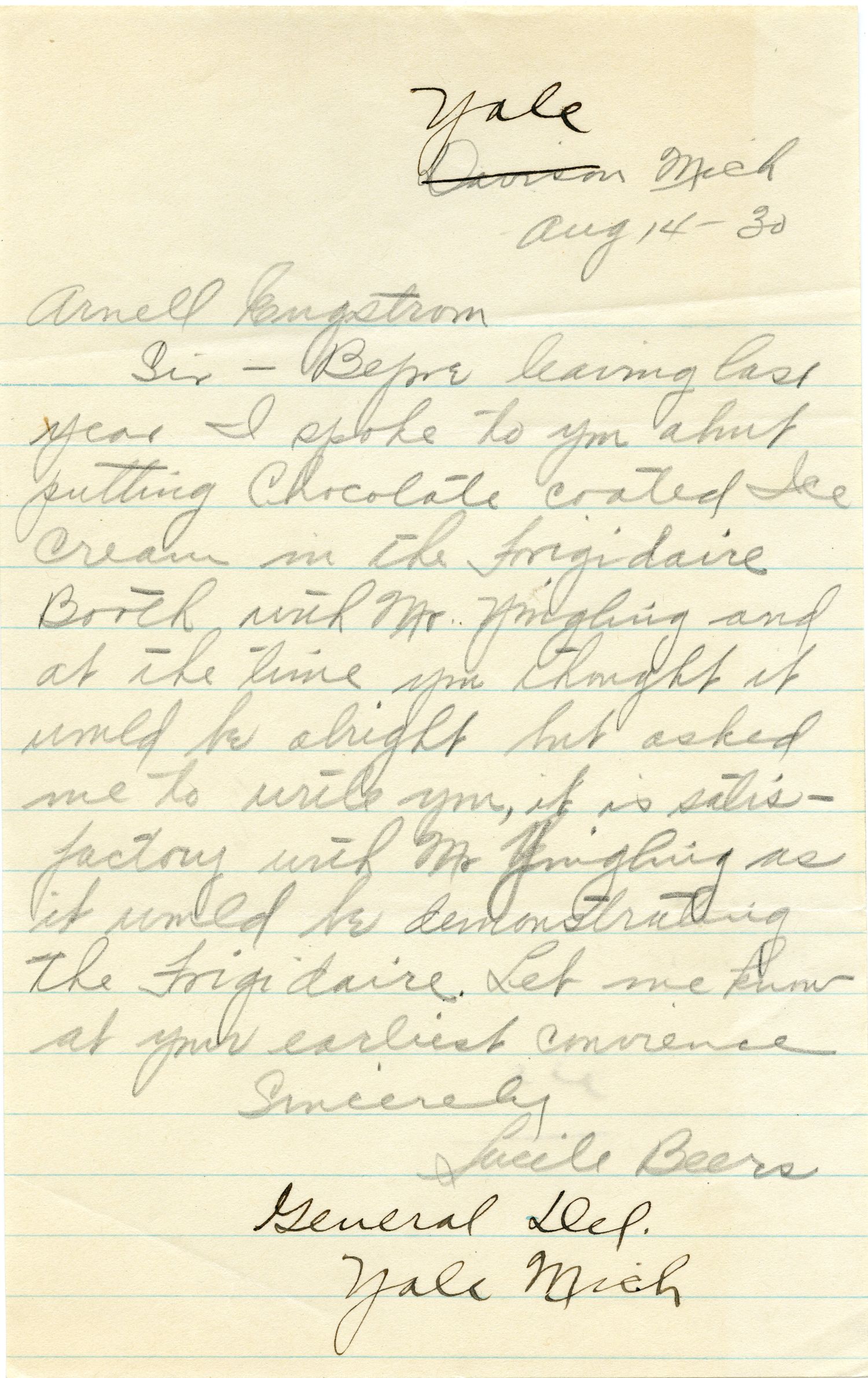
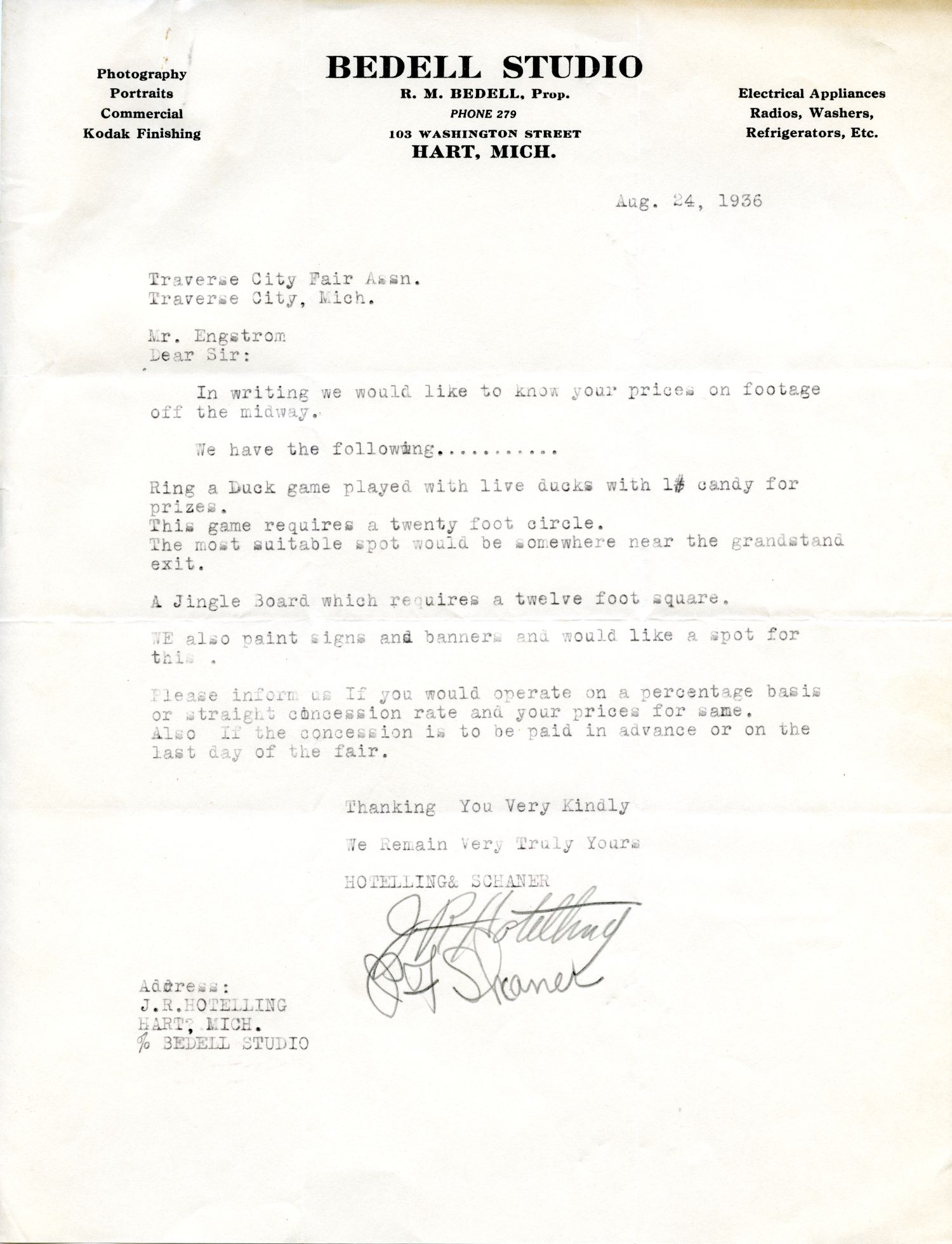
Parties interested in setting up games or concessions at the fair would contact Arnell Engstrom, often times inquiring about the cost of footage. In this correspondence, Hotelling and Schaner of Bedell Studio of Hart, Michigan boasted three attractions, including a ring toss game with “live ducks” for a prize of 1 cent candy (Figure 40).
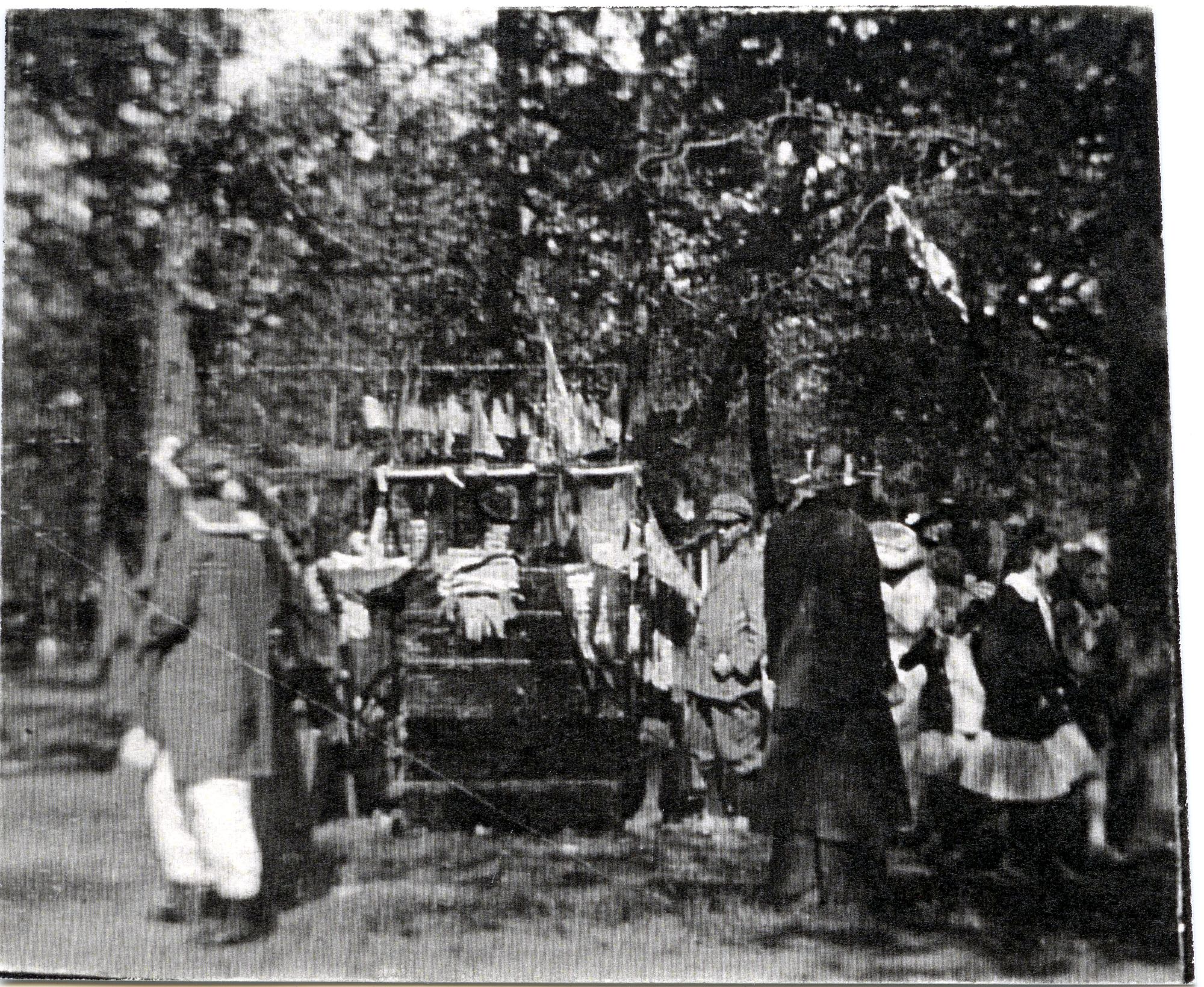
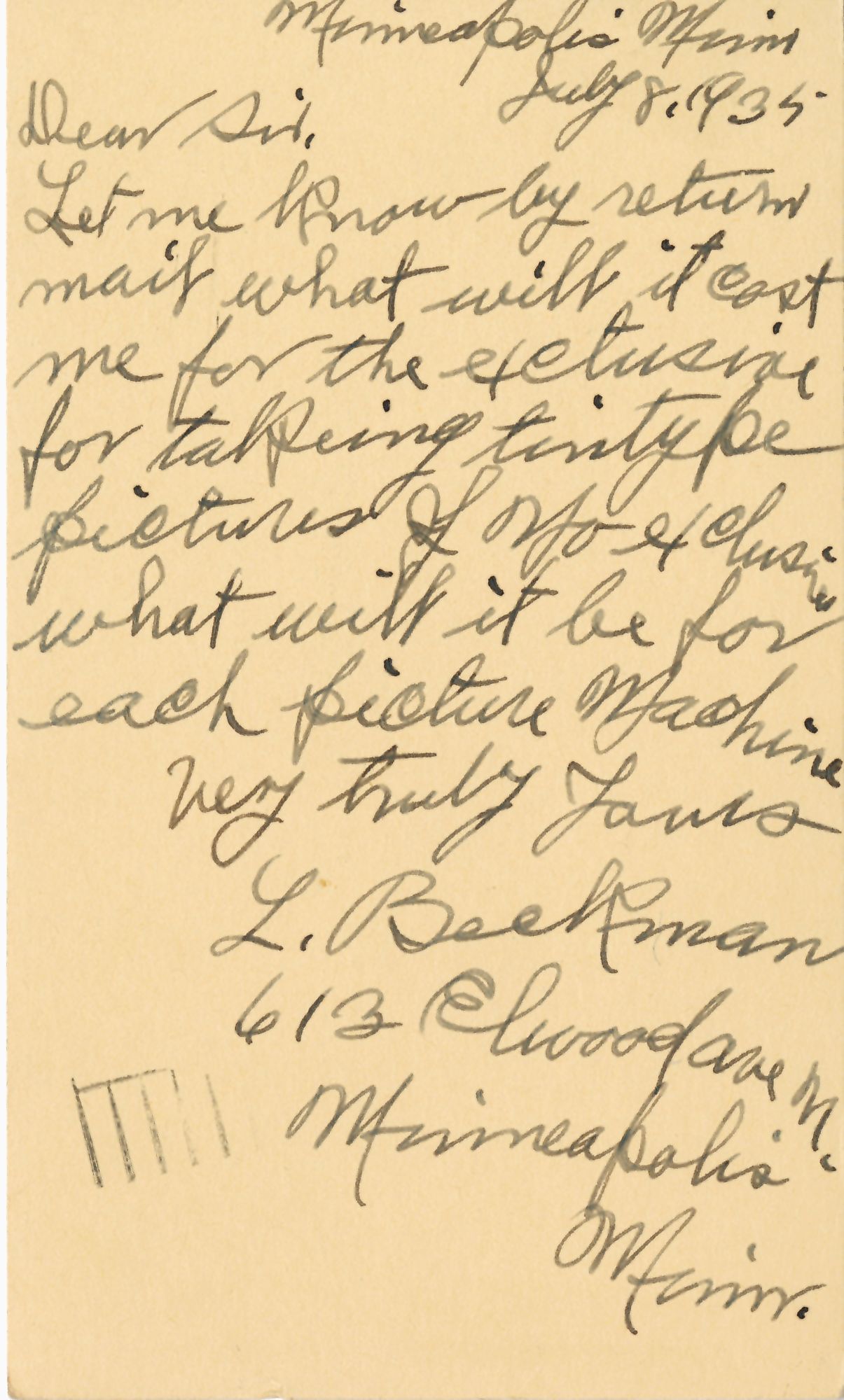
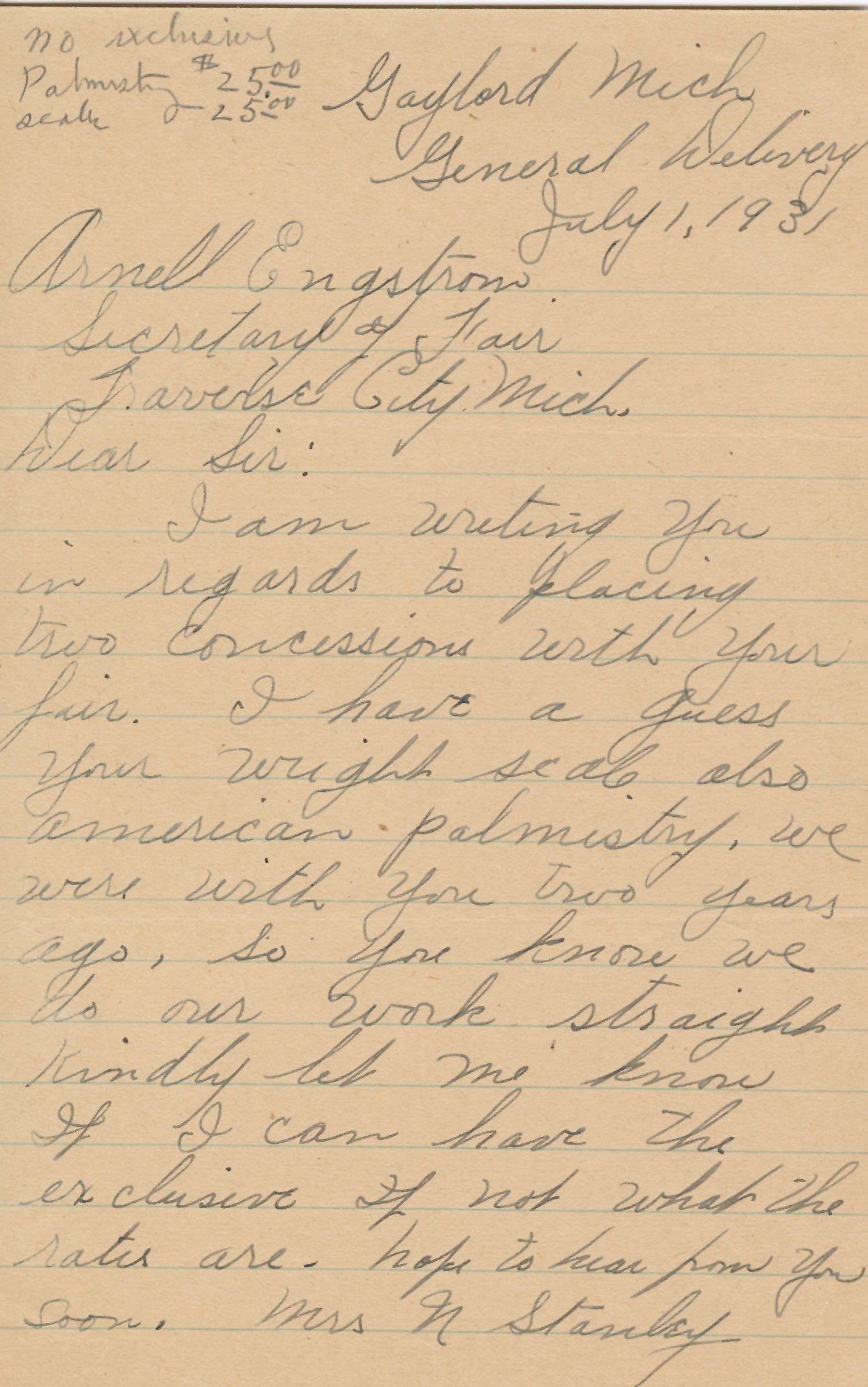
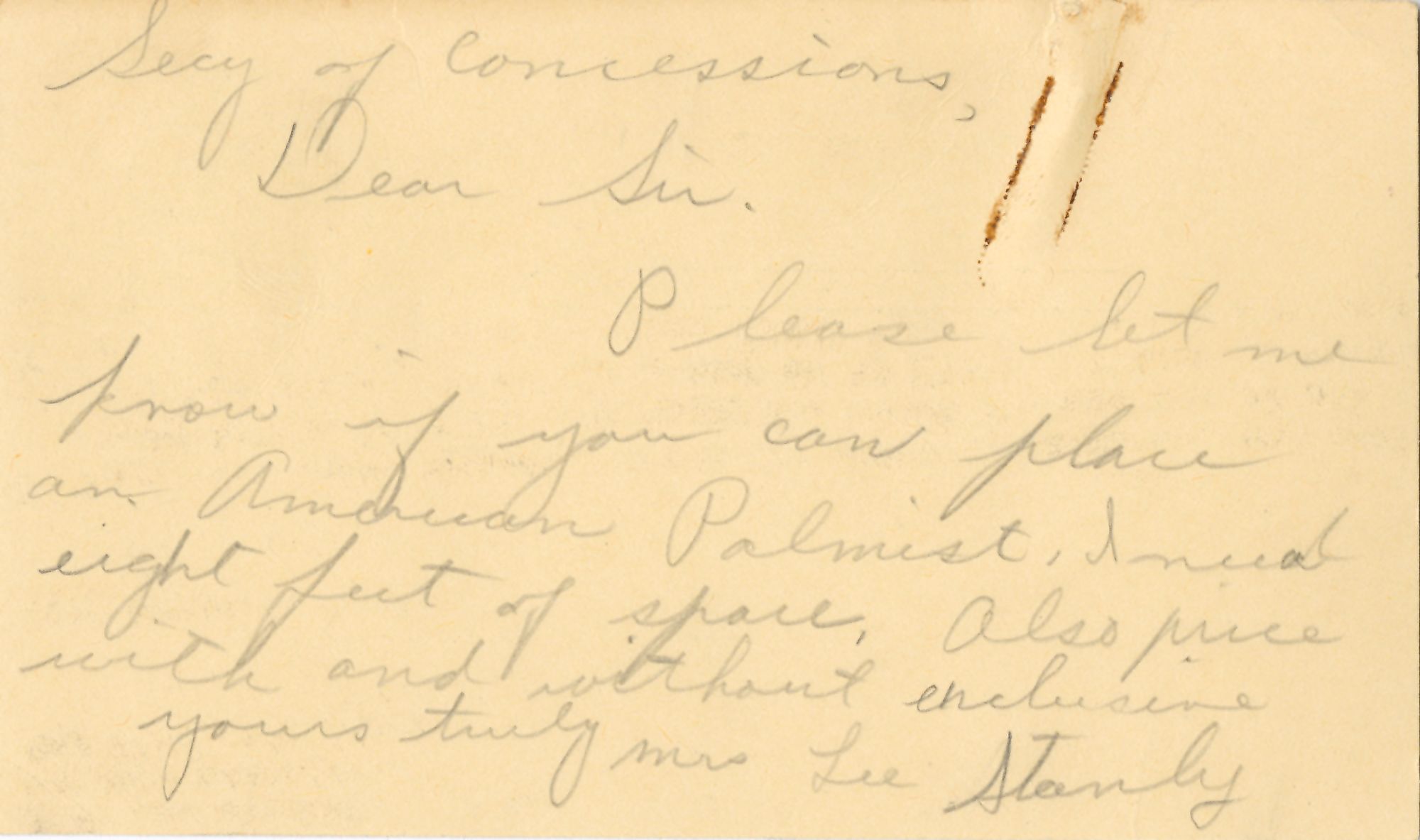
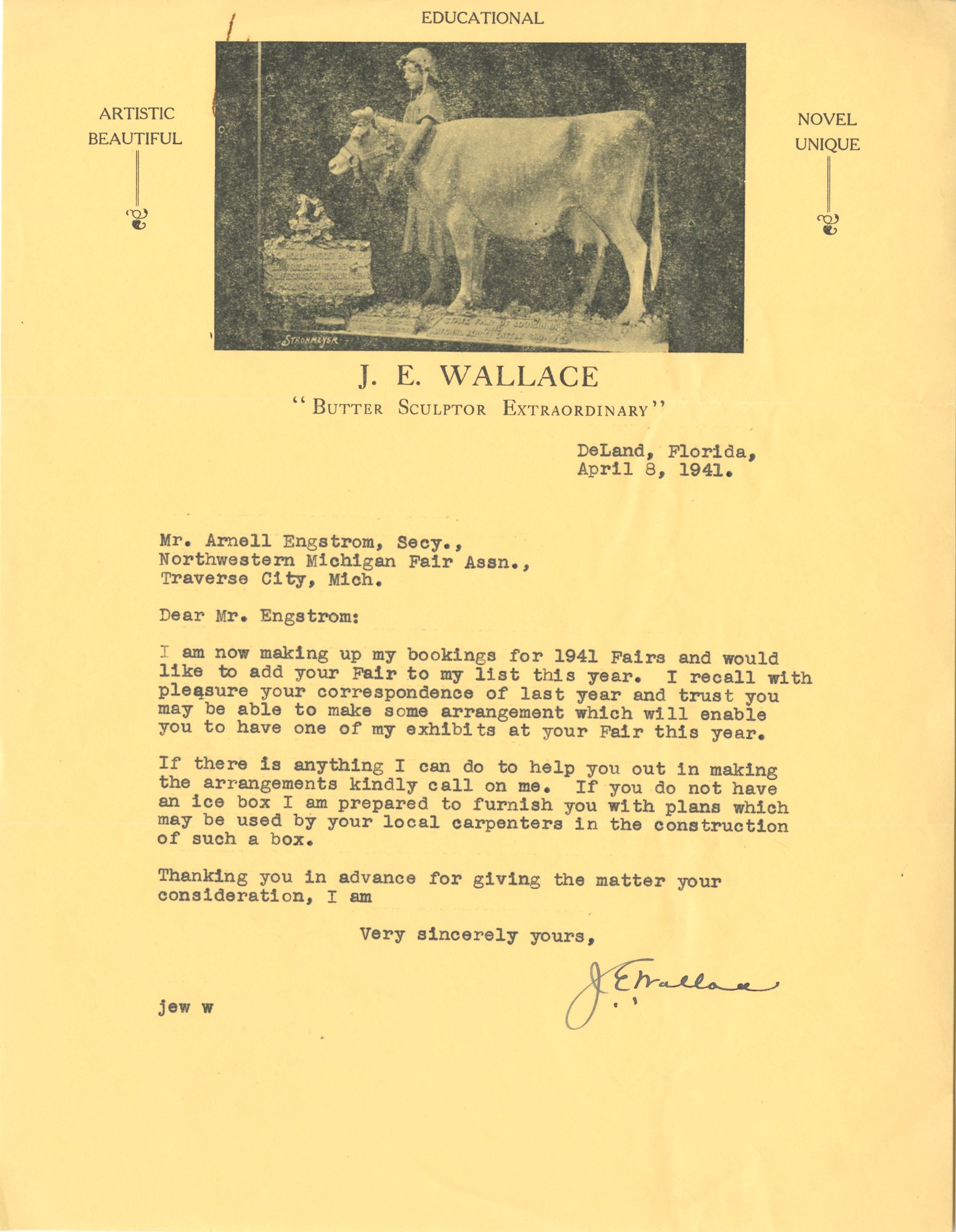
Novelties were also amongst the concessions. Vendors would sell banners, flags, and other ephemera at the fair with permission from the Fair Association (Figure 41). They too had to inquire Engstrom about space and sometimes, about the opportunity to be the exclusive vendor for a specific sale or service, like photography concession for tin type photographs (Figure 42) and palmistry (Figure 43 and Figure 44).
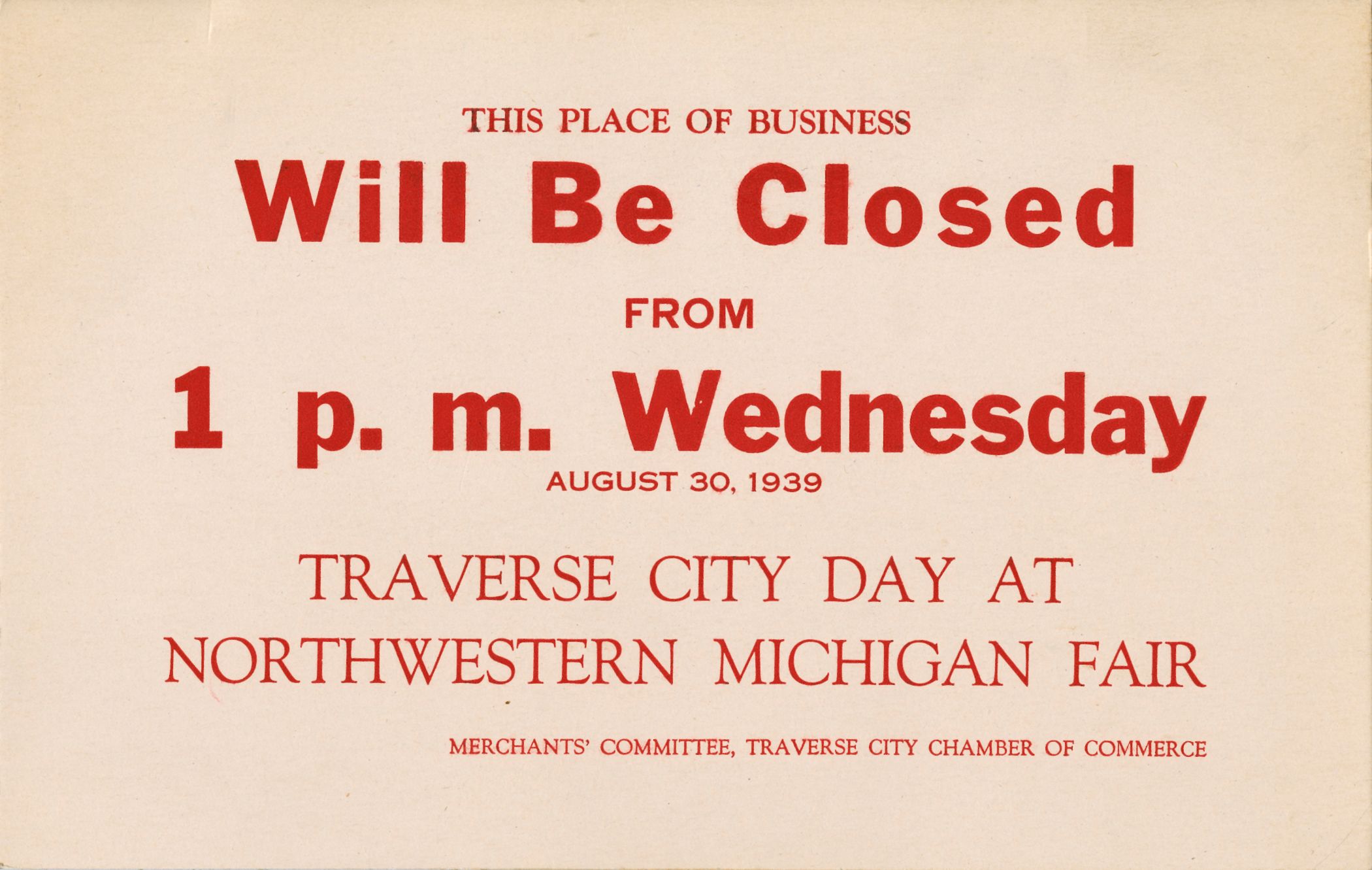
Closed for Fair Day
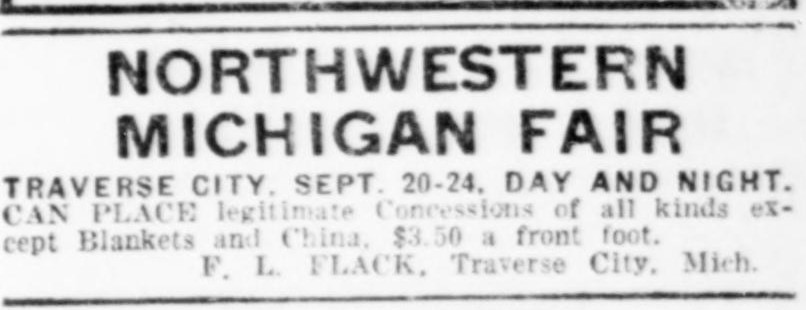
For over a century, the Grand Traverse region has hosted annual fairs, which for many years was the platform for local agriculturalists, professionals, and hobbyists to gather and exhibit their hard work. In the twentieth century, performers, clowns, dare-devils, carnival rides, and candy floss became part of the fair experience. Former secretary of the Northwestern Michigan Fair, Arnell Engstrom’s well-kept records highlight fair amusements and concessions for nearly three decades, showcasing the development and the trends of popular live entertainment. County fairs, circuses, and carnivals have a complicated and sometimes, dark, underbelly, which this article does not fully expand upon. However, it should be noted that prejudice against Roma and so-called “carnies” did not evade the Northwestern Michigan Fair’s administration or hiring decisions. One instance was reported in the Traverse City Record Eagle, when two individuals approached F.L. Flack (Figure 45), a carnival manager who worked with the fair since 1918.29
Gallery
World Amusement Service Association
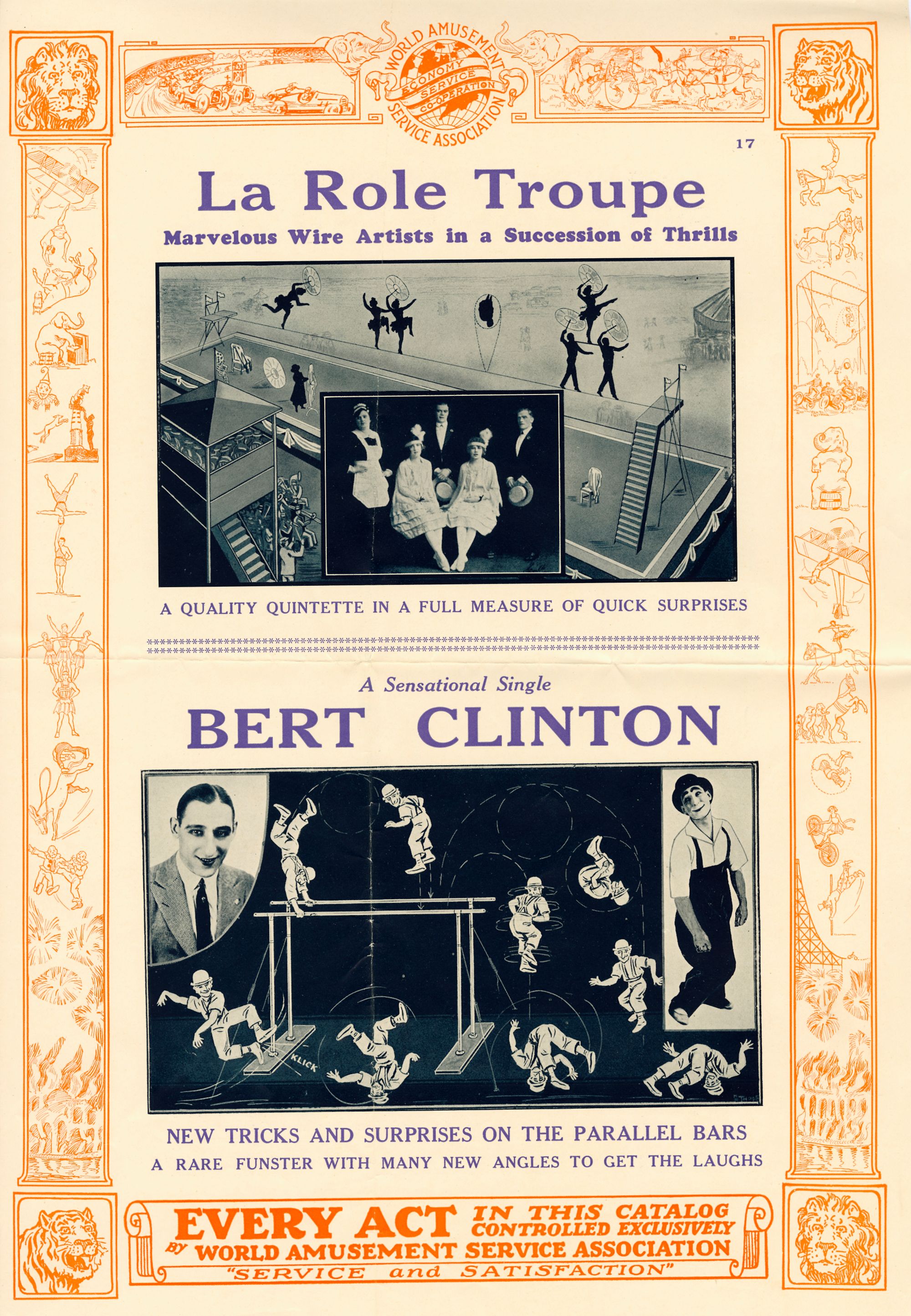
Fine Appearance – Adroit Cleverness -- Meritorious
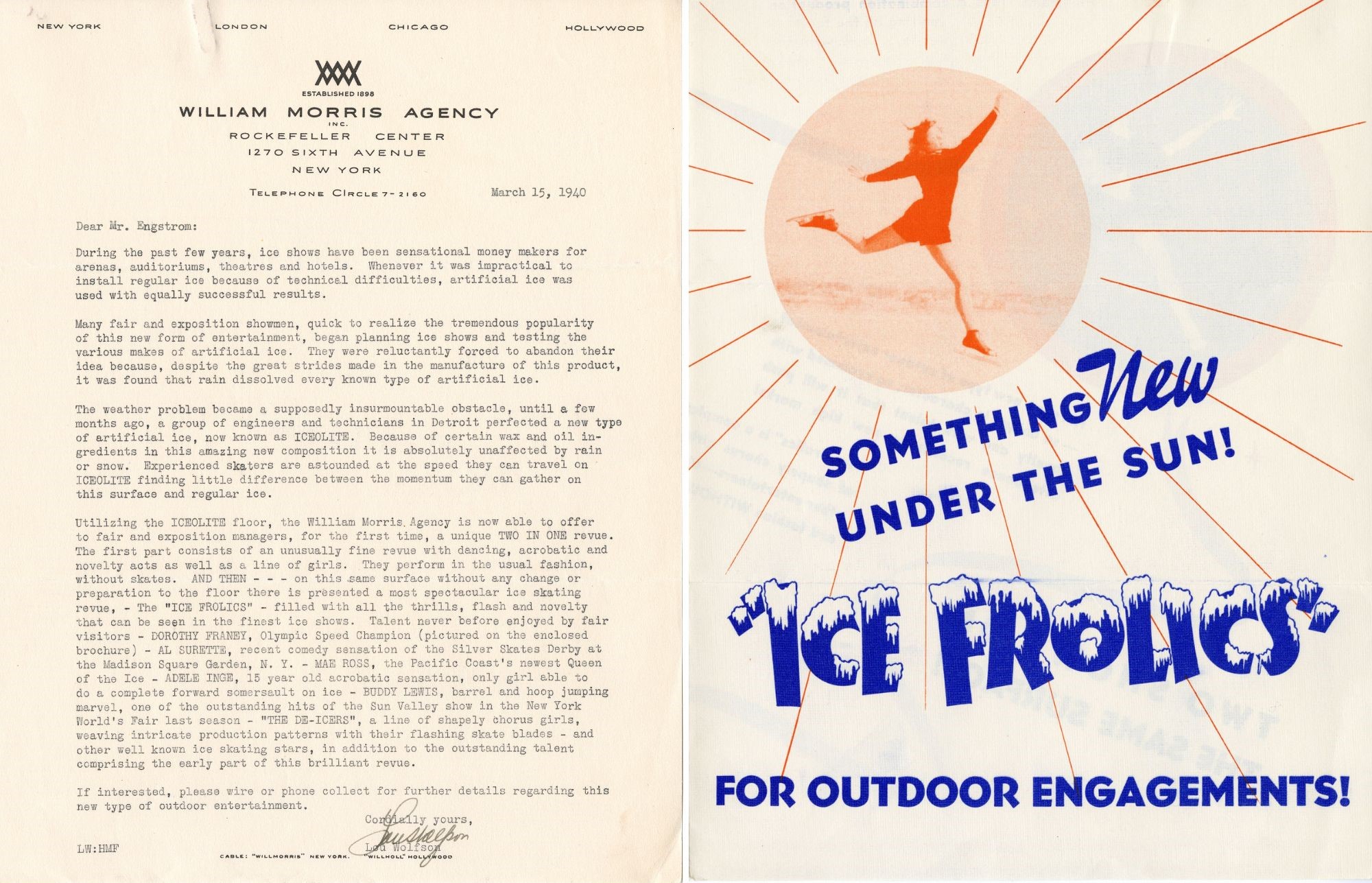
Something New Under the Sun!
The Acrobatic Nervous Wrecks -- “New Blood – New Pep – New Laughter”
Butter Sculptor Extraordinary
[1] “Arnell Engstrom papers, 1952-1970 (majority within 1960-1968),” University of Michigan Bentley Historical Library, accessed July 15, 2025, https://findingaids.lib.umich.edu/catalog/umich-bhl-851227.
[2] The Billboard, April 4, 1936, 39, https://archive.org/details/sim_billboard_1936-04-04_48_14/page/39/mode/1up.
[3] Grand Traverse Herald, August 26, 1869, 3, CMU Digital Michigan Newspapers, https://digmichnews.cmich.edu/?a=d&d=GrandTraverseGTH18690826-01.1.3; Grand Traverse Herald, August 16, 1877, 5, CMU Digital Michigan Newspapers, https://digmichnews.cmich.edu/?a=d&d=GrandTraverseGTH18770816-01.1.5.
[4] Grand Traverse Herald, August 22, 1878, 1, CMU Digital Michigan Newspapers, https://digmichnews.cmich.edu/?a=d&d=GrandTraverseGTH18780822-01.1.1.
[5] Grand Traverse Herald, August 22, 1878, 1, CMU Digital Michigan Newspapers, https://digmichnews.cmich.edu/?a=d&d=GrandTraverseGTH18780822-01.1.1.
[6] Grand Traverse Herald, October 10, 1878, 1, CMU Digital Michigan Newspapers, https://digmichnews.cmich.edu/?a=d&d=GrandTraverseGTH18781010-01.1.1.
[7] Grand Traverse Herald, January 17, 1884, 5, CMU Digital Michigan Newspapers, https://digmichnews.cmich.edu/?a=d&d=GrandTraverseGTH18840117-01.1.5.
[8] Grand Traverse Herald, September 23, 1897, 4, CMU Digital Michigan Newspapers, https://digmichnews.cmich.edu/?a=d&d=GrandTraverseGTH18970923-01.1.4; Grand Traverse Herald, October 24, 1907, 3, CMU Digital Michigan Newspapers, https://digmichnews.cmich.edu/?a=d&d=GrandTraverseGTH19071024-01.1.3.
[9] Also see, Northwestern Michigan Fair, accessed July 22, 2025, https://www.northwesternmichiganfair.net/.
[10] 1927 is also the earliest mention of Arnell Engstrom as the secretary of the Northwest Michigan Fair Association in the local newspaper, which coincides with the earliest date of Engstrom’s fair association documents in the Local History Collection. Traverse City Record Eagle, May 12, 1921, 11, Newspaper Archive; Traverse City Record Eagle, September 16, 1921, 1, Newspaper Archive; Traverse City Record Eagle, September 9, 1927, 1, Newspaper Archive.
[11] The Billboard, April 4, 1936, 39, https://archive.org/details/sim_billboard_1936-04-04_48_14/page/39/mode/1up; “Four Prominent Figures in the Michigan Fairdom,” The Billboard, September 24, 1938, 42, https://archive.org/details/sim_billboard_1938-09-24_50_39/page/42/mode/1up.
[12] For more information pertaining to animals in circuses see, Virginia Thomas, “For Your Entertainment: Researching Animal Cruelty Under the Big Top,” Michigan Bar Journal 97 (December 2018): 40-41. http://www.michbar.org/file/barjournal/article/documents/pdf4article3552.pdf.
[13] See, Julie Cappirllo, “Behind the Curtain: The Dark Reality of Circus Animal Abuse,” blog, World Animal Protection US, June 17, 2025, https://www.worldanimalprotection.us/latest/blogs/circus-animal-abuse/.
[14] Circuses and Traveling Shows, ASPCA, accessed August 11, 2025, https://www.aspca.org/about-us/aspca-policy-and-position-statements/circuses-and-traveling-shows.
[15] “Traveling Exotic Animal Acts,” MSPCA Angell, accessed August 11, 2025, https://www.mspca.org/animal_protection/circus-animal-welfare/. See, Anastasia Niedrich, “Overview of Animals in Circuses and the Laws Governing Them,” Michigan State University Animal Legal & Historical Center, 2010, https://www.animallaw.info/article/overview-animals-circuses-and-laws-governing-them.
[16] Michigan permits “the lawful killing or use of an animal under the animal industry act,1988.” Michigan Penal Code, Michigan Compiled Laws, Michigan Penal Code, Act 328, §750.50(12),(13), accessed August 13, 0225, https://legislature.mi.gov/Laws/MCL?objectName=MCL-750-50. See, “Michigan: Updates about legal issues facing animals in the state,” Animal Legal Defense Fund, accessed August 11, 2025, https://aldf.org/state/michigan/.
[17] “Rube” is slang for “an unsophisticated country person,” deriving from the name Reuben, a name considered to be the stereotypical name for people from rural America in the nineteenth century. American Heritage Dictionary, s.v. “Rube,” accessed August 2, 2025, https://ahdictionary.com/word/search.html?q=rube.
[18] The Billboard, April 8, 1905, 44, https://archive.org/details/sim_billboard_1905-04-08_17_14/page/44/mode/1up.
[19] Fred and Mary Kerslake Scrapbooks,” Robert S. Cox Special Collections & University Archives, UMassAmherst, accessed August 2, 2025, http://scua.library.umass.edu/kerslake-fred/.
[20] Fred and Mary Kerslake Scrapbooks,” Robert S. Cox Special Collections & University Archives, UMassAmherst, accessed August 2, 2025, http://scua.library.umass.edu/kerslake-fred/.
[21]The Billboard, April 16, 1904, 23, https://archive.org/details/sim_billboard_1904-04-16_16_16/page/22/mode/2up; The Billboard, May 27, 1905, 18, https://archive.org/details/sim_billboard_1905-05-27_17_21/page/18/mode/2up.
[22] See, Lil Kerslake and His Animal Actors promotional poster, 2024.12, Northwestern Michigan Fair Association Collection, TADL Local History Collection.
[23] “Training Pigs for the Stage,” Leslie’s Illustrated Weekly, July 22, 1909, 82, https://archive.org/details/sim_leslies-weekly_1909-07-22_109_2811/page/82/mode/2up.
[24] “Training Pigs for the Stage,” 82.
[25] Niagara Falls Gazette, September 6, 1921, NYS Historic Newspapers, https://www.nyshistoricnewspapers.org/?a=d&d=nfg19210906-01.1.11.
[26] The Billboard, September 21, 1918, 41, https://archive.org/details/sim_billboard_1918-09-21_30_38/mode/2up.
[27] The Billboard, June 11, 1938, 51, https://archive.org/details/sim_billboard_1938-06-11_50_24/page/50/mode/2up.
[28] The Billboard, August 14, 1937, 65, https://archive.org/details/sim_billboard_1937-08-14_49_33/page/64/mode/2up/.
[29] “‘Gypsies No Good,’ Says Carnival Man, Explaining the Business,” Traverse City Record Eagle, September 21, 1927, 1, Newspaper Archive.
[30] “‘Gypsies No Good,’ Says Carnival Man, Explaining the Business,” Traverse City Record Eagle, September 21, 1927, 1, Newspaper Archive.