
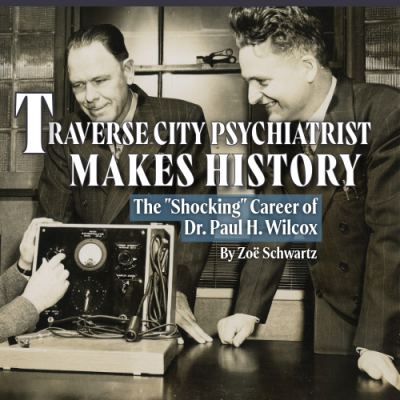
Paul Harlan Wilcox (July 4, 1906- May 23, 1974) was born in Elk Rapids, Michigan and over the course of his career became one of the leading researchers for shock treatment in the United States. His career as a psychiatrist began at the precipice of an enduring revolutionary treatment for the mentally ill: electroconvulsive therapy (also known as electroshock therapy). During his long career spanning from Massachusetts to Traverse City, Wilcox amassed a great deal of research materials, including over 500 publications relating to shock therapy now held in the Traverse Area District Library Local History Collection archive.
The history of mental health treatments is especially important in Traverse City. Our former state hospital still stands today, repurposed and shrouded in macabre lore. Common understanding of the psychiatric treatments, especially electroconvulsive therapy in the 1940s-1950s, is missing the context needed to understand the nuances. Unlike other controversial treatments, like leucotomy (lobotomy), electroconvulsive therapy is still in use today as an accepted treatment option for patients for whom antidepressants (medications) were ineffective. The National Alliance on Mental Health (NAMI) and American Psychological Association (APA) describe the treatment as effective and safe for treating severe mental illness, such as major depressive, catatonia, or bipolar disorder.
Wilcox and his colleagues' research were the foundation for this enduring therapy that has both hurt and helped thousands of people. This article attempts to view psychiatry in the middle of the twentieth century from the perspective of a prominent psychiatrist, whose work is preserved in the Local History Collection (LHC). Including documents from Wilcox’s research papers, the following biography provides a window into the world of psychiatric care, revealing a researcher whose passion was to help people within the boundaries of psychiatry at that time.
Biography
Paul Harlan Wilcox was born in 1906 to Delos F. Wilcox (April 22, 1873 – April 4, 1928) and Mina Gates Wilcox (December 21, 1871 – February 3, 1948).1 With accomplished parents and five siblings, Paul was part of a family with unique and fascinating histories.
His father, Dr. Delos Frank Wilcox was born in Ida, Michigan and studied at the University of Michigan in 1894-1895, after which he received his PhD from Columbia University.2 The family moved from Elk Rapids to Queens, New York around 1907, when Delos Wilcox became the Chief of the Bureau of Franchises of the Public Service Commission for the First District in New York. From 1913-1917, he was the deputy commissioner of the New York department of Water Supply, Gas and Electricity. Delos went into private practice in 1917 and sometime before 1927 the family eventually moved to Grand Rapids, Michigan.3 Delos published monographs, edited in the Civic News journal, and contributed to volumes concerning public service corporations, local governance, and municipal organizations.4 In his later years, he spent time at their family fruit farm at “Wandawood” in Elk Rapids, Michigan. At the end of his life, Delos was “one of the leading authorities in the United States on franchises and public utilities.”5 His papers were donated to the University of Chicago after his death; the collection remains there today titled: “Delos Franklin Wilcox Papers 1907-1928.”6
Paul H. Wilcox spent the later years of adolescence in Grand Rapids, graduating from the Grand Rapids Junior College and the Carleton College in North Field, Minnesota. Following his father's footsteps, Paul attended the University of Michigan for both his bachelor’s degree in 1928, and Doctor of Medicine degree (M.D.) in 1932.7 That same year, he married Katherine Washburn (1908-1982), a native to Minnesota, in Ann Arbor, Michigan.8 At the time, Katherine Washburn was employed as a psychologist at the Ypsilanti State Hospital.9
Meanwhile Paul’s younger brother, Willard Wilcox (1912-1939) graduated with a bachelor’s degree from University of Michigan in 1932.10 His life met a tragic end, however, while studying chemical engineering: Willard died in 1939 after an accident in one of the university’s laboratories, when an explosion of glass cut his left femoral artery.11
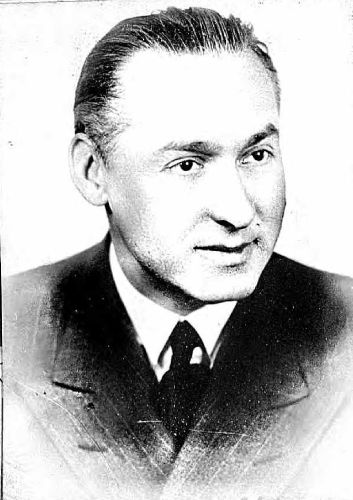
The newly graduated Dr. Wilcox spent his first general internship at the San Diego County General Hospital between 1932-1933 (Figure 1).12 In 1933, he and Katherine moved to Massachusetts, where Wilcox was a medical intern and the chief of the Neuropathological Laboratory at the Boston Psychopathic Hospital.13 It is in Massachusetts that their first three children were born: Robert (in 1935), Theodore (in 1937), and Gordon (in 1939).14
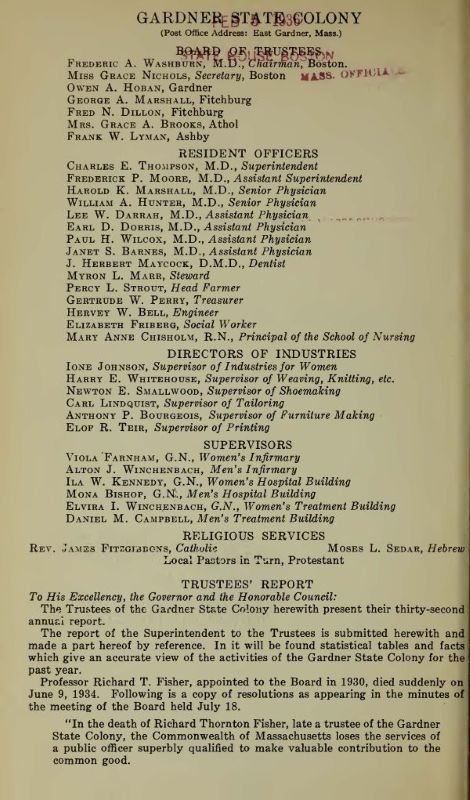
After interning in Boston, Wilcox was appointed Assistant Physician at the Gardner State Colony (later known as the Gardner State Hospital starting in 1935) in Gardner, Massachusetts on March 14, 1934.15 In his first two years there, Wilcox experimented with the therapeutic value of colors.16 He used a loaned revolving color unit called a “Psychochromosphere,” which he operated at intervals in the “continuous bath suite.”17 The result of his study showed that color may have “a legitimate place in the therapeutic program of a hospital,” the light in the bath suite had a sedative or soothing effect.18
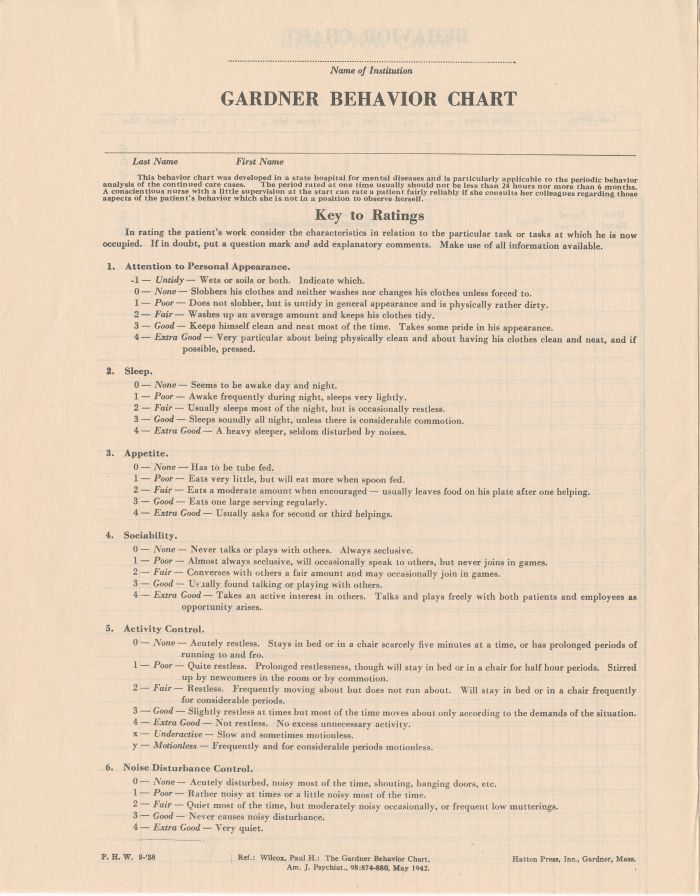
Work not mentioned in the Annual Reports of the Gardner State Hospital include the Gardner Behavior Chart (Figure 2). Wilcox developed the chart sometime around 1938 and through his work he found that physicians had limited time to interact and observe each patient. The chart was thus developed as an aid for nurses and attendants to record a patient's behavior during their time at the hospital.19 By filling out the chart, nurses and attendants, who spend more time observing and interacting with patients than physicians, can provide “the psychiatrist a condensed objective record of the patient’s behavior on the ward.”20 The chart was published in 1942 and researchers continued to use this chart until at least 1963.21 Its use in Traverse City is recorded in 1958, when Dr. Katherine Wilcox was researching the reliability of the Gardner Behavior Chart as the Director of Psychology at the Traverse City State Hospital.22 Later in his career, Wilcox began developing new psychiatric charts.23
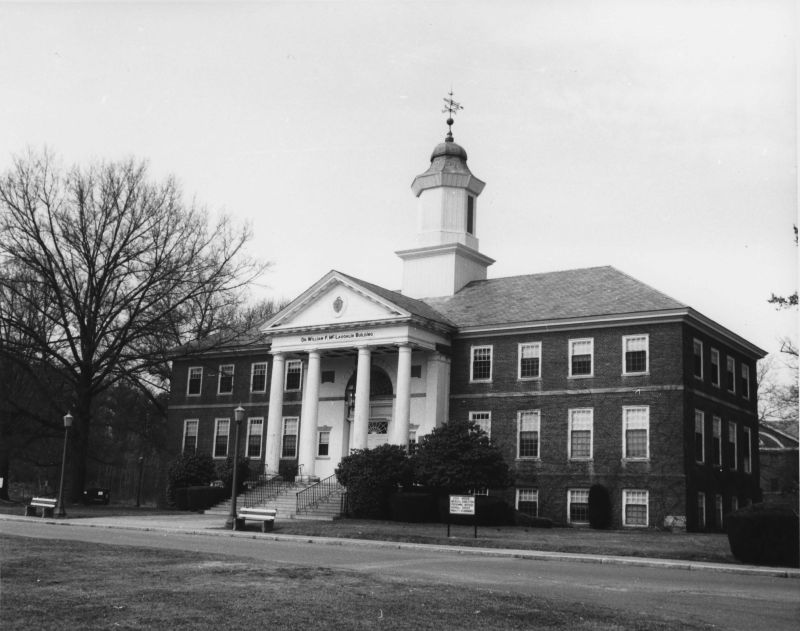
Wilcox was transferred January 3, 1939, to the relatively new Metropolitan State Hospital (opened October 29, 1930).24 At the time of his transfer, the Gardner State Hospital reported this about Wilcox:
His work was characterised always by a very active, enthusiastic interest in the welfare of his patients. He was of an investigative mind always searching for reasons and the correct application of ever changing medical knowledge.25
Electroshock Therapy
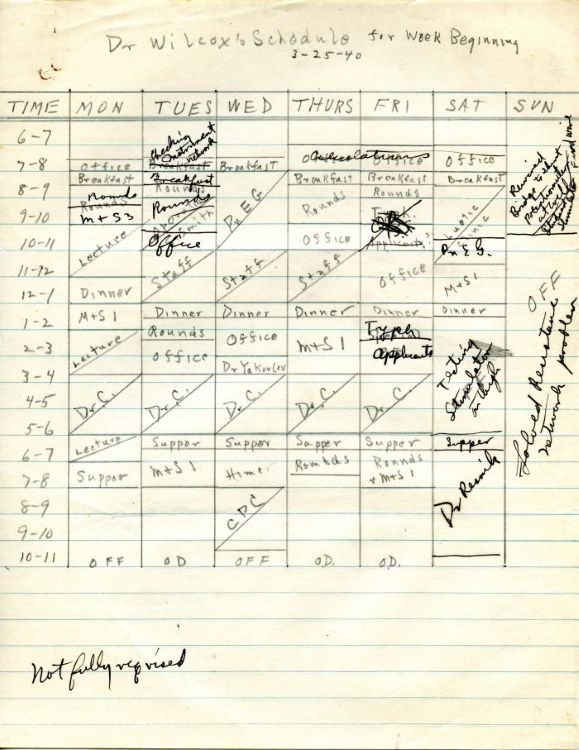
The trajectory of Wilcox’s scientific enquiry and career was established during his time at the Metropolitan State Hospital (Figure 3). While the Gardner Behavior Chart was developed at Gardner State Hospital, a great deal of research concerning electroshock devices and therapy was conducted at the Metropolitan State Hospital. Wilcox’s transfer occurred at a time of great discovery in psychiatry: electroshock therapy.
Shock therapy was already established in the United States in the late 1930s. Insulin coma therapy was common in mental hospitals, followed by Metrazol shock therapy, the closest predecessor of shock therapy to electroshock therapy. While studying epilepsy and schizophrenia, Ladislas J. Meduna (1896-1964), in Budapest in the Kingdom of Hungary, noticed that schizophrenia and epilepsy were rarely concurrent conditions in psychiatric patients (Figure 5).26 In 1933, Meduna began researching a way to induce seizures to reduce the symptoms of schizophrenia. Through his research, he believed that inducing seizures could help cure schizophrenia.
In 1934 Meduna tested his first patient with an injection of camphor in oil with success. Camphor was soon replaced by Metrazol, a drug that when injected intravenously induces seizures. Metrazol injections were not as painful, and a seizure would commence within a minute. Metrazol shock therapy required many treatments, causing terror and anxiety in patients. The dangers surrounding this primitive form of shock therapy often resulted in death or injury, consequently it was discontinued in the 1940s. Ultimately, the concept of induced seizures as a treatment for various mental disorders had set off a chain of events that led to revolutionary new treatments in psychiatry.
According to Meduna’s autobiography, a conversation with Lucio de Bini (1908-1964) at the Swiss Neuropsychiatric Society international meeting for the treatment of schizophrenia in 1937 led to the use of an electrical device constructed by Bini and Ugo Cerletti (1877-1963) to induce seizures.27 In May 1938, Cerletti and his team began trials on human patients at the Royal Medical Academy in Rome.28 The results of the newly invented electroshock therapy, now known as electroconvulsive therapy (ECT), were significant and quickly spread from Europe to all over the globe.
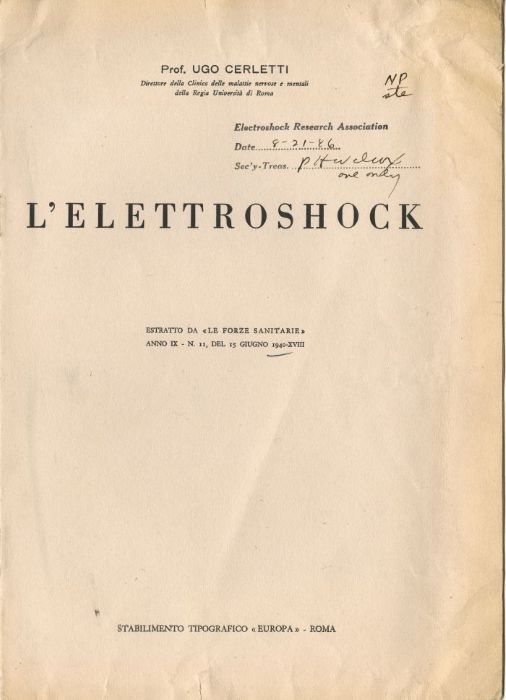
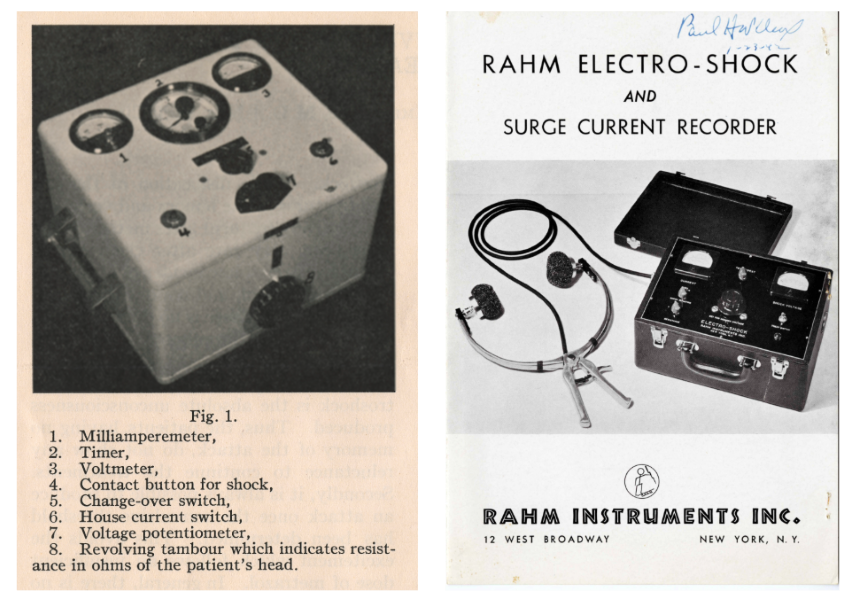
Based on Wilcox’s papers, he dedicated a lot of his time to researching, designing, and constructing multiple electro-stimulation devices and electrical instruments between 1939-1941. According to the annual reports of the Metropolitan State Hospital, Wilcox worked for years with Emerick Friedman (1910-1991), a fellow assistant physician at the hospital.29 In 1939, the Metropolitan State Hospital reported that in addition to the Metrazol and insulin therapy treatments, the hospital began using “newly devised electrical current apparatus” constructed by Wilcox.30
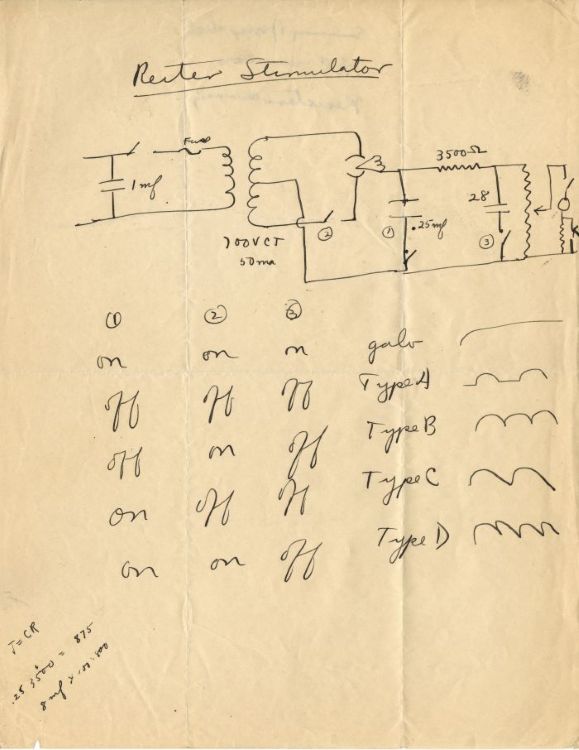
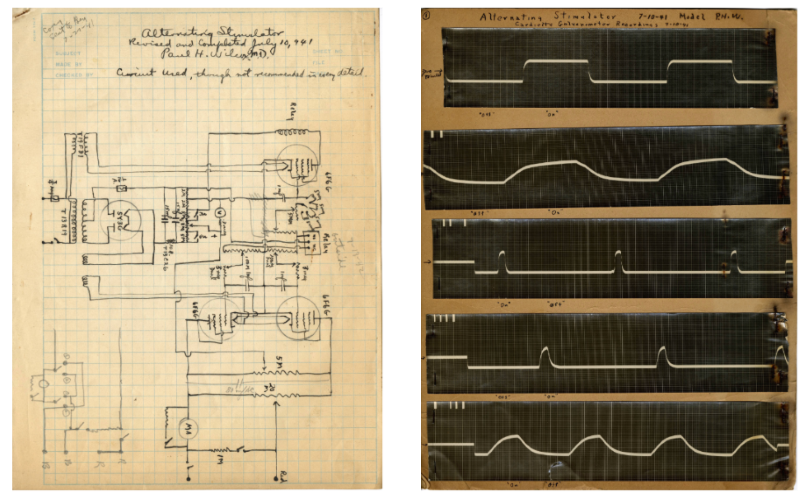
Between 1939-1940, electroshock machines were new and nearly duplicates of Cerletti-Bini’s electroshock device from 1938 (Figure 7). Using the Cerletti-Bini instrument, the two most common, often severe side-effects of the treatment were amnesia and fractures or dislocation of bones. Using unidirectional currents instead of alternating currents, Friedman, Wilcox, and electrical engineer Reuben Reiter (1908-1992) attempted to mitigate the destructive side effects of electroshock therapy (Figure 8).31 By 1940, the Metropolitan State Hospital reported that Wilcox and Friedman had “perfected their direct current apparatus for electro-stimulation and conducted interesting original investigations in the effects and technique of this new form of therapy” (Figure 9).32 Together they authored Wilcox's second publication in a medical journal: “Electrostimulated Convulsive Doses Intact Humans by Means of Unidirectional Currents” published in the Journal of Nervous and Mental Disease in 1942 on the research they began at the Metropolitan State Hospital.33
Other papers from the Wilcox Papers on Electroshock Therapy collection reveal a project for Dr. Paul I. Yakovlev, a visiting neurologist for the Metropolitan State Hospital in 1939-1941.34 Wilcox designed and constructed an electric device for Yakovlev, referred to as the “Galvano-Faradic Diagnostic Unit” (Figure 11). 35 His papers relating to this project date from about April to July 1940 (Figure 10).
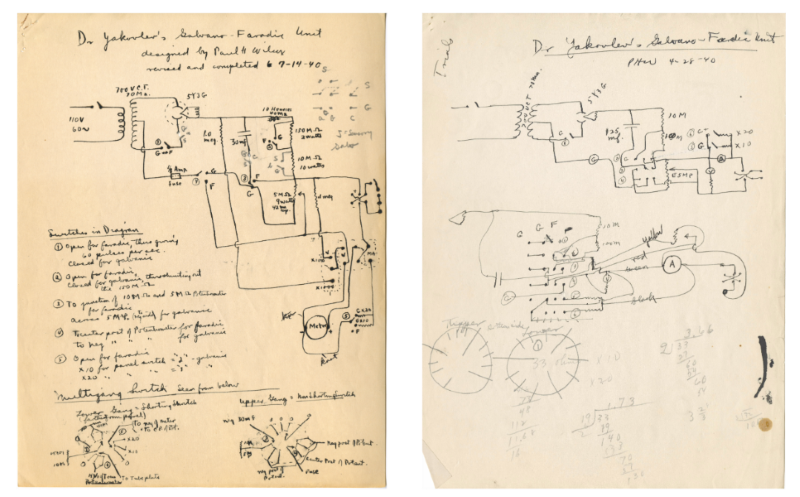
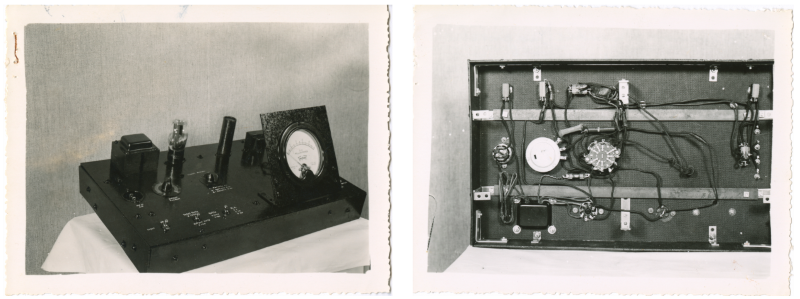
Dr. Wilcox’s chapter in Massachusetts came to an end when he resigned from the Metropolitan State Hospital on September 1, 1941.36 Both the Gardner Behavior chart and his work in the technical aspects of electroshock therapy represent Wilcox's interest in psychotherapy and enquiry into how to objectively record patients' behavior and progress. His early career (1932-1941) was influential for his next chapter in Traverse City, Michigan as he became entrenched in electroshock therapy studies.
Traverse City State Hospital & the Electroshock Research Association
By October 1941, the Wilcox family had relocated to Traverse City. Wilcox assumed the position of Research Director at the Traverse City State Hospital, where he remained employed for the next ten years. Willard P. Wilcox, the youngest member of the family, was born in Traverse City in 1943.37
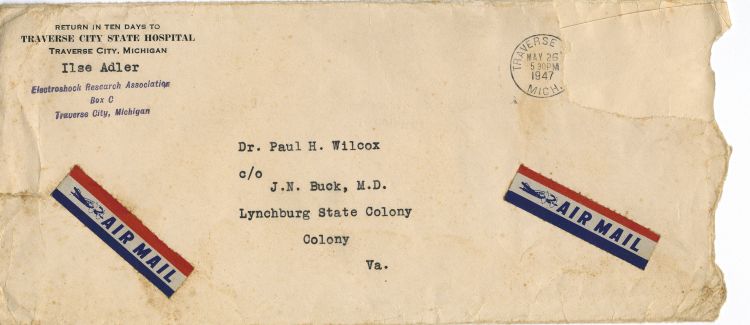
The work Wilcox started with Dr. Friedman and Reiter in Massachusetts continued during his time at the Traverse City State Hospital. According to a newspaper article, the Reitner Method (designed by Reuben Reiter in 1939), was first used by Dr. Paul H. Wilcox and Dr. Emerick Friedman in April 1940 at the Metropolitan State Hospital in Waltham, Massachusetts.38 In October 1941, Wilcox introduced the Reitner method to the Traverse City State Hospital.39
Dr. Wilcox founded the Electroshock Research Association (ERA) in 1944 (Figure 13). The Electroshock Research Association incorporated Michigan as a non-profit on January 11, 1945. Wilcox was the secretary-treasurer for probably the entire lifetime of the association.40 In May 1945, Wilcox published the official announcement of the association in the American Journal of Psychiatry:
The purpose of this association is to promote and coordinate research and clinical investigations regarding electroshock and related therapies in mental diseases. There is a need for a flexible organization for the facilitation of such investigations. This association aims to fulfill this need and when the need and when the need no longer exists or is adequately fulfilled through some other organization, steps shall be taken to terminate the separate existence of the Electroshock Research Association.” Paul H. Wilcox, M.D. 502 W. 8th Street, Traverse City, Michigan is secretary-treasurer. Annual dues are $5.00.41
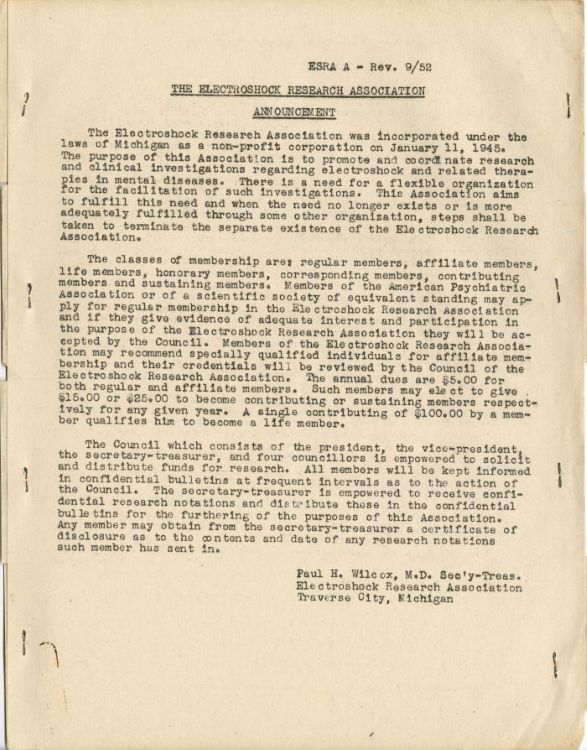
The ERA had regular meetings, the proceedings of which were published in Confinia Neurologica. Only a few publications of the proceedings were found in the Wilcox Papers collection, and were edited by Leo Alexander in 1952 and 1953, by Paul H. Wilcox between 1954-1956, and in 1958, by Katherine W. Wilcox.42
Besides creating a network of international researchers united in their interest in psychiatric care and furthering the scientific understanding of mental disorders, the association provided funding for relevant research. The article “Cerebrospinal Fluid Changes in Electroshock Treatment of Psychoses (Spectrophotometric and Enzyme Studies)” authored by M. Spiegel-Adolf, P. H. Wilcox, and E. A. Spiegel, was “aided by the Electroshock Research Association.”43
The Traverse City State Hospital was the foreground for Wilcox's research into Electroshock therapy. His article with W. T. Liberson comparing different stimuli techniques was based on “this study was conducted at the Traverse City State Hospital, February 21-March 9, 1945.”44 Eighteen of Wilcox’s known publications between 1942-1951 were published during his research at the Traverse City State Hospital.
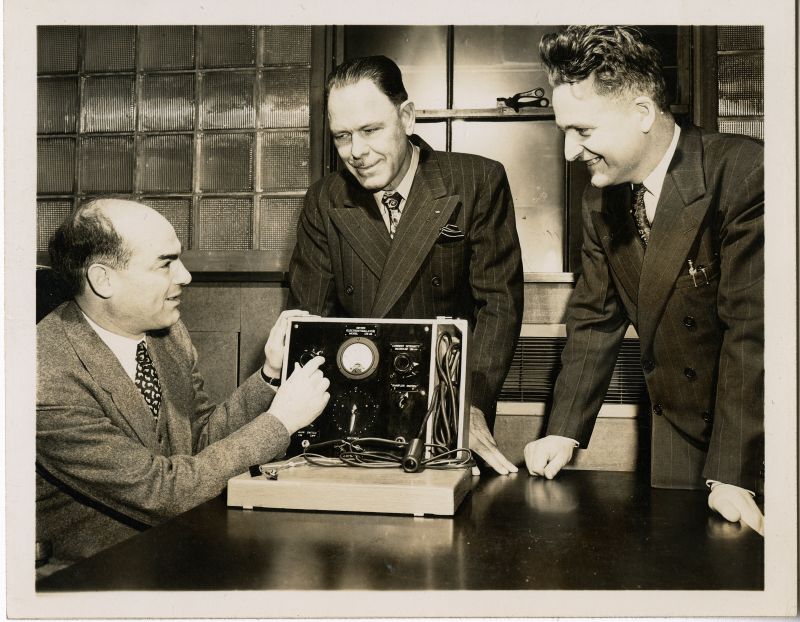
The Traverse City State Hospital supported Wilcox in multiple ways. Between July 1, 1931 and January 3, 1956, Dr. R. P. Sheets (1892-1956) was the medical superintendent at the Traverse City State Hospital involved in Wilcox’s research efforts,as evidenced by his appearance at the meeting with Reuben Reiter in March 1947 (Figure 14).45 He was also a counselor for the Electroshock Research Association in 1946. By 1947, the Traverse City State Hospital had given over 30,000 electroshock treatments under the direction of Wilcox.46 By appearances, Wilcox’s research and ECT treatments at the Traverse City State Hospital seemed to be supported by Sheets.
In turn, Wilcox bolstered the influence and prestige of the Traverse City State Hospital. Evidenced by an article in the Traverse City Record Eagle in 1947 that declared Dr. Wilcox a “pioneer” in electroshock therapy:
It is time local residents realized that the Traverse City State Hospital has done more to develop the electro-shock treatment than any other similar institution in the nation. Other scientists have worked with Dr. Wilcox but the Traverse City institution has taken the lead among hospitals.47
Electroshock Research Association Library (ERA Library).
Part of the Electroshock Research Association was the research library. Based on the collection of publications, members or publishers sent the ERA their research articles relating to shock therapy from all over the world. As the treasurer and secretary for the Electroshock Research Association from 1945 to the mid-1960s, Wilcox collected over 500 research publications relating to shock therapy from the late 1930s to 1946.
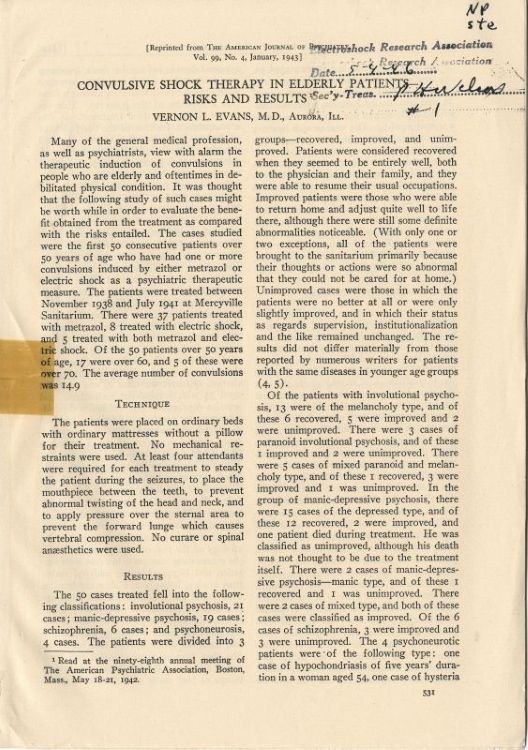
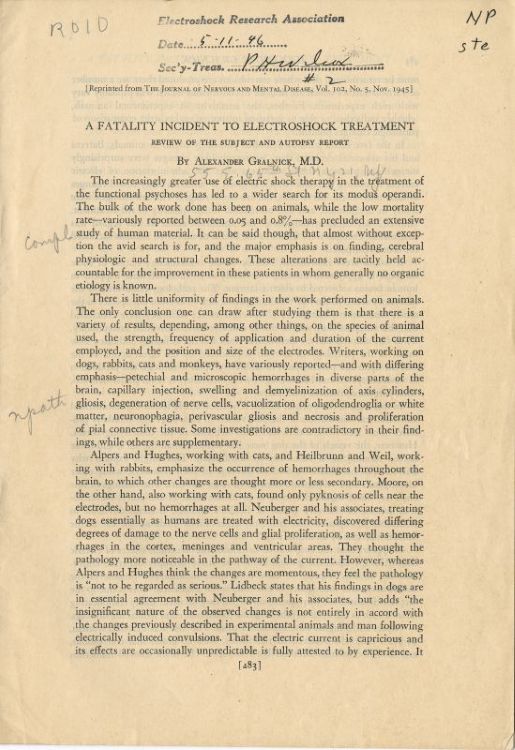
An intensive inventory of the ERA Library in Wilcox’s collection reveals how electroshock therapy connected doctors all over the world. The library contains 180 individual journals/periodicals, only 175 of which could be identified, from 23 different counties.
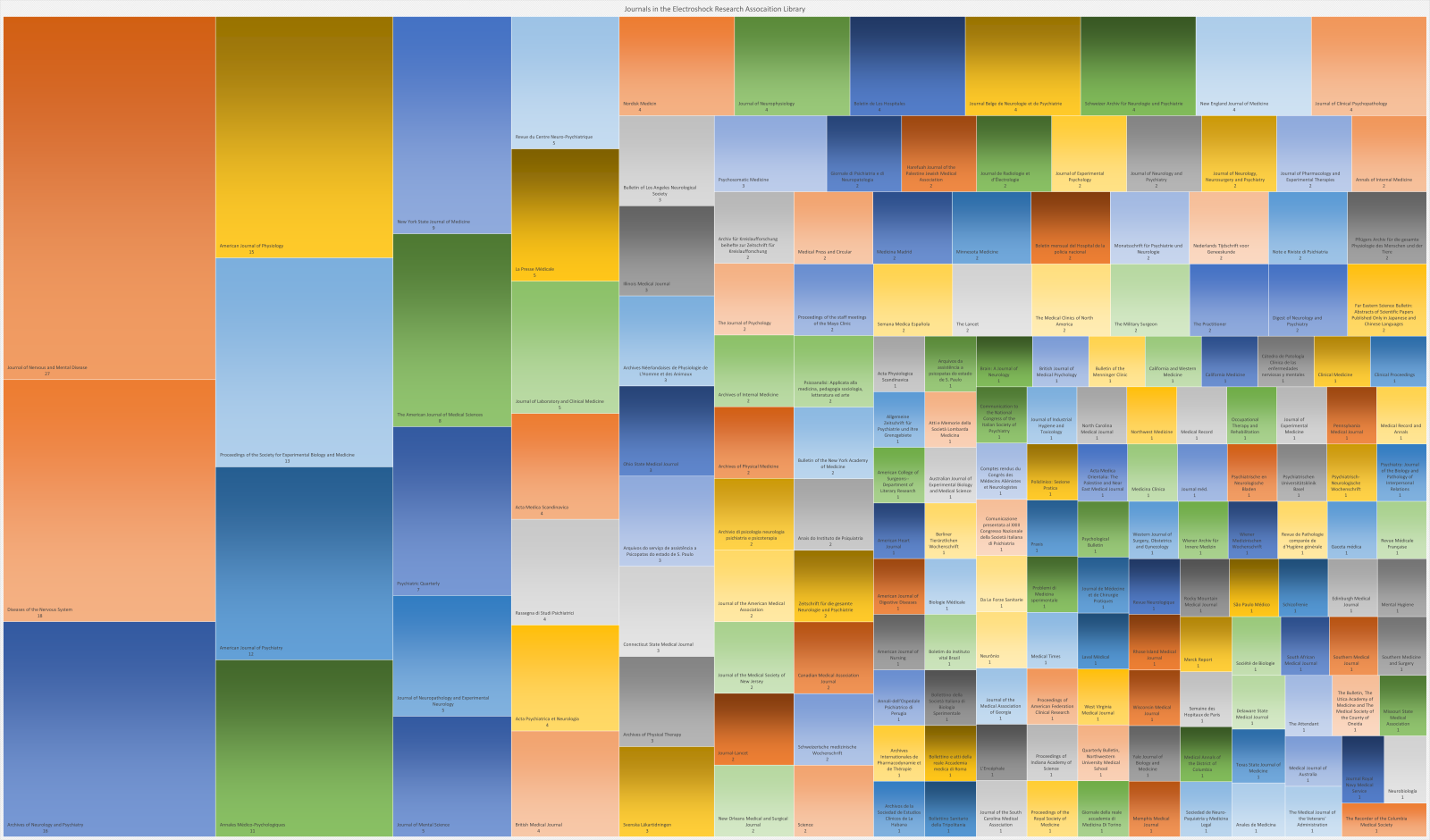
Most publications were published in the United States (80), Italy (20), France (14), and Great Britain (13). The majority are in English (63%), followed by Italian (8%), French (8%), and German (7%) (Figure 19). Other languages in the collection include Portuguese (Figure 20), Swedish, and Hebrew (Figure 23).
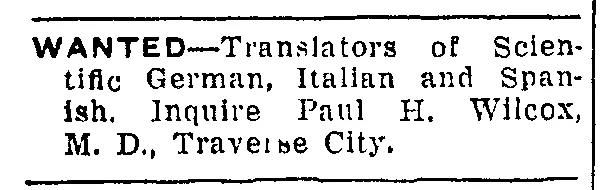
There are over 870 individual authors represented (Figure 19, Figure 16). The top three researchers with the highest number of publications are Eugene Ziskind (11), A. Van Harreveld (10) (Figure 24), and Lothar B. Kalinowsky (10).
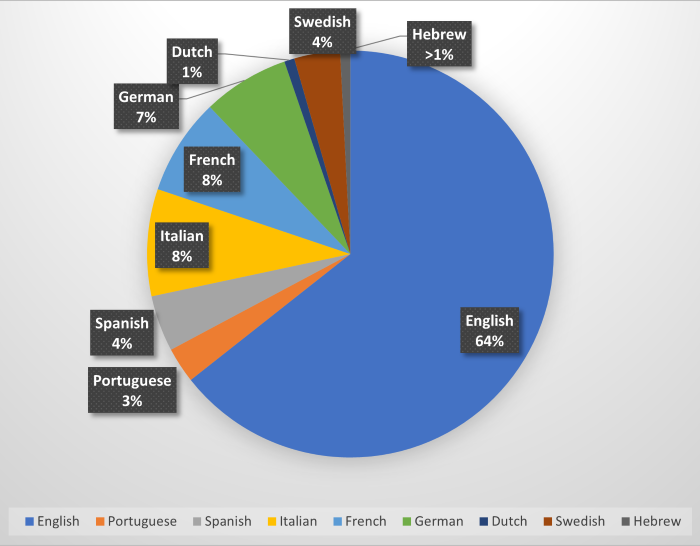
Figure 19. The languages of the Electroshock Therapy Association Library in the Local History Collection.
A Sampling of the ERA Library:
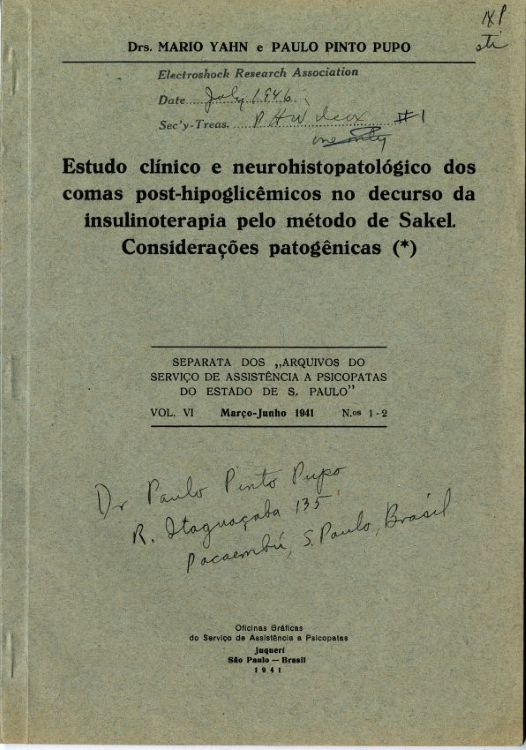
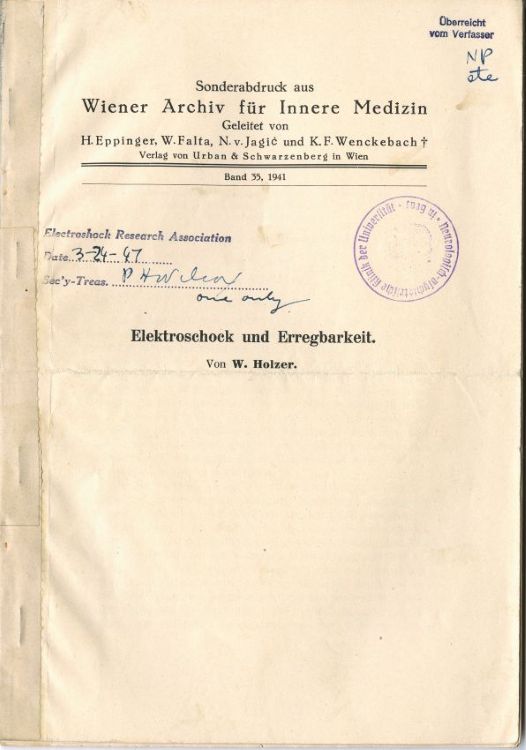
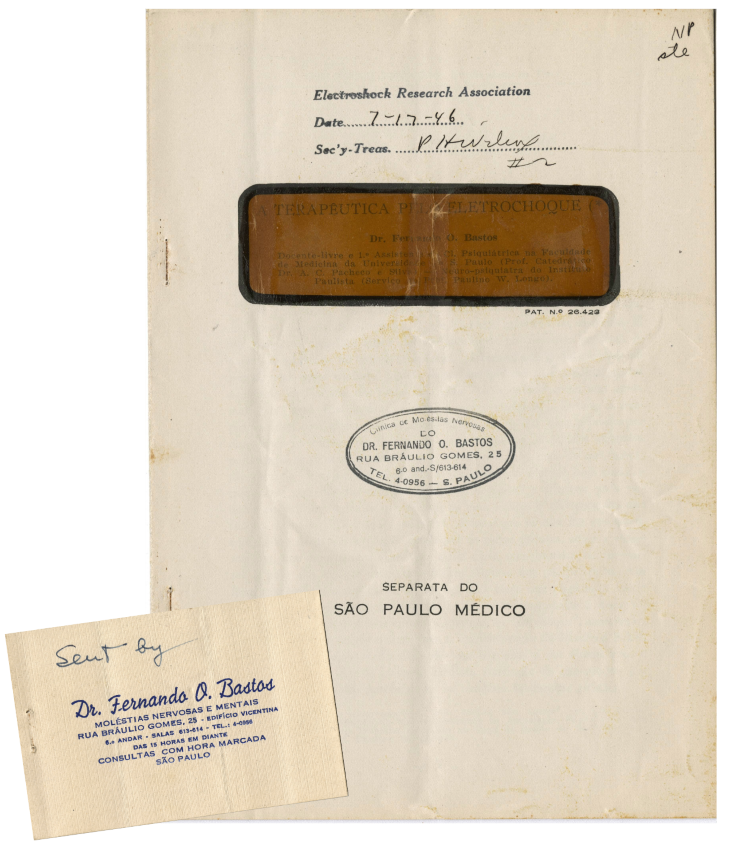
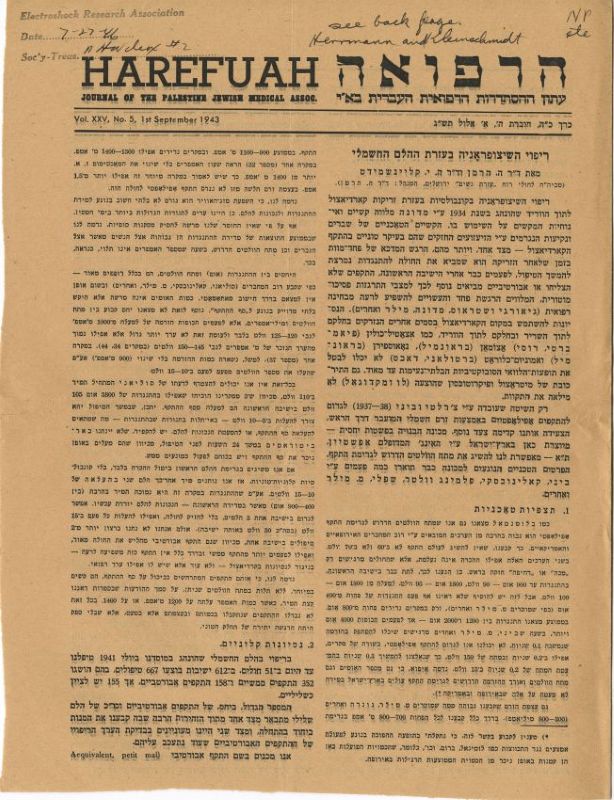
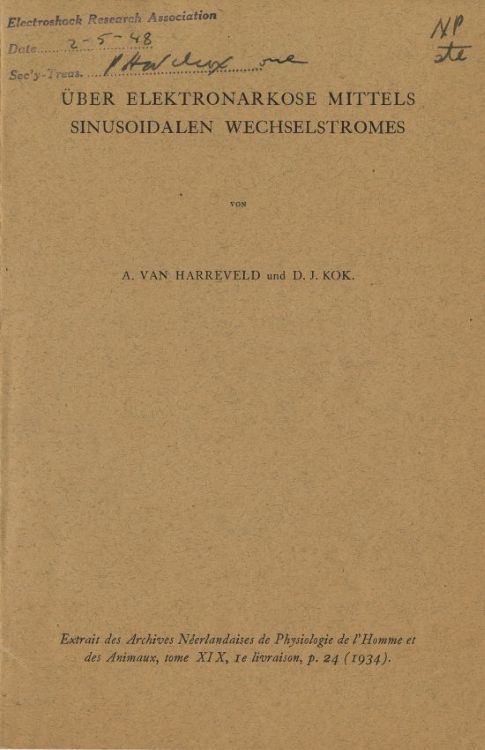
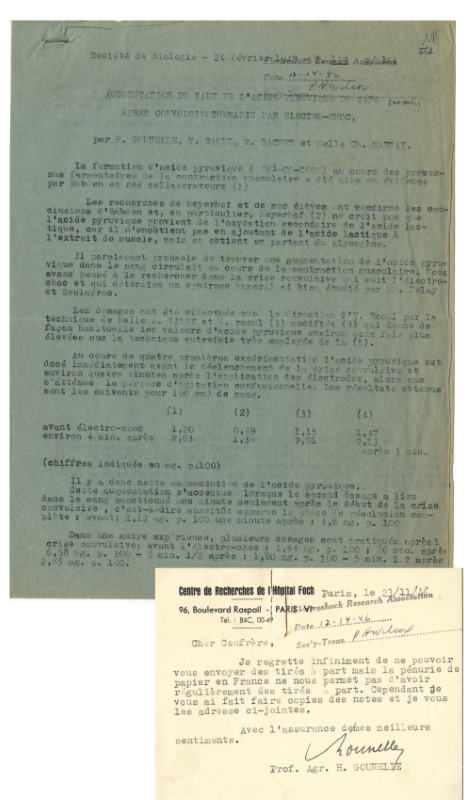
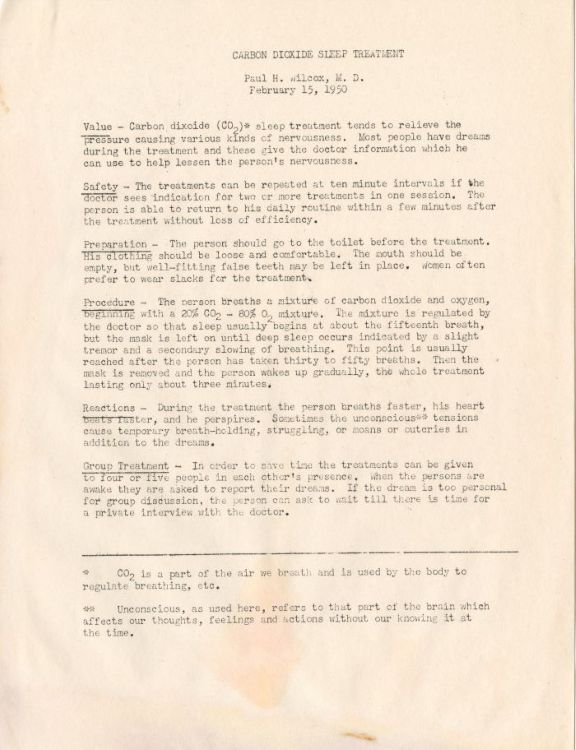
By the end of the decade, Wilcox became more interested in “psychopenetration.”48 One method Wilcox used was Carbon Dioxide Therapy (CDT) (Figure 26). Carbon Dioxide Therapy was pioneered by Meduna as a treatment for neurotic (hysteria, anxiety, obsessive behavior) and psychosomatic patients. The treatment involved about 30 minutes for CO2 inhalation and recording and analyzing the dream. Most patients require at least 20 sessions (Figure 27).
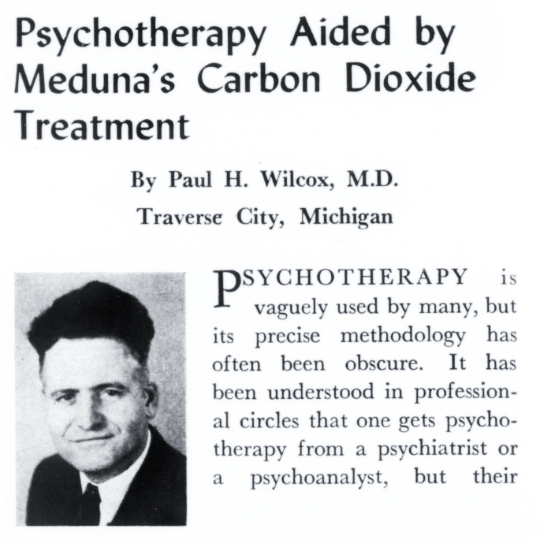
Wilcox received “personal instruction by Meduna” in CDT in 1946.49 He added the procedure to the Traverse City State Hospital in June 1946 and by January 1948 he used CDT on over 2000 state hospital patients and out-patients. For Wilcox, CO2 therapy was an aid to psychotherapy (talk therapy): "progress is many times faster than in strict Freudian psychoanalysis and the psychiatric hours are fewer."50
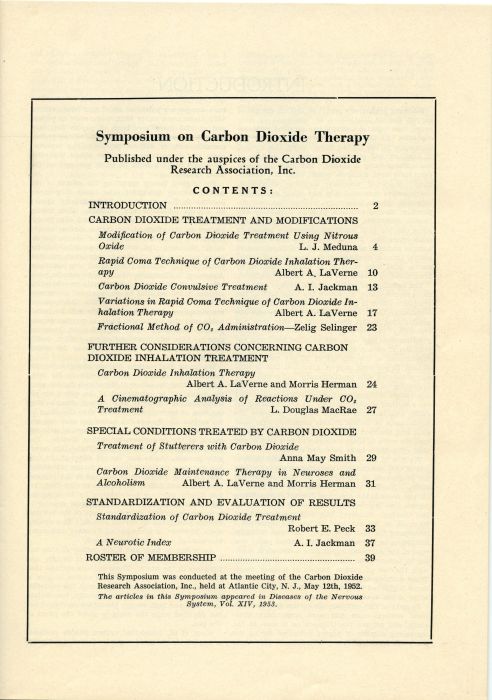
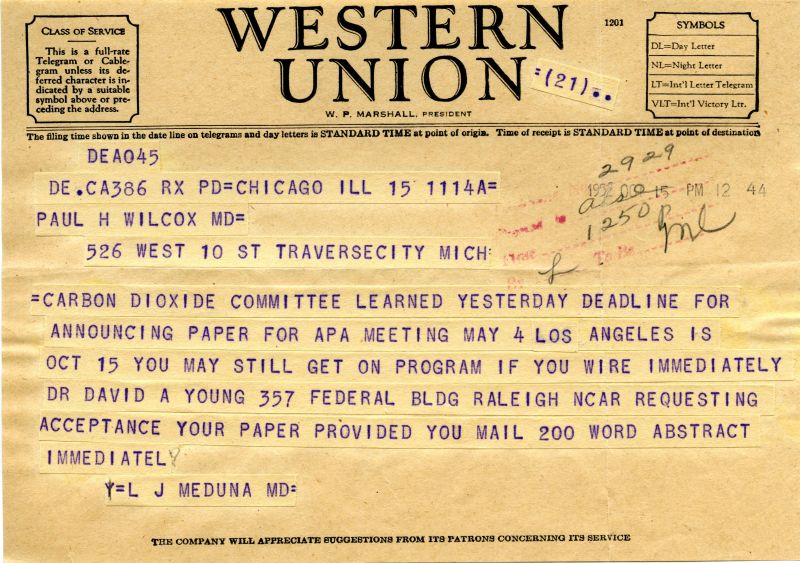
Gaining popularity, CO2 treatment was the focus of the Carbon Dioxide Research Association founded in 1953.51 Wilcox was a member of this association by 1954. He had correspondence with Meduna about collaborating on an edited publication.52 Another paper, ‘‘the Place of CO2, Therapy in Broad Spectrum Psychiatric Treatment,” was first presented at the Eastern Psychiatric Research Association’s annual meeting in October 1958.53 His paper was awarded $100 by the Institute of Psychiatric Treatment for the “best contribution during the first day.”54 Wilcox published this paper in Diseases of the Nervous System in May 1959.55
After the Traverse City State Hospital
In 1951, Wilcox resigned from the Traverse City State Hospital and opened two offices for private practice in Cadillac and Traverse City. According to the Traverse City Record Eagle, he was prompted by “a feeling that there is a definite need for such service in this area.”56 In the early 1950s, Wilcox was perhaps the only full-time psychiatrist in private practice between Grand Rapids and the Straits of Mackinac on the west side of the state.57
The end of the Electroshock Research Association came near the end of Wilcox’s life. Max Fink (1923-2025),an active member of the association that presented at their annual meetings between 1956-1958, went on to be a long-time advocate for electroconvulsive therapy.58 According to Fink the end of the association happened in the mid-1960s:
In the 1940’s and 1950’s there was the Electroshock Research Association which focused issues about ECT, and they published their annual proceedings in the Confinia Neurologica. When that association was prematurely digested by the Society of Biological Psychiatry in the mid-1960’s, the central focus ended. Of course, we expected the treatment to be replaced by drugs. But that has not happened.59
After the end of the ERA, Fink describes the “significant gap” in focus for convulsive therapy research in publications and associations.60 This gap is reflected in Wilcox’s own research and publications, as Wilcox was more focused on psychotherapy and developing psychiatric charts and measuring psychiatric treatments and disorders in the 1960s.61
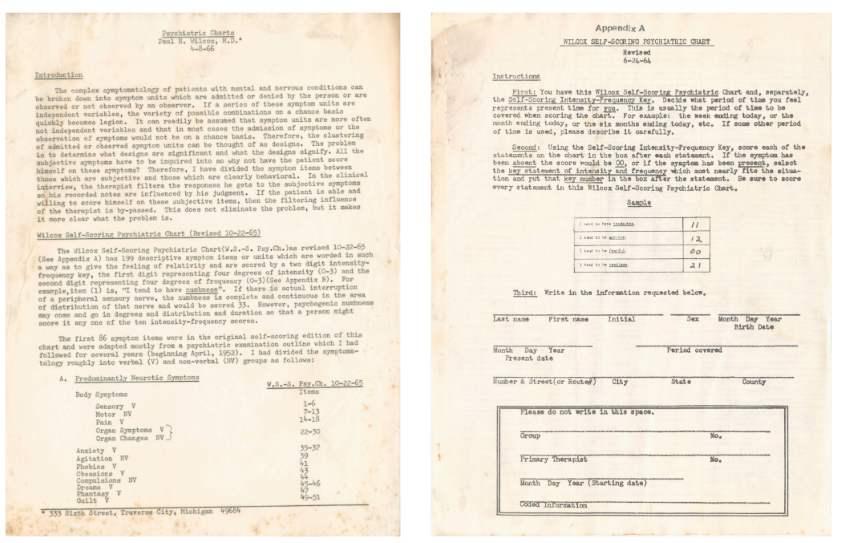
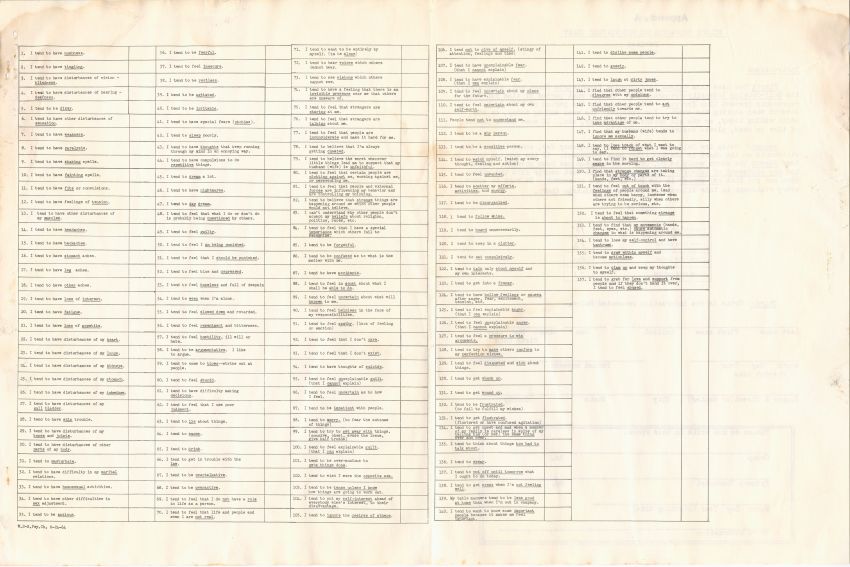
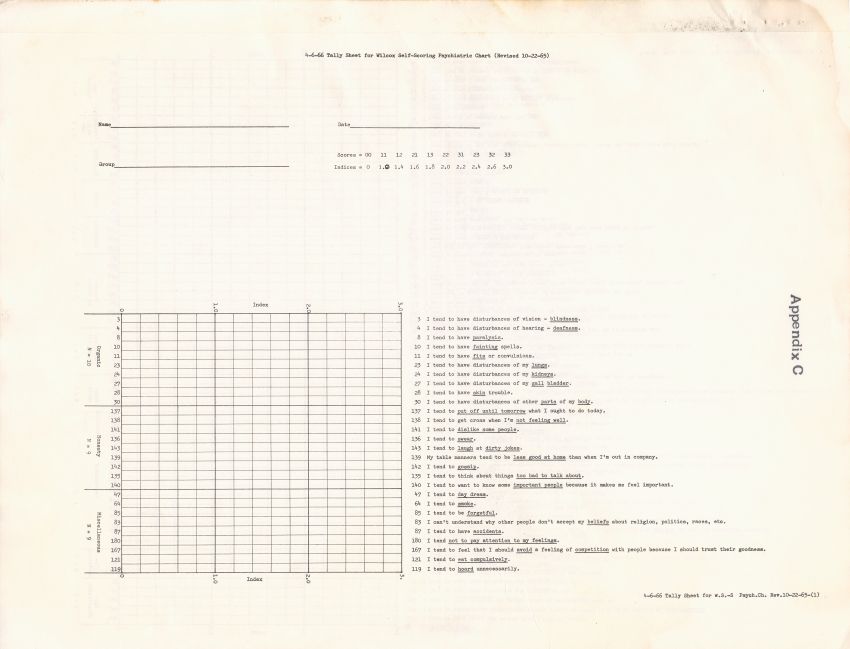
For the rest of his career, Wilcox dedicated himself to private practice and extensive research in electroshock therapy and psychopenetration. While in private practice, he had more time to dedicate to scholarship, both writing and presenting studies. He published materials in medical journals about 37 known publications between 1942 and 1961, 19 of which he published between 1951-1961. The known bibliography of Wilcox’s published works will be included at the end of the article for reference. The collection in the Local History Collection also holds a hoard of unpublished manuscripts and papers he authored after he resigned from the Traverse City State Hospital in 1951.62
Many of his unpublished materials are in his papers:
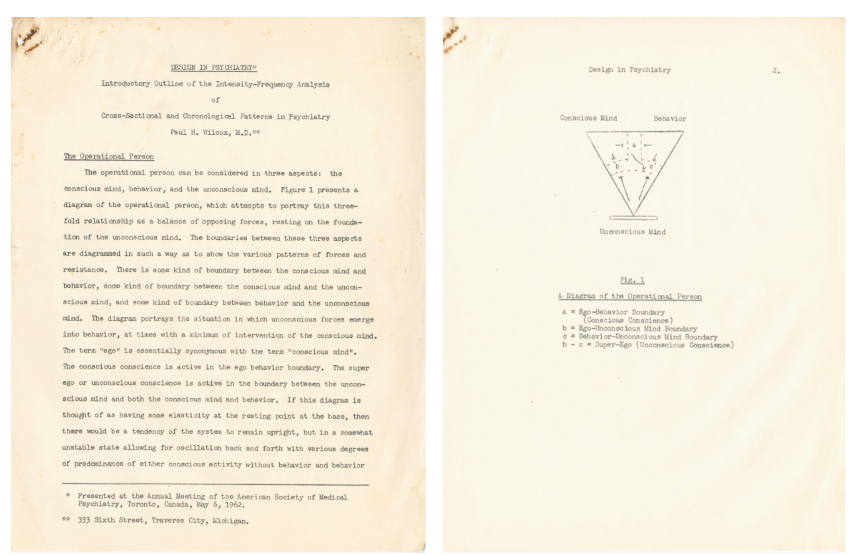
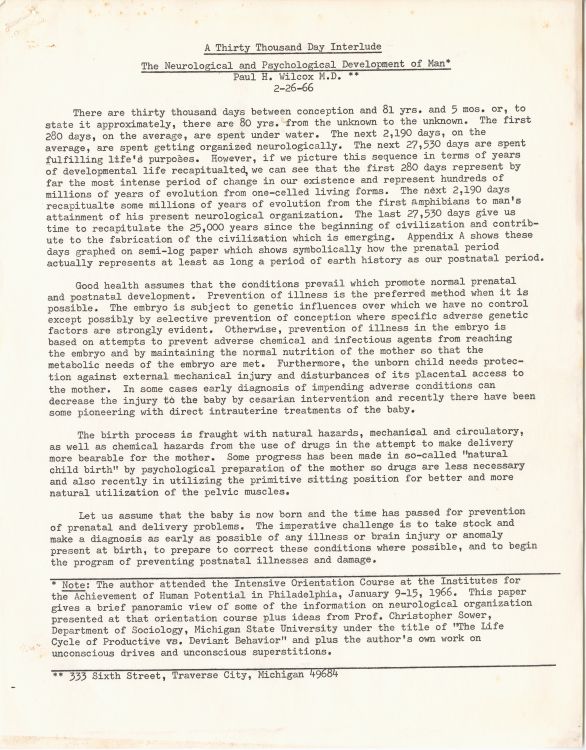
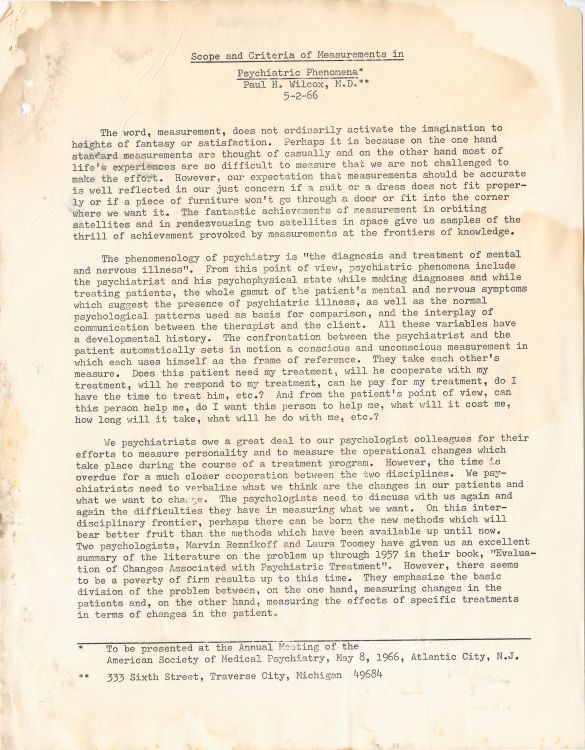
In 1959 moved to 333 Sixth Street and around this time Katherine and Paul set up the Wilcox Clinic in their home in Traverse City, where they remained until 1974.63 Besides research, Wilcox was involved in many social and community organizations, including founding the Cadillac Community Science Council in 1957.64 Wilcox was a member of the Traverse City Kiwanis Club and the chairman of the Traverse City Kiwanis Club Vocational Guidance Committee.65
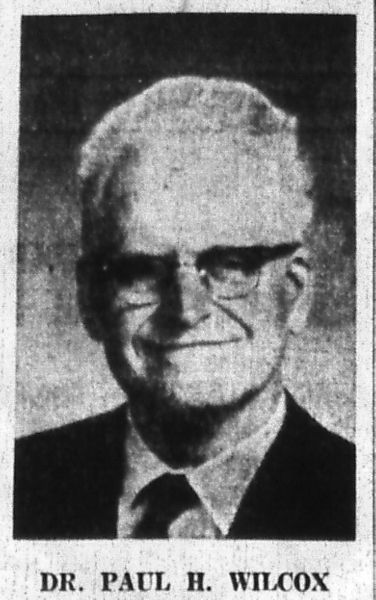
Paul Wilcox died from cardiac arrhythmia and coronary artery disease in Newton, Massachusetts on May 23, 1974, at the age of 67.66 More details about his death were reported by Dr. David S. Evans in the Hillsdale Daily Newspaper in June 1974. A close friend of Katherine W. Wilcox, Evans attributes Wilcox’s death with an earlier “savage tuberculosis attack” that immobilized him for months during his early years in Massachusetts (around 1933-1940).67
In memory of Paul H. Wilcox, a quote from Evans perhaps encapsulates the impressions of Wilcox held by many people in the community: “What impressed me most about this man was the great burden of human woes he sought to alleviate.”68
An Afterword for Dr. Kay: Katherine W. Wilcox, Ph.D. (1908-1982)
Katherine Washburn Wilcox received her bachelor’s degree from Hamline University, and theological degree from Garrett Theological Seminary, before graduating with a master’s in psychology from Northwestern University.69 She joined the staff of the Traverse City State Hospital in 1943 and became the head of the psychology department in 1951, after completing her doctorate degree in psychology at the University of Michigan.70
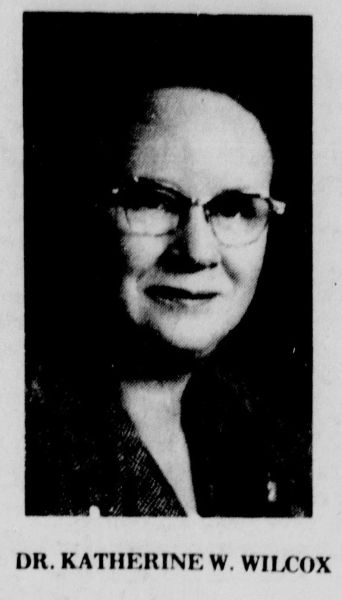
Dr. Katherine Wilcox resigned from Traverse City State hospital in 1959 to focus on consulting with Paul Wilcox, presumably at the Wilcox Clinic.71 By 1964, Dr. Katherine Wilcox was a professor of psychology for Michigan State University off-campus courses at Northwestern Michigan College.72 For her whole life in Traverse City, Katherine was heavily involved in the United Methodist Church and in the community at large in Traverse City and surrounding counties, often speaking at conventions, P.T.A. and club meetings about various social and psychological topics.73
After the death of her husband in 1974, Dr. Katherine Wilcox continued to live at 333 Sixth Street for some time before she died in 1982 at the age of 73. More about Dr. Kay, as she was commonly known, is unknown. Unlike her husband, the Local History Collection does not have her research papers. Maybe one day, if these papers still exist, the two heads of the Wilcox Clinic could reunite in the Local History Collection.
Endnotes
1 New York, U.S., State Census, 1915, 17, ttps://www.ancestrylibrary.com/search/collections/2703/records/5090371.
2 The Michigan Alumnus v.34 1927/1928, 688, https://hdl.handle.net/2027/mdp.39015026502990?urlappend=%3Bseq=724%3Bownerid=13510798887813296-898.
3 New York, U.S., State Census, 1915, 17; 1920 United States Federal Census, New York, Queens, Queens Assembly District 3, District 0162, sheet 7B, https://www.ancestrylibrary.com/search/collections/6061/records/48671236; Grand Rapids Central High School Yearbook, 1927, 52, https://www.ancestrylibrary.com/search/collections/1265/records/94860856.
4 Dictionary of American Biography, (1936), s.v. “Wilcox, Delos Franklin.”
5 “In Memoriam- Dr. Delos Franklin Wilcox, ‘94, A.M., ‘95,” The Michigan Alumnus 34, no. 31 (May 26, 1928), 688, https://hdl.handle.net/2027/mdp.39015026502990?urlappend=%3Bseq=724%3Bownerid=13510798887813296-898.
6 https://www.lib.uchicago.edu/ead/rlg/ICU.SPCL.WILCOX.pdf; Dictionary of American Biography, (1936), s.v. “Wilcox, Delos Franklin.”
7 University of Michigan Yearbook, 1928, 161, https://www.ancestrylibrary.com/search/collections/1265/records/12819065; University of Michigan Yearbook 1932, 327, https://www.ancestrylibrary.com/search/collections/1265/records/12729665.
8 Michigan Marriage Records, file no. 222, https://www.ancestrylibrary.com/search/collections/9093/records/1309058.
9 Michigan Marriage Records, file no. 222.
10 University of Michigan Yearbook 1932, 327.
11 Michigan, U.S., Death Records, 1867-1952, Certificates, 1921-1945, 522: Washtenaw (Ann Arbor-State Hospital), 1938-1944, Register No. 460.
12 World Biography, 5th ed. (Institute for Research in Biography, Inc.: Bethpage, New York, 1954), 1192. https://www.ancestrylibrary.com/search/collections/62282/records/4503426915.
13 The Commonwealth of Massachusetts, Annual Report of the Trustees of the Boston Psychopathic Hospital for the Year Ending November 30, 1933, 2, https://hdl.handle.net/2027/mdp.39015068147993?urlappend=%3Bseq=1206%3Bownerid=13510798901029581-1332.
14 1950 United States Federal Census, Michigan, Grand Traverse, Traverse City, 28-26, 13, https://www.ancestrylibrary.com/search/collections/62308/records/179147437.
15 The Commonwealth of Massachusetts, Annual report of the Trustees of the Gardner State Colony for the Year Ending November 30, 1937, 7, https://hdl.handle.net/2027/uiug.30112110866214?urlappend=%3Bseq=579%3Bownerid=13510798902232644-587.
16 The Common Wealth of Massachusetts, Annual Report of the Trustees of the Gardner State Hospital for the year ending November 30, 1934, 9, https://hdl.handle.net/2027/uiug.30112110866214?urlappend=%3Bseq=581%3Bownerid=13510798902232644-589.
17 Annual Report of the Trustees of the Gardner State Hospital 1934, 9.
18 Annual Report of the Trustees of the Gardner State Hospital 1934, 9; The Common Wealth of Massachusetts, Annual Report of the Trustees of the Gardner State Hospital for the year ending November 30, 1936, 10, https://hdl.handle.net/2027/uiug.30112110866214?urlappend=%3Bseq=652%3Bownerid=13510798902235288-762.
19 Paul H. Wilcox, “The Gardner Behavior Chart,” American Journal of Psychiatry 98, no. 6 (May 1942): 874-880, https://archive.org/details/sim_american-journal-of-psychiatry_1942-05_98_6.
20 Wilcox, “The Gardner Behavior Chart.”
21 M. Dayan and J. Mclean, “The Gardner behavior chart as a measure of adaptive behavior of the mentally retarded,” American Journal of Mental Deficiency 67 (May 1963): 887-92.
22 Traverse City State Hospital, “Annual Report of the Traverse City State Hospital for the Fiscal Year Ending June 30, 1958,” TADL Local History Collection, accessed February 18, 2026, https://localhistory.tadl.org/items/show/33055.
23 Paul H. Wilcox, “Psychiatric Charts,” 8 April 1966, 2018.39.01.07, Wilcox Papers on Electroshock Therapy Collection, Traverse Area District Library Local History Collection, Traverse City.
24 The Commonwealth of Massachusetts, Annual Report of the Commissioner of Mental Health for the Year Ending November 30, 1939, 459- 460, https://hdl.handle.net/2027/umn.31951000423367e?urlappend=%3Bseq=465%3Bownerid=13510798903952357-469.
25 Annual Report of the Trustees of the Gardner State Hospital 1939, 6.
26 M. Fink,“Convulsive therapy: a review of the first 55 years,” Journal of Affective Disorders 63, no.1-3 (March 2001): 1-15; Zigmond M Lebensohn, “The history of electroconvulsive therapy in the United States and its place in American psychiatry: A Personal Memoir,” Comprehensive Psychiatry 40, no. 3 (May/June 1999): 173-181; Norman S. Endler, “The Origins of Electroconvulsive Therapy (ECT),” Convulsive Therapy 4, no. 1 (1998): 5-23.
27 L. J. Meduna, “Autobiography of L. J. Meduna (Part 2),” Convulsive Therapy 1, no. 2 (June 1984): 121-135, https://journals.lww.com/ectjournal/citation/1985/06000/autobiography_of_l__j__meduna__part_2_.6.aspx.
28 Lara Rzesnitzek and Sascha Lang, “A Material History of Electroshock Therapy,” NTM Zeitschrift für Geschichte der Wissenschaften, Technik und Medizin 24, (2016): 251–277, https://rdcu.be/e3wcf.
29 The Commonwealth of Massachusetts, Annual Report of the Commissioner of Mental Health for the Year Ending November 30, 1939, 460, https://hdl.handle.net/2027/umn.31951000423367e?urlappend=%3Bseq=465%3Bownerid=13510798903952357-469.
30 Metropolitan State Hospital (Waltham, Mass.), Annual Report of the Trustees of the Metropolitan State Hospital for the Year Ending November 30, 1939, State Library of Massachusetts Digital Collections, http://archives.lib.state.ma.us/handle/2452/801845.
31 “The electroconvulsive therapy (ECT) devices of today are, we might assume, state-of-the-art electronic instruments which have evolved in a direct fashion from presumably primitive, unsophisticated forerunners of 50 years past. In many cases, however, the conceptual gap between the old and the new is surprisingly quite small.” Richard D. Weiner, “The First ECT Devices,” Convulsive Therapy 4, no. 1 (1988): 50-62.
32 Metropolitan State Hospital (Waltham, Mass.), Annual Report of the Trustees of the Metropolitan State Hospital for the Year Ending November 30, 1940, State Library of Massachusetts Digital Collections, http://archives.lib.state.ma.us/handle/2452/801846.
33 Emmerick Friedman and Paul H. Wilcox, “Electrostimulated Convulsive Doses Intact Humans By Means of Unidirectional Currents,” Journal of Nervous and Mental Disease 96, no. 1 (July 1942): 56-64.
34 The Commonwealth of Massachusetts, Annual Report of the Commissioner of Mental Diseases for the Year Ending November 30, 1937, 470, https://hdl.handle.net/2027/umn.31951000423365i?urlappend=%3Bseq=476%3Bownerid=13510798903953512-488.
35 Wilcox Papers on Electroshock Therapy Collection, Traverse Area District Library Local History Collection, Traverse City.
36 Metropolitan State Hospital (Waltham, Mass.), Annual Report of the Trustees of the Metropolitan State Hospital for the Year Ending November 30, 1941, State Library of Massachusetts Digital Collections, http://archives.lib.state.ma.us/handle/2452/801847.
37 Washington, U.S., Marriage Records, 1854-2013, King County, Marriages 1966 Sep-Dec, series A 297259, https://www.ancestrylibrary.com/search/collections/2378/records/802550.
38 Traverse City Record Eagle, March 26, 1947, 1, Newspaper Archives.
39 Traverse City Record Eagle, March 26, 1947, 1.
40 Traverse City Record Eagle, May 24, 1974, 6, Newspaper Archives.
41 American Journal of Psychiatry 101, no. 6 (May 1945): 835, https://archive.org/details/sim_american-journal-of-psychiatry_1945-05_101_6.
42 See, Confinia Neurologica 12, no. 5-6 (1952): 292A, https://doi.org/10.1159/000105815; Confinia Neurologica 13, no. 5-6 (1953) : 265, https://doi.org/10.1159/000105422; Confinia Neurologica 14, no. 5 (1954): 257, https://doi.org/10.1159/000105718; Confinia Neurologica 16, no. 2-3 (1956): 87, https://doi.org/10.1159/000105277; Confinia Neurologica 18, no. 1 (1958): 21, https://doi.org/10.1159/000105021.
43 M. Spiegel-Adolf, P. H. Wilcox, and E. A. Spiegel, “Cerebrospinal Fluid Changes in Electroshock Treatment of Psychoses (Spectrophotometric and Enzyme Studies),” American Journal of Psychiatry 104, no. 11 (May 1948): 697, https://archive.org/details/sim_american-journal-of-psychiatry_1948-05_104_11.
44 W. T. Liberson and P. H. Wilcox, “Electric Convulsive Therapy: comparison of “brief-stimuli-technique” with Friedman-Wilcox-Reiter technique,” Digest Neurology & Psychiatry, Institute of Living 13 (May 1945): 292-302.
45 Traverse City Record Eagle, March 26, 1947, 1.
46 Traverse City Record Eagle, March 26, 1947, 1.
47 Traverse City Record Eagle, May 22, 1947, 4, Newspaper Archives.
48 In 1949, Wilcox presented on five questions of "psychopenetration" method at the closing session of the American Psychiatric Association in Montreal. “Test Emotional Flexibility: Five questions which test the strength of social taboos on the unconscious mind form a new “psychopenetration” approach to mental patients,” Science News Letter 55, no. 23 (June 4, 1949): 357, https://archive.org/details/sim_science-news-us_1949-06-04_55_23.
49 P. H. Wilcox, “Psychotherapy Aided by Meduna’s Carbon Dioxide Treatment,” Journal of the Michigan State Medical Society 47 (January 1948): 50-56, https://archive.org/details/sim_michigan-medicine_1948-01_47_1.
50 Wilcox, “Psychotherapy Aided by Meduna’s Carbon Dioxide Treatment,” 50-56.
51 P. H. Wilcox, “Selective Use of Carbon Dioxide as an aid to Psychopenetration,” in Carbon Dioxide Therapy: a Neurophysiological Treatment of Nervous Disorders 2nd ed., ed. L. J. Meduna (Springfield, Ill.: Thomas, 1958), 306-328.
52 P. H. Wilcox, “Selective Use of Carbon Dioxide as an aid to Psychopenetration,” 306-328.
53 Theodore R. Robie, “Forward,” Diseases of the Nervous System 20, no. 5 (May 1959): 3, https://archive.org/details/sim_journal-of-clinical-psychiatry_1959-05_20_5_0.
54 Robie, “Forward,” 3.
55 P. H. Wilcox, “CO2 Therapy in Broad Spectrum Psychiatric Treatment,” Diseases of the Nervous System 20 (May 1959): 97-101, https://archive.org/details/sim_journal-of-clinical-psychiatry_1959-05_20_5_0.
56 Traverse City Record Eagle, 1951 August 8, 10, Newspaper Archives.
57 Hillsdale Daily News, June 1 1974, 18, Newspaper Archives.
58 Maximilian Fink (1923-2025) was an Electroshock Research Association Councilor in 1957. Born in Vienna, Austria, his family left for the United States in 1923. He won an award from the Electroshock Research Association in 1956. He established the journal “Convulsive Therapy” in 1984. Max Fink, “Relation Between Altered Brain Function and Denial in Electroshock Therapy (research), 1955-1959,” Max Fink Digital Collection, accessed September 24, 2025, https://exhibits.library.stonybrook.edu/mfp/items/show/6736; Max Fink, “Progress and annual reports; research activities (folder title),” Max Fink Digital Collection, https://exhibits.library.stonybrook.edu/mfp/items/show/6727; Max Fink, “EEG (notes), 1955-1957,” Max Fink Digital Collection, https://exhibits.library.stonybrook.edu/mfp/items/show/6737.
59 Max Fink, “Correspondence to: Schildkraut, Joseph J.,” 1982, Max Fink Digital Collection, accessed September 24, 2025, https://exhibits.library.stonybrook.edu/mfp/items/show/6389. The merger was also mentioned in Richard D. Weiner and C. Edward Coffey, “Electroconvulsive Therapy in the United States,” Psychopharmacology Bulletin / National Clearinghouse for Mental Health Information 27 no. 1, 1991, 10, https://hdl.handle.net/2027/osu.32435028582781?urlappend=%3Bseq=16%3Bownerid=102804930-22.
60 Fink, “Correspondence to: Schildkraut, Joseph J.”
61 Paul H. Wilcox, “Psychiatric Pattern Changes During the Course of Treatment, I. Patients with Schizo-affective Tendencies,” 3 May 1964, Wilcox Papers on Electroshock Therapy Collection, Traverse Area District Library Local History Collection, Traverse City.
62 Paul H. Wilcox, Reprints and Unpublished Manuscripts, 6 April 1956, Wilcox Papers on Electroshock Therapy Collection, Traverse Area District Library Local History Collection, Traverse City.
63 Polk's Traverse City and Grand Traverse County Directory, 1959 (Detroit, Michigan: R. L. Polk & Co., 1959), 314; Polk's Traverse City and Grand Traverse County Directory, 1973 (Detroit, Michigan: R. L. Polk & Co., 1961), 235.
64 Traverse City Record Eagle, December 10, 1957, 18, Newspaper Archives.
65 Traverse City Record Eagle, May 24, 1974, 6, Newspaper Archives; Traverse City Record Eagle, November 5, 1969, 22, Newspaper Archives.
66 Massachusetts, U.S., Death Index, 1970-2003, https://www.ancestrylibrary.com/search/collections/7457/records/262150; Traverse City Record Eagle, May 24, 1974, 6; “Obituaries,” Journal of American Medical Association (JAMA) 229, no. 12 (September 16, 1974): 1672.
67 Hillsdale Daily News, June 1 1974, 18.
68 Hillsdale Daily News, June 1 1974, 18.
69 Hillsdale Daily News, November 10, 1972, 6, Newspaper Archives.
70 Traverse City Record Eagle, August 7, 1959, 27, Newspaper Archives.
71 Traverse City Record Eagle, August 7, 1959, 27.
72 Traverse City Record Eagle, March 20, 1964, 2, Newspaper Archives.
73 See, Traverse City Record Eagle, November 1, 1954, 10, Newspaper Archives; Traverse City Record Eagle, March 29, 1956, 12, Newspaper Archives; Ludington Daily News, February 22, 1957, 2, Newspaper Archives; Traverse City Record Eagle, February 28, 1961, 8, Newspaper Archives.